
Autonomous Systems: Learning the Right Lessons from Ukraine for Down Under
My testimony about the lessons of Ukraine and the future of autonomous systems in war for an Australian parliamentary committee hearing this week.

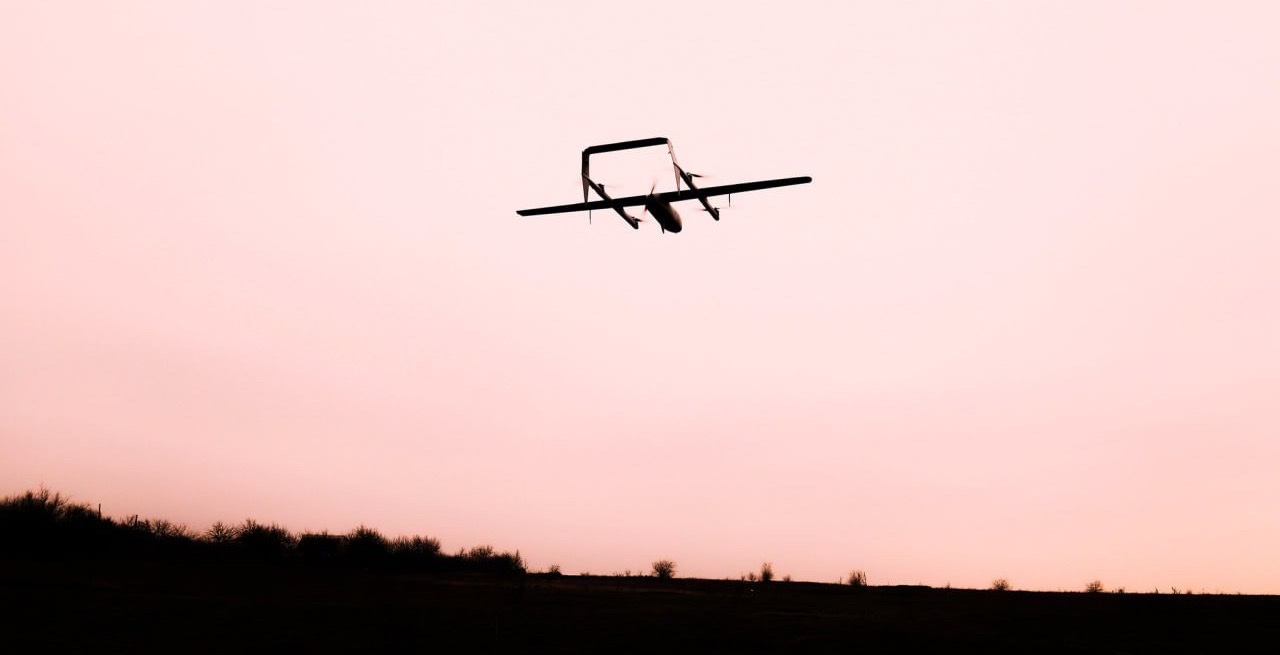
Our experience will be invaluable for the entire rational world, because any country could face a similar scenario. I don’t know of a single NATO country capable of defending its cities if faced with 200-300 Shaheds every day, seven days a week. Robert ‘Madyar’ Brovdi, July 2025.
On 4 November 2025, I appeared as an expert before Australia’s federal parliament Defence subcommittee of the Joint Standing Committee on Foreign Affairs Defence and Trade. I testified about autonomous systems, AI and defence partnerships and their implications for Australia’s defence and national security.
In my testimony, I covered two crucial issues.
First, what are the trends in drone operations during the war in Ukraine that we must understand and learn from in the Australian Defence Force (and other military forces). And, second, what might we do now to adapt the force structure, warfighting concepts, training and procurement systems to ensure that our military remains at the leading edge of 21st century capability.
Below is not a transcript of my testimony. The sections below however do cover the key concepts and ideas that I explained to the Defence subcommittee of the Joint Standing Committee on Foreign Affairs Defence and Trade.
Key Contemporary Trends in War and Autonomous Systems
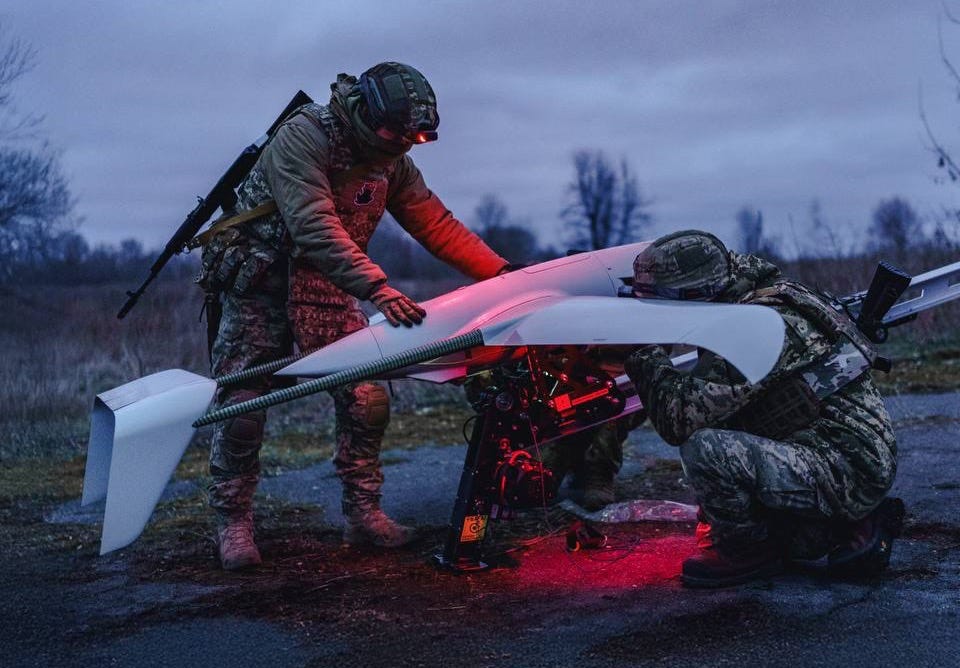
Ukraine now a saturated drone operating environment. Now, within 15km of the front line, vehicle movement is difficult to impossible. Infantry soldiers must march to their positions for 10-15km. Where armoured vehicles and artillery are deployed, these can be subject to dozens of attacks per platform per day. Ukraine has invested in decoys and deception activities, and every HQ is now buried deep underground to avoid detection and destruction by Russian drones.
There is a question however is whether this saturated environment, which has built in scale and intensity over the last three and a half years, is possible elsewhere like the non-contiguous Pacific theatre? It is not the same in the Middle East for example. And, if drone saturation is possible elsewhere, how quickly might combatants build the kind of density of autonomous systems we are seeing in Ukraine?
Drone don’t replace, but extend, human and conventional military capacity. Ukraine brigades use artillery and drones collaboratively. And for every drone battalion, brigades have 3-5 infantry battalions. Thus, despite a saturated drone environment, infantry troops remain more important than ever to hold ground.
EW and drones are a co-evolutionary system. One cannot be considered without the other in modern war. Both drone operations and EW operations must be integrated and have common learning and adaptation systems. Believing that a military can do one without the other is a false premise.
Drones and counter-drones operations may achieve parity. Counter-drone technologies are improving rapidly. We might ponder whether drones and counter-drone systems will achieve parity in many circumstances in future conflicts. Drones may not be as decisive in future as they were 2022-2024. But they still remain an essential component in combined arms and joint warfare.
Drones are an air, land and sea system. While the initial stages of this war saw drones primarily used in the aerial domain, since 2022 there has been proliferation of drones in the maritime and ground environments. These are becoming as integral to land and naval forces as their aerial counterparts have since 2022. As such, drone operations apply to all services in all domains. While different ratios of crewed to uncrewed systems will be required in different domains, and for different mission sets, drones are here to stay in all the physical warfighting domains.
Multi-domain drone operations is now manifesting as next gen robotic warfare, seeing drones carry drones, and drones attack drones. This has become apparent in the past year or so, as drones are employed to carry smaller drones to their operating areas. Interceptor drones are now widespread in counter-shaped operations, and UAVs are often used to destroy Unmanned Ground Vehicles (UGV) on the frontline. The use of drone motherships, in all domains, and drone-on-drone combat is a growing trend.
Training is vital to drone effectiveness. Ukraine has found that well trained operators have a better success rate at completing the missions assigned to them. But this training is not just about drone operations. Drone armourers and maintenance personnel must be trained. So too is training required for tactical planners in the integration of drones into combined arms activities.
Training and leadership development culture must evolve. The proliferation of AI in robotics means our entire training and leadership culture must evolve from one of using machines to one of partnering with them. Since the dawn on human conflict, humans have used tools and machines to aid them in their competition with, and destruction of, enemy forces. For the first time, drones and other tools of war now include a form of very basic non-human sentience. These are no longer dumb tools, but potential partners in military operations. As such, how we train military personnel and their leaders will have to change to take this into account.
Drone operations are a critical part of the larger adaptation battle in Ukraine, and the wider global adaptation war. Adaptation in drones is occurring daily and weekly. This involves the evolution of both software and hardware, as well as the development of new systems continuously. In many respects, the pace of the adaptation battle has shifted beyond the comprehension of many military procurement and strategic decision-making capabilities.
Russian innovation in drones probably now just outstrips that of Ukraine. This was the view of frontline combat leaders I spoke with on my recent visit. This has several contributing factors. First, Russia stole a march with fibre-optic controlled drones and continues to lead in their development and employment. These provide a stealthier platform and superior imagery for targeting other drones, artillery, etc. Second, Russia has standardised its drone production around a limited number of models. This has logistics, training and production implications. Finally, the Russian Rubikon units have transformed Russian drone operations and the targeting of Ukraine drone control centres.
There is no reason that China might not steal a similar lead in innovation and production of uncrewed systems in the Pacific theatre in the near future.
Finally, it bears emphasising that drones are NOT a silver bullet in war. In some commentary on the role of drones, there are dogmas developing that are similar to the “bomber will always get through” ideas developed in the 1930s. This fallacy led to untold numbers of deaths and injuries to Allied airmen in the early stages of the Combined Bomber Offensive in Europe during the Second World War.
We must take care to avoid drones (or any other exquisite technology) being the centre of a similar fallacy about the realities of war in the 21st century.
Drones do not replace humans or conventional capacity. However, they do extend and improve human capacity, and are now an essential element - but not the only element - of every modern military warfighting system on land, in the air and at sea.
What do we need to do?
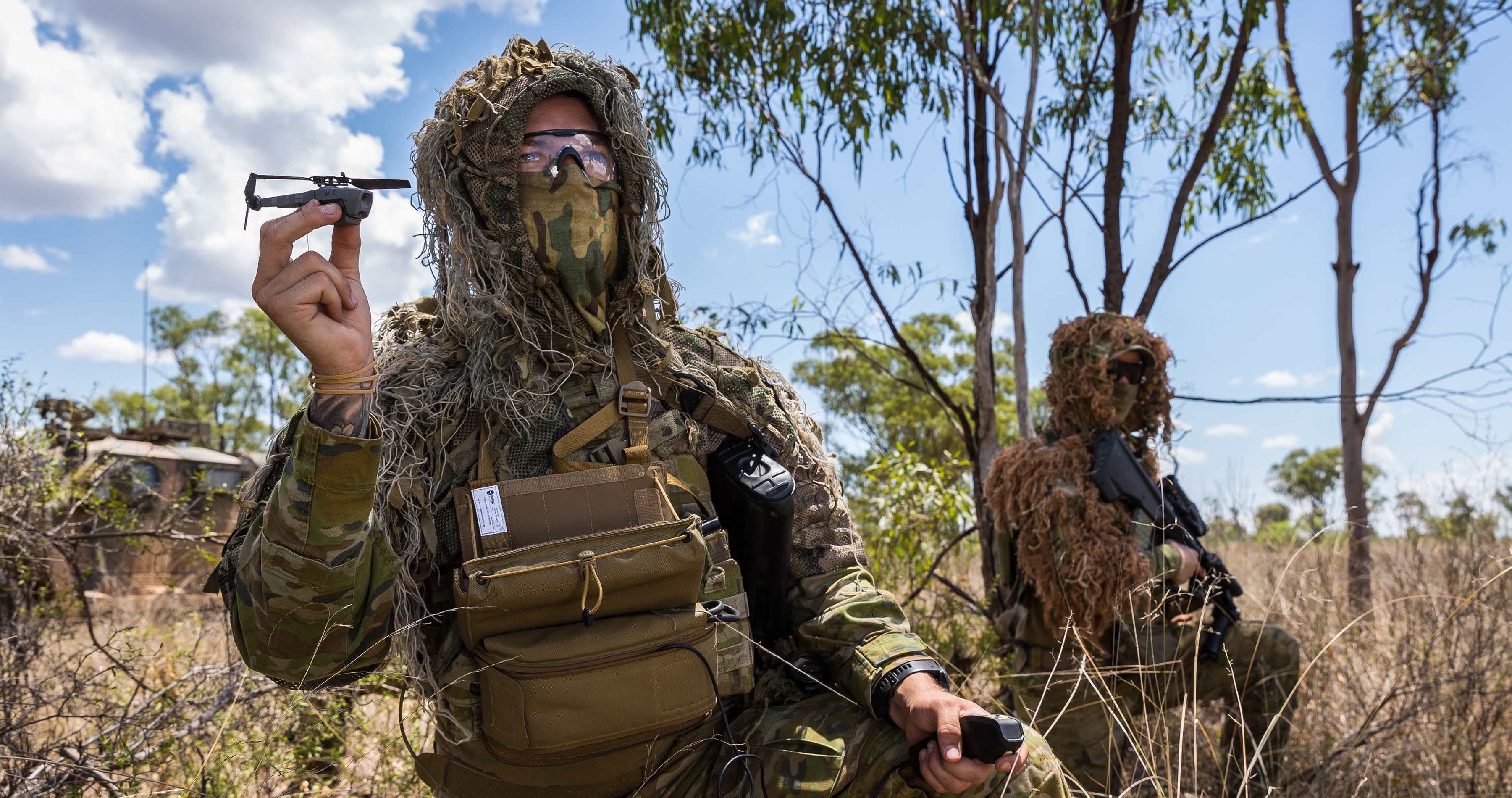
The second part of my testimony before the committee was to provide some initial recommendations about how the Australian Department of Defence, and the Australian Defence Force might respond to these insights into the employment of drones and autonomous systems in modern war.
I offered five recommendations:
Recommendation 1: Ensure we translate the right lessons from Ukraine for the Pacific theatre. This will allow for the integration of appropriate drone operating concepts and technologies into all of our warfighting as well as humanitarian assistance concepts. My recent report on this topic, Translating Ukraine Lessons for the Pacific Theatre, was offered to members of the committee as an example of how to undertake this translation process.
Recommendation 2: Balance small numbers of exquisite and expensive drones with larger numbers of cheap, attritable drones. The current Australian Defence Force focus on exquisite, expensive drones is probably unsustainable. This committee might recommend changed procurement rules for cheaper, bulk drone purchases that can be done annually.
Recommendation 3: Balance imported and indigenous drones. It is very likely in a future war, as happened in World War Two, that Australia might be cut off from key defence suppliers. In order to address this risk, indigenous production is necessary. This committee might recommend policy that ensures 50% of all military and public safety drones are made in Australia to prime Australian industrial development and production of drones.
Recommendation 4: Balance long range and short-range drones. Ukraine has demonstrated that a mix of long and short range drones are necessary. In our region, the balance of long and short range drones may be different because of the vast size of the Pacific theatre, but both remain necessary. Not every problem in the Pacific theatre needs drones with a range of 1000km or more. This committee might recommend this be included in the coming NDS.
Recommendation 5: Balance crewed and uncrewed systems. The Australian Defence Force has very few drone units. More drones are needed in normal units, and more specialised drone units are needed across all elements of the joint force. This committee might recommend that the ADF requires many more drone companies and battalions; army is several drone battalions short. Air Force is multiple drone squadrons short. Navy should have hundreds of surface drones to prevent or at least challenge future Chinese naval circle work around Australia.
You can view my testimony at this link (I start at the 1:09:00 mark).