

Criticism matters not only for what it says, but for where it leads. Wang Wen-sheng, 18 August 2026.
As the stalemate in the Iran War drags on, Russia’s president maintained his maximalist goals for his war on Ukraine in a speech given to the United Russia Party Congress. At the same time, Ukraine this week saw some of the heaviest bombardments against Ukrainian cities of the war so far. Exploiting the shortfalls in advanced missile interceptors being supplied to Ukraine, Russia hit a shopping centre in President Zelenskyy’s hometown killing at least 15 people and injuring dozens more including children.
On the frontline, Russia continues to focus on capturing the Donbas but is making little headway. It has now lost ground in four of the past five months. Ukraine meanwhile is using ever-larger drone raids to smash its way through power infrastructure in occupied Crimea, and through dual-use logistics facilities and oil refineries in Russia. On one day this week, over 600 drones were dispatched towards Moscow. Might we soon see a “1000 drone bomber raid” on the Russian capital?
In the Pacific, a shortened military exercise was conducted in South Korea, with a senior allied officer acknowledging that the training activity was partially a response to North Korea’s learning and improvements from its Ukraine battlefield experiences.
Welcome to this week’s edition of The Big Five.
Ukraine
Putin Stays the Course. At a speech in the last 24 hours at the United Russia Party Congress, the Russian president has stuck with his original, maximalist goals for the war against Ukraine. Before I get to that, I wanted to highlight one of the boldest lies of Putin’s speech:
The constitutional right of the citizens to elect their representatives and determine the course of their country’s development is inviolable. It is the foundation of legitimacy and legal capacity of the state’s democratic institutions. This is why we will hold fast to the principles of democracy even under the most difficult conditions, and we hold and will keep holding election at different levels across the entire territory of our vast country, from the Far East to Novorossiya and Donbass.
The pretence of Russia as a democracy is laughable, but some in the West still drink it up. And the mention of the Donbas as part of Russia again highlights Putin’s view of a larger Russian empire – and reinforces why this region is the main effort for Russian offensive operations and has been for four years now. He is also very obviously trying to draw the difference between Russia having elections and Ukraine not having elections in the same week that former Ukrainian defence minister Fedorov called for elections in his nation.
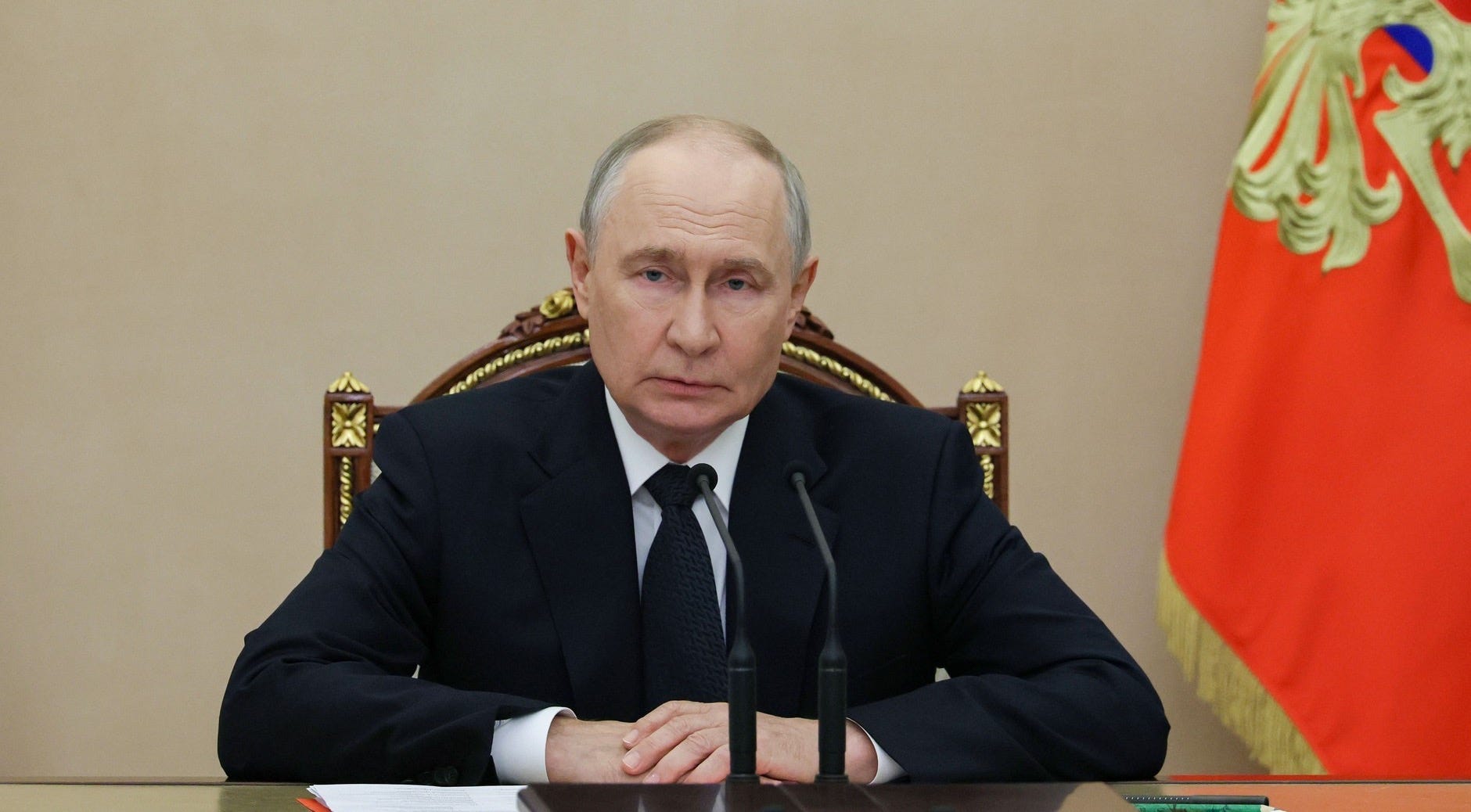
What did Putin have to say about his war against Ukraine? You can read from the transcript below:
The special military operation continues. And the more difficult the situation at the front is for the enemy, the more brutal and barbaric are the attacks carried out by the Kiev regime. This is how the whole neo‑Nazi, Banderite and Russophobic essence of the force we are fighting manifests itself… a great deal depends on our unity, on the courage of Russian soldiers and officers, and on everyone who works conscientiously in their place to contribute to the victory.
A couple of things bear highlighting in this Putin narrative. First, he continues to refer to “victory” as if it is inevitable. It is not, but it is one method that he uses to continue to extract mass human resources from Russia for his flailing war efforts. Second, he recycles his old narratives about the “neo-Nazis” and “Banderites” in Ukraine, which were part of his original justification for the war. Third, he retains his focus on the defeat of Ukraine here, not just the capture of the eastern regions.
In a follow-on media conference, Putin acknowledged the ongoing Ukrainian long-range strike campaign against Russia, stating that:
If we talk about the current developments, it is, of course, the result of yet another adventure by the Kiev regime and its Western handlers who have planned to inflict yet another “strategic defeat” on Russia – this time, as is known, within 40 days and through massive missile and UAV strikes against our civilian facilities and logistics… The overall goal is to bring Russia to collapse, something they have long dreamed of and constantly talk about… We know well that the Nazis during the Great Patriotic War and World War II, and neo‑Nazis today, felt and, apparently, still feel a special satisfaction, a pleasure as they commit such crimes, and we see these crimes continue. Yet the final result turned out to be exactly the opposite of what the enemy had expected.
This is designed to shape the story of internal impacts of Ukrainian strikes on Russia, equate Ukrainian strikes with Nazi atrocities during the Second World War, and highlight that Russia is at war against Ukraine and Western nations. Taken together, these elements of the Putin narrative are being pushed to develop a Russian equivalent of the “spirit of the blitz” – and message the Russian people that in Putin’s view, there is no end to the war until Russia wins.
This should highlight, again, that there is little hope for serious negotiations to end the war anytime soon. And taken alongside the Russian foreign minister’s comments this week in a congratulatory message to North Korea’s foreign ministry about Moscow and Pyongyang acting as a united front to build a “new and righteous world order”, this is a war that Russia has postured itself to fight against Ukraine and Western nations for some time to come.
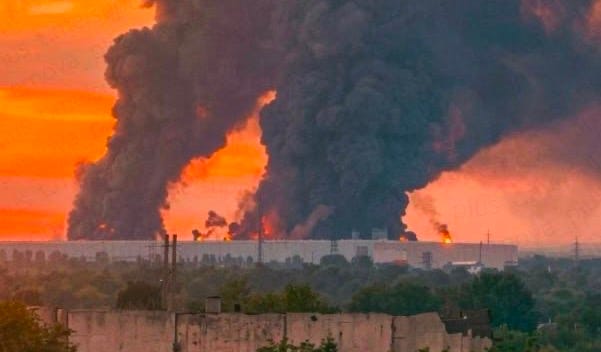
Long-Range Sanctions. On 21 August, Ukraine attacked the Lukoil-Permnefteorgsintez refinery in Perm Krai, a facility located in the Ural region and more than 1,500 kilometres from the Ukrainian border. It was the fourth strike on that facility in four months. The plant is a significant one for Russia; it processed 12.6 million metric tons of crude oil in 2024. Bloomberg, quoted in The Moscow Times, has reported how Russian oil refining is now operating at a 24-year low. Oil industry experts estimate that approximately one quarter to two-fifths of Russian refining capacity is currently offline.
The day after the strike in Perm Krai, Ukrainian long-range drones struck the Ozon logistics centre in Chapayevsk and the Novokuybyshevsk oil refinery, approximately 900 kilometres from Ukraine. This was the first Ukrainian strike on Ozon and follows the deliberate campaign against Wildberries dual-use logistics facilities in Russia. Ukraine has already attacked seven of the ten largest Wildberries logistics centres. Ozon and Wildberries supply drones, communications equipment, thermal-imaging devices and tactical gear that are purchased by Russian troops. Ukraine now treats major e-commerce logistics hubs as part of the Russian war-making capacity in depth, rather than as neutral civilian infrastructure.
President Zelenskyy described the strikes as being executed under the doctrine he has described for some time as “long-range sanctions”. He wrote on Twitter that “we will continue, through our long-range sanctions, to bring the consequences of the war back to where it came from”. The execution of this doctrine has been ongoing throughout 2026 and back into 2025. On 26 July, Zelenskyy described how Ukraine’s strike range “has already exceeded 3,000 kilometres” and described Russian strategic depth as “now becoming a particular problem for the political and military leadership of Russia.”
Ukraine has constructed, and then normalised, an evolved non-nuclear strategic bombing doctrine, which is cloaked in the lexicon of “sanctions”. This language is important because Ukraine wants the strikes to be viewed in Western capitals as economic pressure rather than the kind of nightly attacks on Ukrainian cities undertaken by Russia. Kyiv is employing coercive activities against the Russian government, while engaged in a program to destroy civilian energy and dual-use infrastructure at continental range.
Interestingly, the Ukrainian president has refused to permit attacks on civil airports to be included in this new long-range strike doctrine. Writing in The Atlantic this week, Simon Shuster describes how Ukrainian planners proposed a large-scale assault on Moscow airports to provide additional pressure on Putin to negotiate. Zelenskyy, as the report notes, apparently declined to provide permission. He was concerned that such an attack might be viewed as “piracy” and undermine support for Ukraine from Western nations. Additionally, if the operation resulted in the deaths of civilians, this too would have an impact on support for Ukraine.
Notwithstanding Zelenskyy’s prevention of strikes on civilian airports in Moscow, there are many implications of this new-era approach to long-range strikes for Western governments and military institutions. Many have their own logistics tails that sit atop commercial entities. For example, in Australia, Australia Post depots, third-party logistics providers, container ports and warehouse hubs carry consumer freight and Defence-adjacent stock. The legal and reputational issues of striking commercial warehouses are not yet settled. Ukraine’s framing has been “dual-use” rather than “civilian”. Ultimately, this means that the Wildberries campaign is potentially seeing the e-commerce sector being named as a target category in modern war.
There is no defence doctrine in most Western nations that sees this logistics infrastructure as a force protection requirement. Taiwan, as demonstrated in its recent Han Kuang exercise, is an obvious outlier here. But if a national support base for military operations is built on top of commercial logistics, then in a major conflict the commercial logistics network becomes a legitimate object of an adversary’s long-range strike planning.
Russia’s Missile Offensive. Russia carried out one of its heaviest drone and missile attacks against Ukraine of the war on 19-20 August. The attacks struck Kyiv with a barrage of ballistic and cruise missiles alongside 168 Shahed attack drones. At least 16 people were killed and more than 40 injured. Kyiv Mayor Klitschko declared a day of mourning, while President Zelenskyy renewed his appeal for Western-supplied Patriot interceptors.
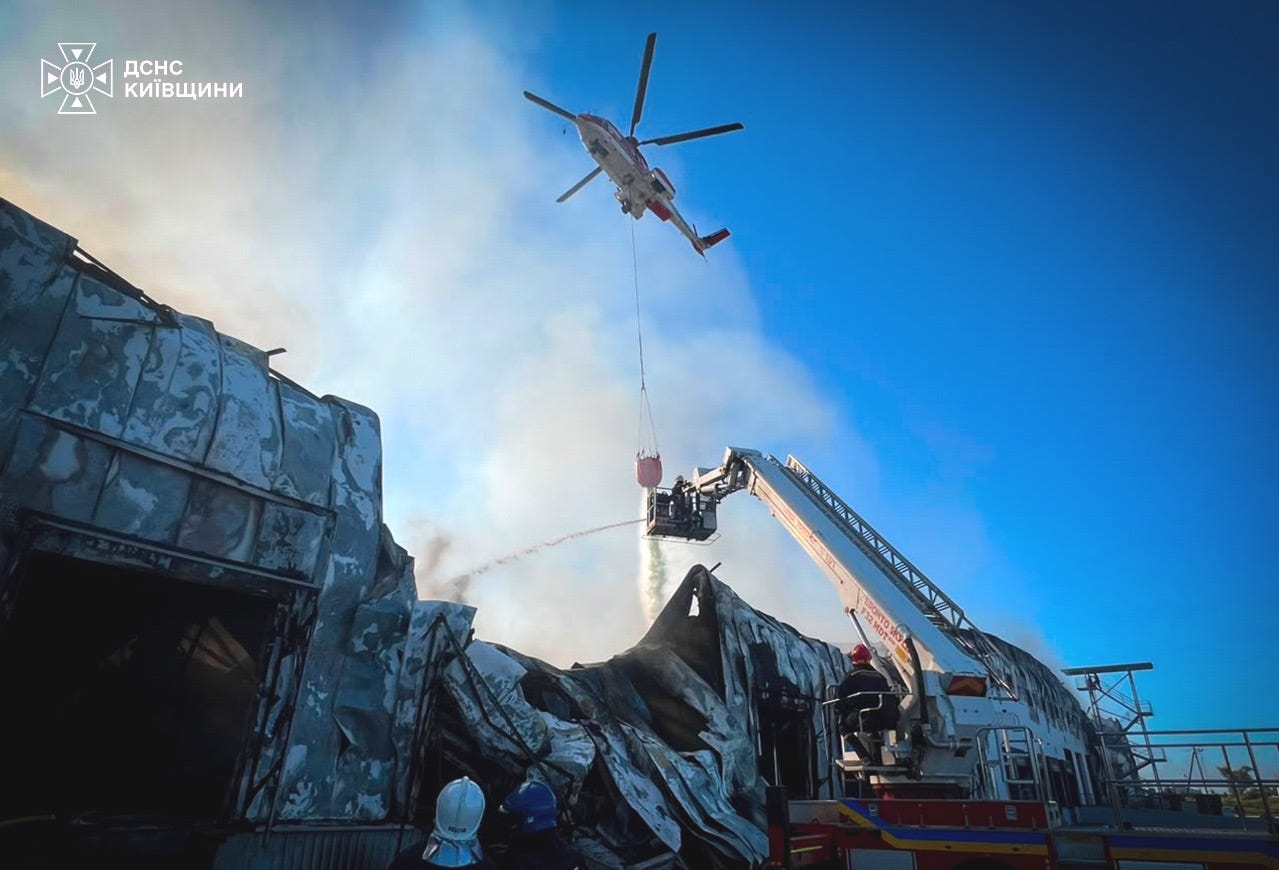
The following day, Russian drones struck the Sunny Gallery shopping mall in Kryvyi Rih, President Zelenskyy’s hometown. This was a “double-tap” attack, with the initial wave of drones striking the mall, followed by a second wave around 30 minutes later that hit as rescue workers were responding. At least 15 people were killed and roughly 130 wounded, including 23 children. The mall attack, together with strikes elsewhere that same day, brought the nationwide death toll for 21 August to 21.
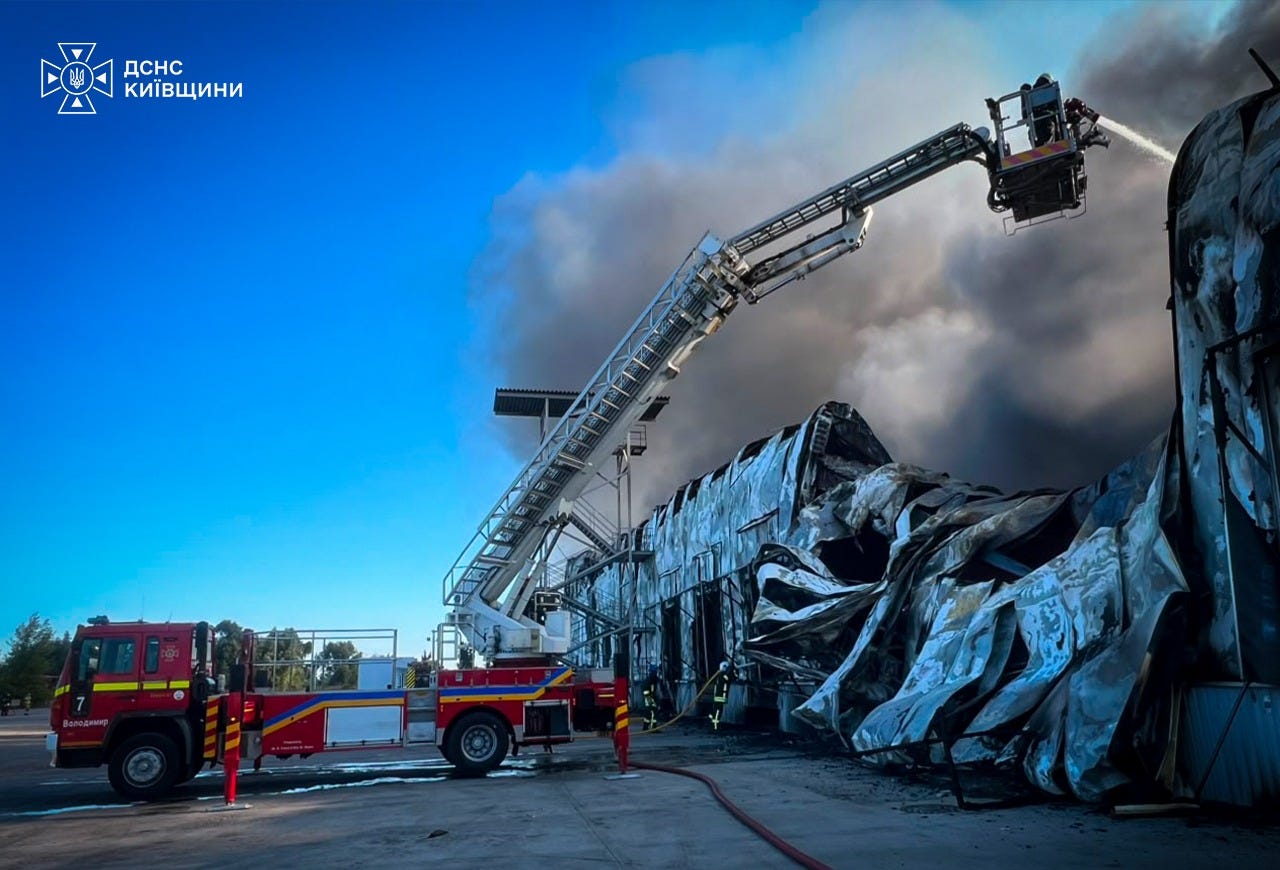
The Russian attacks continued in the following days. On 22 August, Russian ballistic missiles and jet-powered Shahed drones struck Kyiv’s Darnytskyi district along with Kherson, Donetsk, Kramatorsk, and Sumy regions. At least six people were killed in these attacks.
The intensity of this week’s attacks is part of Russia’s broader escalation to reverse narratives about Ukrainian strategic momentum, to achieve results where its ground offensive is not, and to exploit the paucity of high-end missile interceptors available to Ukrainian Patriot missile batteries.
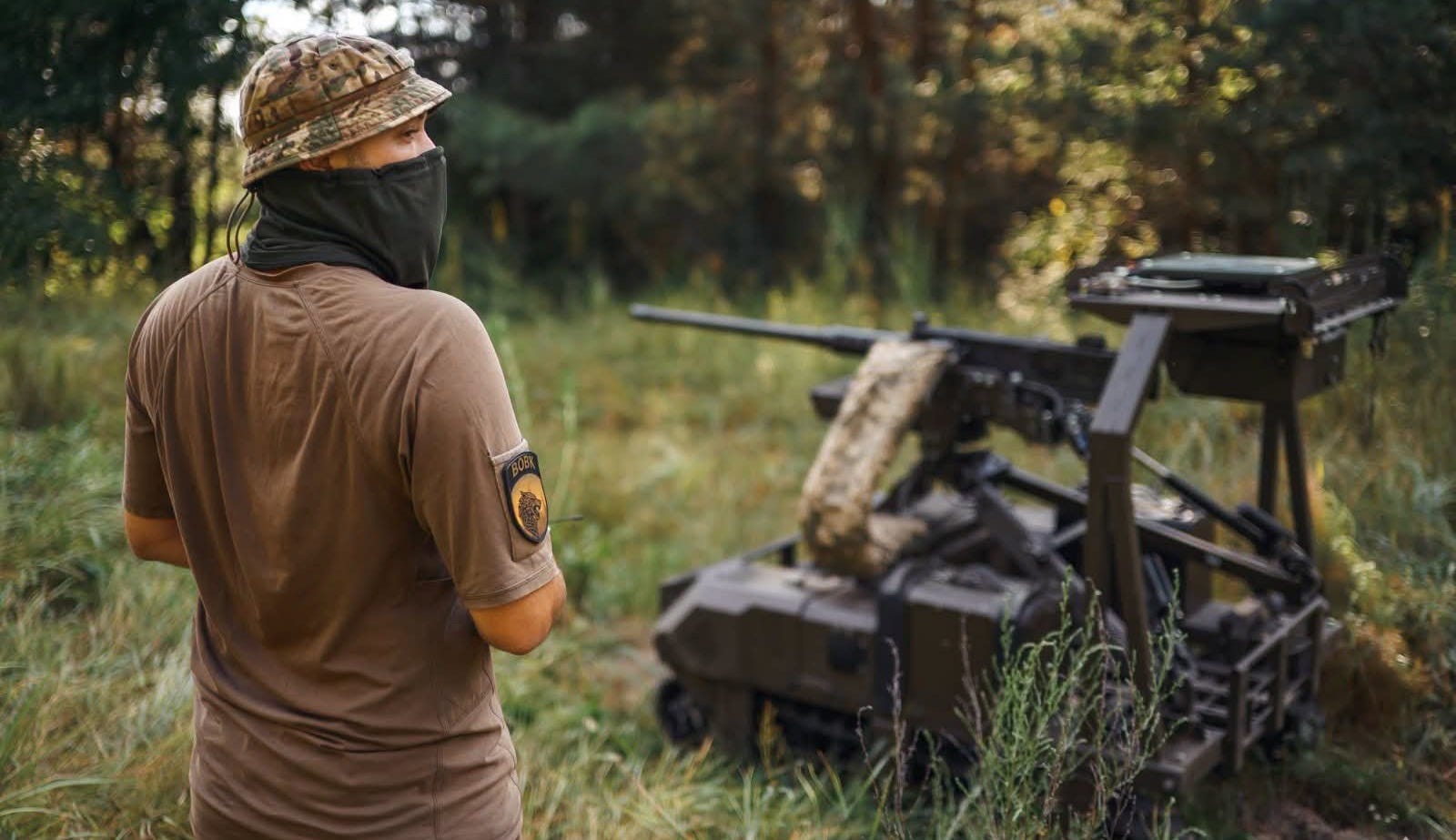
Attacking Europe – And Ukraine’s Strategic Depth. In the past 24 hours, reports have emerged about an unattributed attack against a drone manufacturer in Estonia. The attack on a Tallinn facility used by defence manufacturer Milrem Robotics is being investigated by Estonian authorities. This is just the latest example of the widespread campaign of sabotage and subversion that Russia has been quietly, and sometimes not so quietly, waging against Ukraine supporters and NATO on the European continent and the UK. Just this month, a drone carrying explosives was intercepted just moments before it was due to impact a cargo plane in Leipzig.
This Russian campaign has been chronicled by multiple reputable sources in the last couple of years. In December last year, the Associated Press produced a report with maps that compiled a series of alleged Russian attacks against targets in Europe over the past several years. That report described how at least 145 incidents had occurred in the preceding years that were likely to have been “masterminded by Russia”. It described how a key goal was “to drain European investigative resources” while interfering with support to Ukraine from multiple nations.
Several days ago, the US Congressional Research Service released an updated report on this topic. It described how “continued Russian hybrid warfare activities are raising questions in both the United States and Europe about the long-term threat Russia poses to US and European strategic and national security interests.” The report describes the wide variety of Russian attack methods over the last few years, which includes GPS jamming, weaponized migration, election and political interference, cyber-attacks, assassinations, airspace violations (with crewed and uncrewed aerial vehicles, and other sabotage activities including interference with submarine cables. The number of these attacks in Europe “quadrupled from 2023 to 2024”.
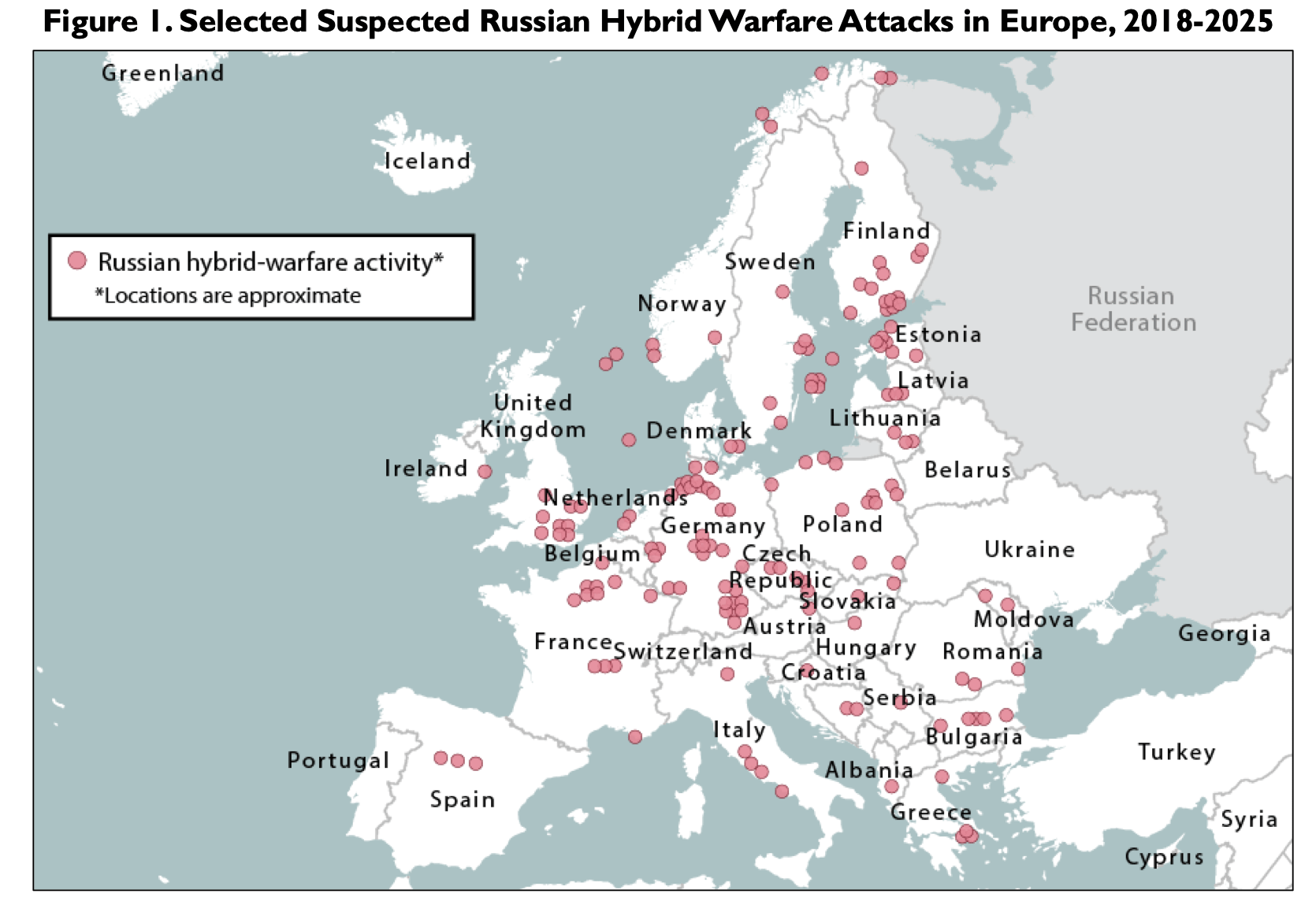
One hopes that these reports help provide impetus for the passing of next round of sanctions against Russia by the US Congress. Ultimately however, these reports provide a useful diagnosis of the type and scale of the problem now faced by Western democratic nations. Russia is conducting attacks not only against Ukraine’s strategic depth (European support) but against European defence industry and force generation capabilities.
This is an indicator that our views on strategic depth must continue to evolve to encompass many elements besides physical distance and geography. As Nadia Schadlow wrote recently, strategic depth remains an old yet relevant concept but requires updating for the 21st century. Further, she describes how:
We can no longer measure strategic depth by miles alone. Digital networks, satellites, global supply chains, and geopolitical influence allow adversaries to degrade our defences and to strengthen their ability to maneuver in ways that bypass traditional borders altogether.
The Russians are testing old notions of strategic depth in Europe, just as Ukraine is doing the same against Russia. Western nations need a broader and more comprehensive set of physical and intellectual tools to build strategic depth, while acting defensively and offensively.
The Ground War. Russia’s ground offensives continue to grind away, wasting enormous numbers of troops for very minimal gains in territory. The clear main effort for the Russians, as it has been since 2023, is the seizure of territory in the Donbas. In particular, the seizure of the Fortress Belt in eastern Ukraine remains the focus of Russian ground combat operations.
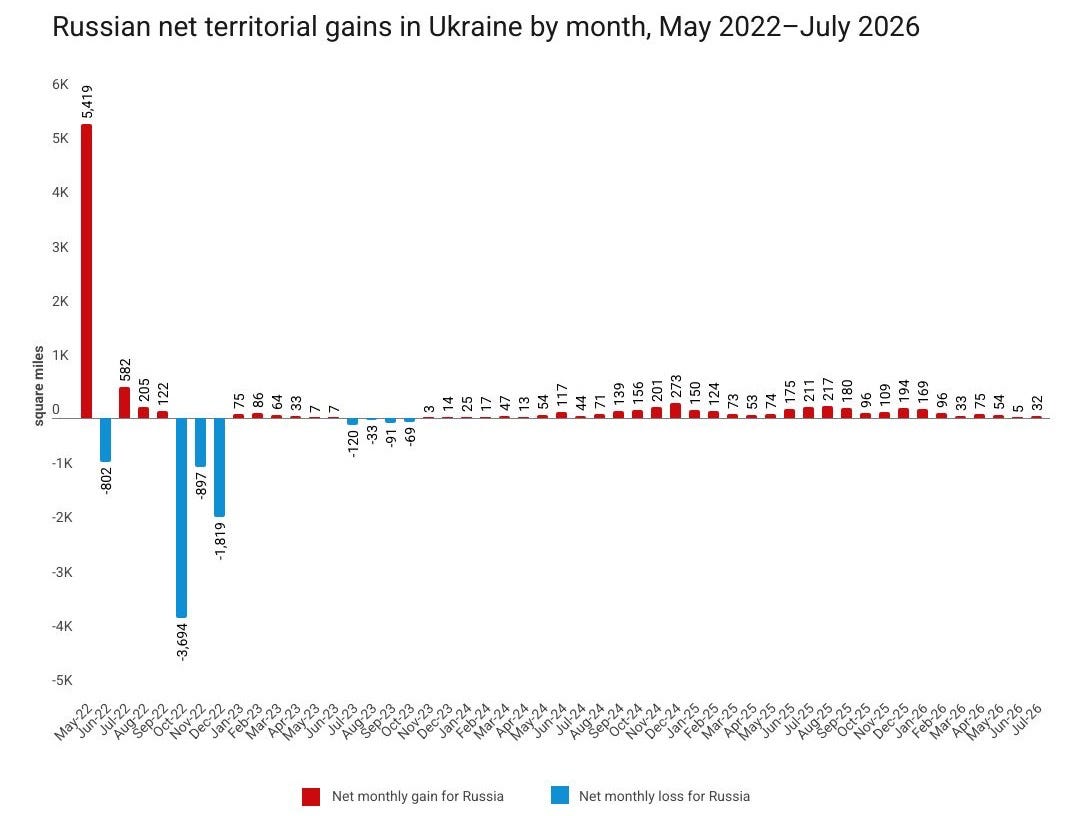
Over the past month, Russian operations have not gained ground but lost it. The reporting of Deepstate and ISW, in the latest Russia Matters update, shows that Russia lost between 2 and 12 square miles in the period since 21 July this year. This occurs at a time of the year that has, in the past two years, been one of Russia’s most successful months for capturing Ukrainian territory. And, for four of the past five months, Russia has lost ground in Ukraine while suffering increasing monthly casualty figures.
Wrapping up the coverage of the war on the ground, this week Euromaidan published a report on how Russia continues to attempt to advance on and capture the Ukrainian city of Lyman. This city, viewed by the Russians as a “gateway to the fortress belt cities of Kramatorsk and Sloviansk” continues to hold out against Russian attacks. Russia has sought to capture Lyman for well over a year, but like most other parts of the frontline, its operations on this axis of advance have remained slow and extraordinarily costly in Russian casualties.
The Pacific
Preparing for a North Korea Experienced in Modern War. North Korea has been supporting Russia’s war effort against Ukraine for some time. North Korean troops were first deployed in 2024 to the Kursk region, and in 2025, Ukrainian intelligence services estimated that the North Koreans were by then providing up to half of Russia’s ammunition requirements. While this is a story deserving of more prominence, the reality is that tens of thousands of North Korean troops have fought against Ukraine, and North Korean missiles and other munitions have rained down on the Ukrainian frontline – and Ukrainian cities – for over two years. Potentially the more important flip side of this story is what North Korea is taking from the war: experience in modern war.
The Korean People’s Army, because of its experience in Ukraine, is probably now the most combat-experienced large-scale military force in Northeast Asia. The knowledge it has gained there is driving a large-scale military modernisation program in North Korea. Russia provides microchips, rocket parts, as well as key technologies and equipment, such as tanks, artillery, UAVs, and enhanced air defence missiles, ballistic missiles for submarines, MiG-29 and Su-27 jets, and Mi-8 helicopters. As Khang Vu writes:
North Korea kick-started an ambitious modernisation program by unveiling its biggest warships yet, upgrading its tanks, producing a new type of artillery shell, introducing AI-enhanced suicide attack drones, and launching new air defence systems. North Korean Chairman Kim Jong-un also promised to equip the air force with “new strategic military assets.”
North Korea is actively cycling personnel and platforms through the war in Ukraine, including the recent deployment of 8500 troops that incorporates a drone unit and a ballistic missile unit.
Beyond experience in modern war, the North Koreans are benefiting financially from their assistance to Russia. Russia has paid North Korea somewhere between $7 billion and $14 billion, and possibly more, according to a report by the South Korean intelligence and security think tank, the Institute for National Security Strategy (INSS). Russia also appears to be funding North Korea’s nuclear program.
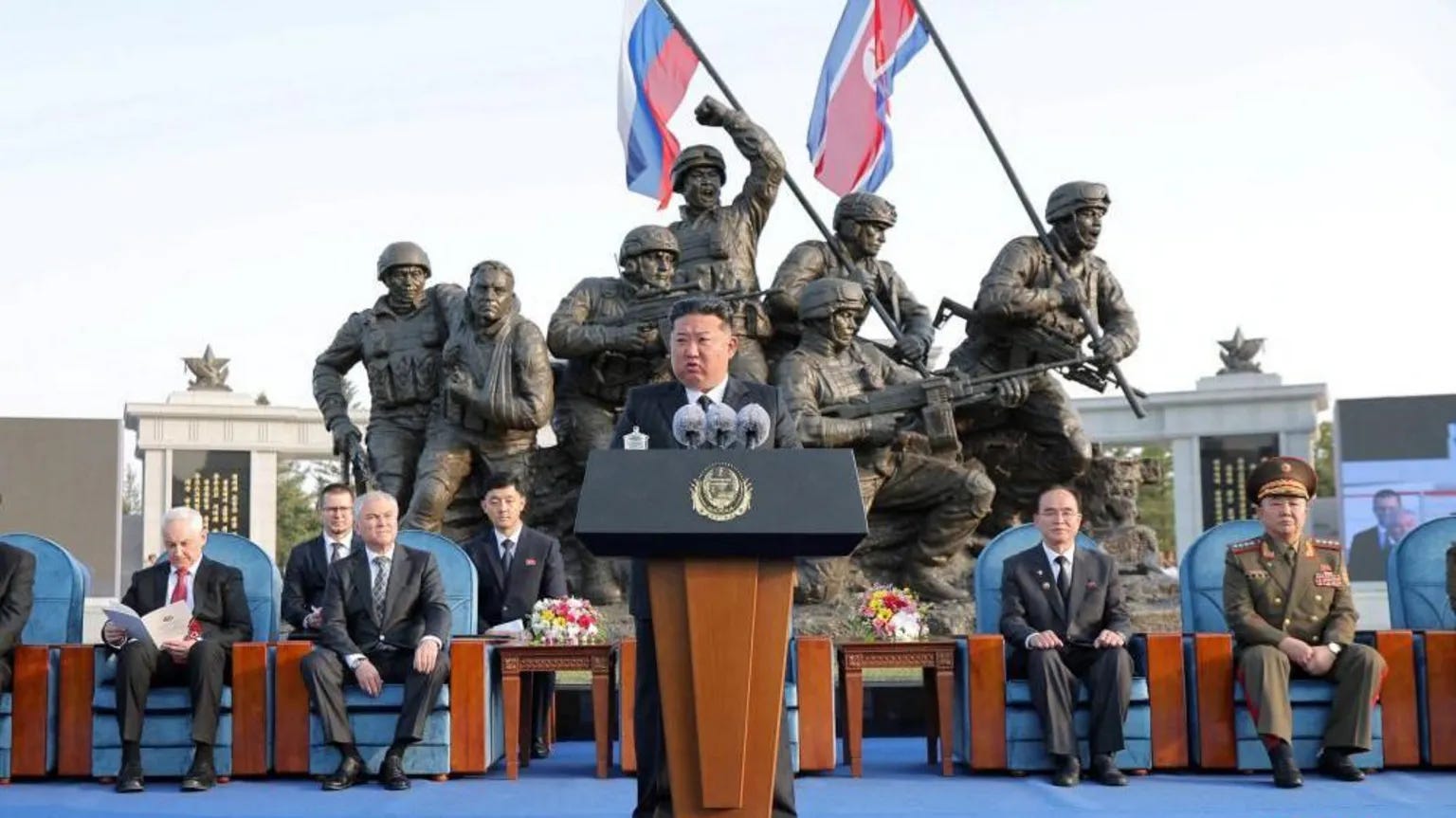
This battlefield experience in Ukraine appears to also be informing the evolution of North Korean military training and education. Korea expert, Jenny Town, has been quoted as follows on this topic:
This has included upgrades to major military training facilities, including improving the technological infrastructure, new curriculum on modern battlefield concepts, and drone warfare integration…It also includes a major overhaul of its field and combat training regimen, such as small unit tactics, multi-purpose special forces, real war modelling exercises, and greater integration of emerging technologies.
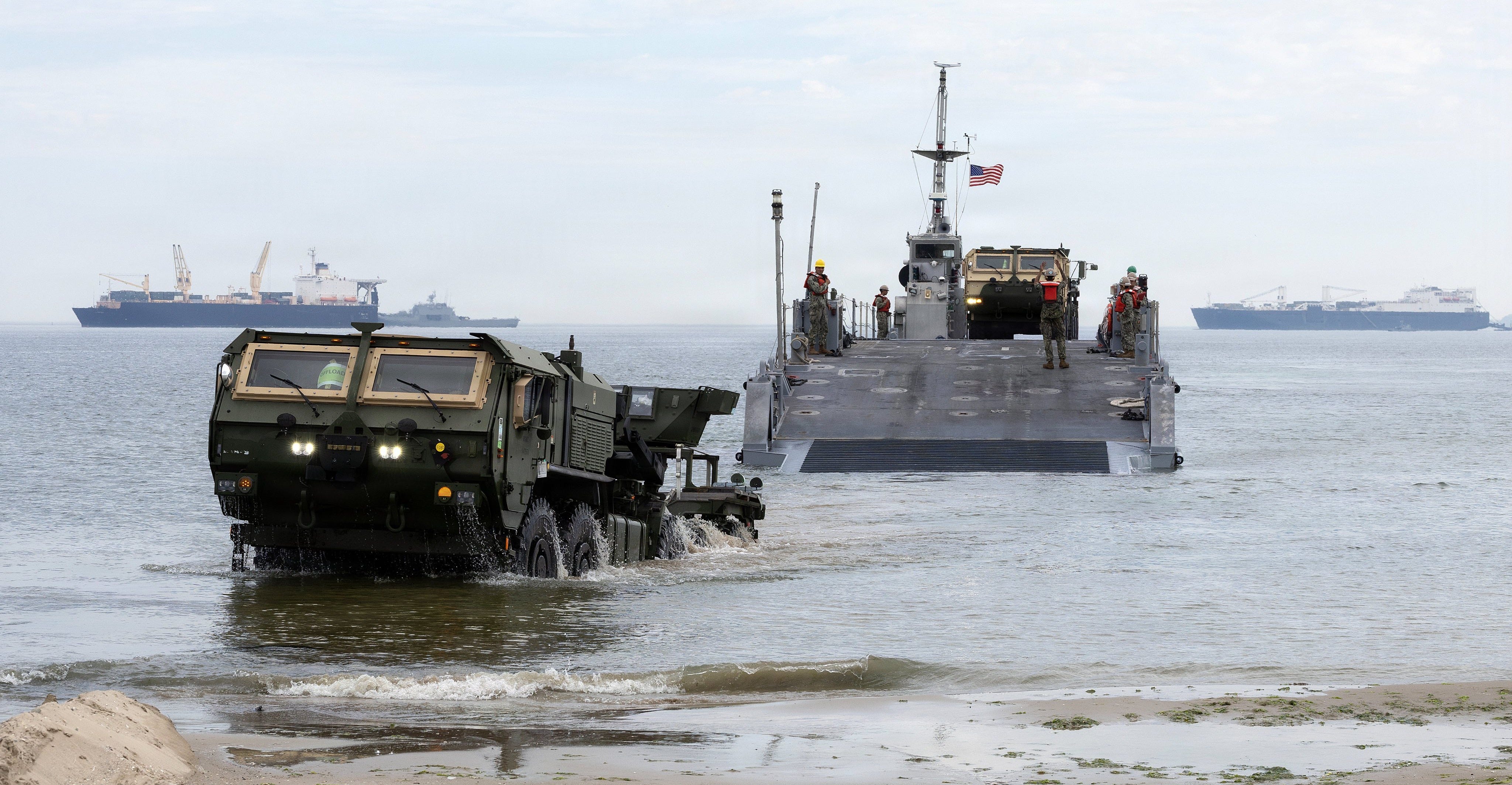
Overall, this is a major shift in the correlation of forces on the Korean peninsula. Given the advantage in size that the North Koreans have over South Korean and American forces on the ground, an overall increase in the quality of that larger force will drive changes in force posture, structures and exercises south of the DMZ. This situation was hinted at recently when Lt. Gen. Scott Winter, deputy commander of U.N. Command, stated during a press conference in South Korea that forces on the peninsula are accounting for Pyongyang’s increased use of technology, its ballistic-missile development and lessons learned by North Korean troops supporting Russia.
Last year, my Adaptation War report covered the status of Russia-North Korea shared learning and adaptation. This relationship appears to have deepened since then, with the manifestation of that learning and adaptation bloc being a more capable North Korean military (at least in the ground and missile forces).
Australia’s New Cyber Reserve. On 21 August, the Australian Department of Defence announced the establishment of a specialist Cyber Reserve Force. This is designed to attract “experienced cyber professionals from industry, government and academia” through a direct-entry pathway that recognises existing expertise while maintaining Defence standards. Acting Commander Cyber Command, Air Commodore Michael Reidy, described the mission as follows:
Cyber power is an essential element of Australia’s national defence; the new pathway enables Defence to access highly specialised expertise, strengthening our ability to defend, fight and prevail in an increasingly contested and complex digital battlespace.
The initiative has its genesis in the 2023 Defence Strategic Review and was endorsed by a July 2025 reserve modernisation review. Recruitment areas for the new force include cyber operations, artificial intelligence, network engineering, cloud security, digital forensics, incident response, threat intelligence and cyber strategy. These are the types of specialisations that have been difficult for the ADF to retain against commercial salaries. The initiative is Australia’s admission that a decisive military capability now lives outside the uniformed aspects of the ADF, and that the only way to employ many cyber related capabilities is building a new species of soldier who also remains a civilian professional. That is a substantial institutional and cultural shift. There are many issues that are still to be resolved, which include:
What does a reservist owe their day-job employer when a cyber incident is running through their employer’s own networks?
How does a private-sector security-cleared reservist behave toward their own firm’s counsel and clients when an incident belongs to Defence?
How does the ADF certify the currency of skills developed on private-sector time?
How are cyber reservists indemnified when their operations produce collateral effects on third-party systems?
Despite these unanswered questions, they are best resolved by establishing the force and working through them, not waiting for answers before establishing the force.
Ukraine’s IT Army and Estonia’s Küberkaitseüksus are two earlier models that may have influenced the Australian initiative. Neither transfers neatly to the Australian legal system that has not thought through digital call-out powers. But it is a positive move and is the first visible solution to a broader total-mobilisation challenge for the country.
*******
This week I published three articles.
The first was for News24, and in this piece I examined the newly announced Australian government inquiry into national resilience and civil preparedness. While supportive of the inquiry, I proposed that it should go further an explore wider national mobilisation issues. You can read that article at this link.
My second piece this week explores the recently completed Han Kuang exercises in Taiwan. This was a more realistic, longer exercise than normal, and had an emphasis on whole-of-society readiness. My article proposed the crucial insights that it provides for other Western nations about civil-military integration, civil defence and resilience for other democracies. You can read that piece here.
The third and final article was for News24. In it I explored the Trump administration’s decision to reduce support for Exercise Ulchi Freedom Shield in South Korea, and what signal this is sending to other US allies in the Pacific region. I also examined how the Australian government is responding to the increased uncertainty in security affairs across the Pacific. You can read it here.
*******
It’s time to explore this week’s recommended readings.
This week’s recommendations include a great article about why self-critique is important in democracies. There are also articles about Ukraine’s wartime drone industry, learning from Ukraine’s “kill-web”, rebuilding the US defence industrial base and the value of land forces in the modern era.
As always, if you only have the time available to read one of my recommendations, the first is my pick of the week.
1. The Importance of Democratic Self-Critique

This week, the Taipei Times published an important commentary that examines the crucial importance of self-criticism in democratic polities. Such self-critique is important to highlight weaknesses in government and military institutions so they might be fixed. But it also underpins the open debates on which democratic governance and self-improvement is built. And it is critical to pushing back against foreign malign narratives and misinformation. You can read the full commentary at this link.
2. Ukraine’s Drone Industry
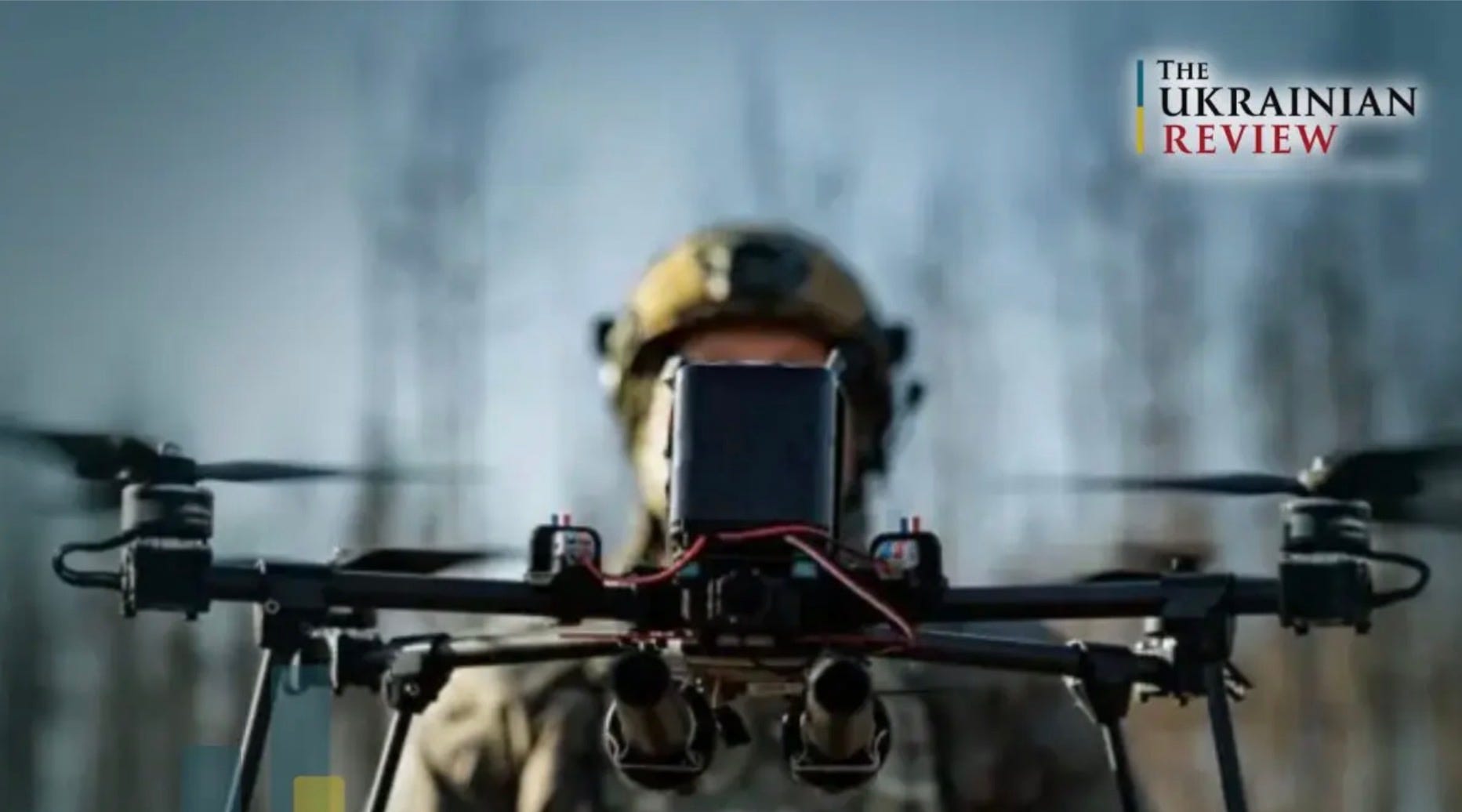
This piece, published in The Ukrainian Review, examines how Ukraine developed its contemporary drone industry over the past four years. Further, it examines how this new industry is having an impact on global drone research and development as well as production and procurement. A great look at a new, 21st century defence industry, you can read the full piece at this link.
3. Borrowing Good Ideas from Ukraine
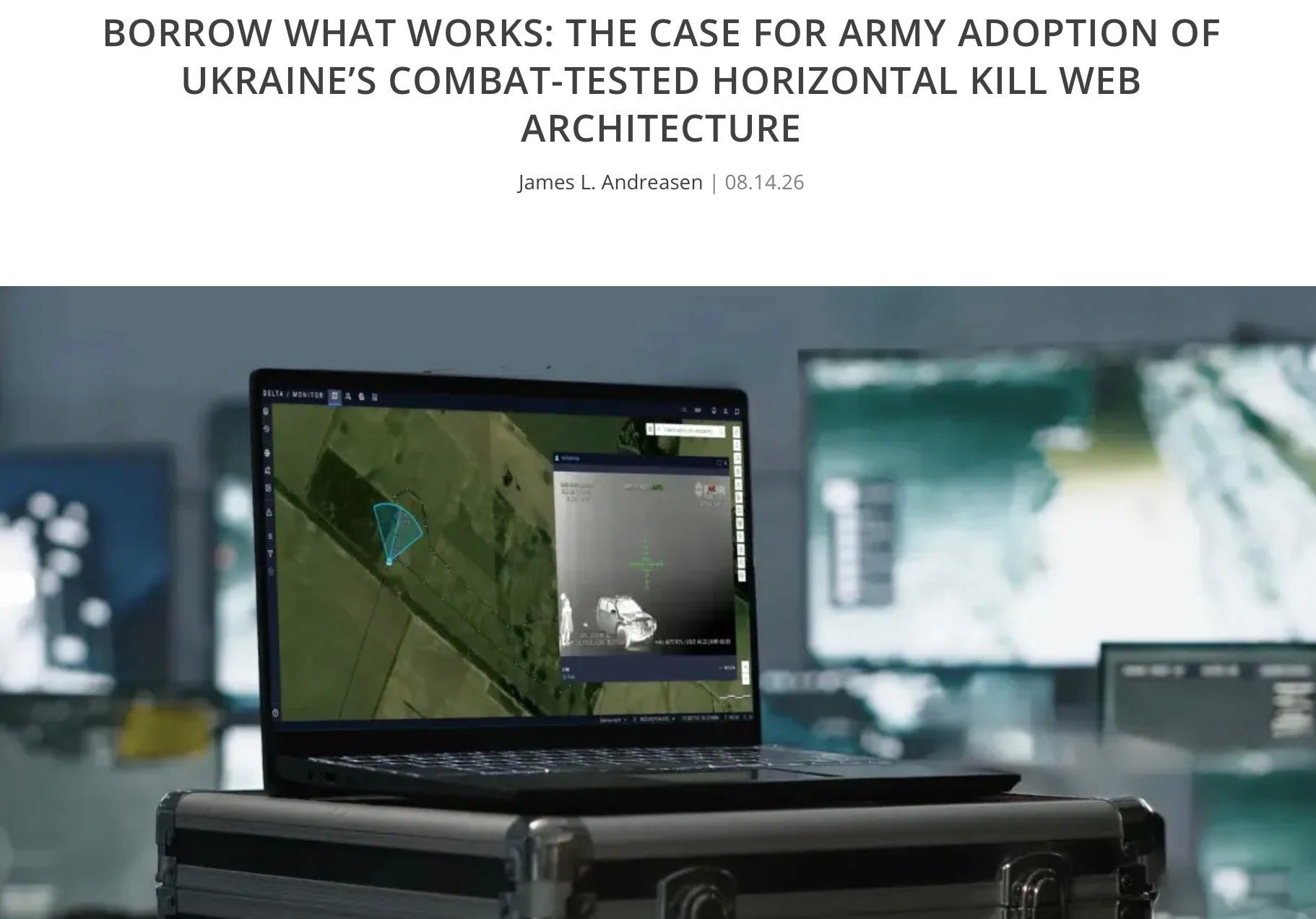
This piece, published by the Modern War Institute, proposes that the US military should borrow insights from the Ukrainian military about best practice in building, operating and evolving the sensor-to-shooter chain on the modern battlefield. As the article notes, “Ukraine has already demonstrated that architecture in large-scale combat. The United States should field it, train with it, and build future drones to operate inside it.” The article is available at this link.
4. Valuing Land Power
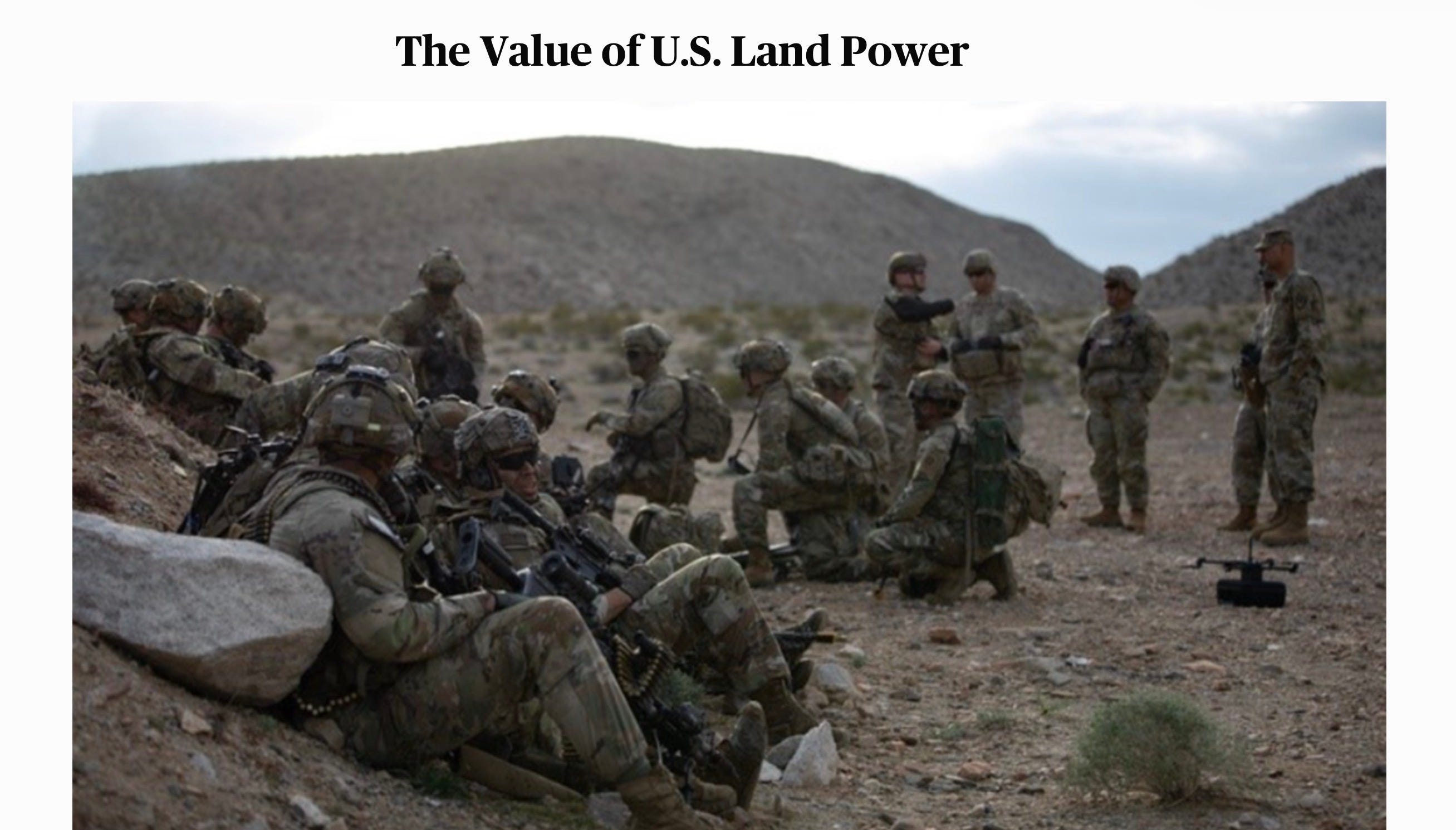
Published by the Center for Strategic and International Studies, this commentary explores the value of land forces in the contemporary security environment. Taking lessons from Ukraine and elsewhere, it proposes several elements that comprise the core value proposition for land forces. The commentary can be read here.
5. Rebuilding the American Arsenal
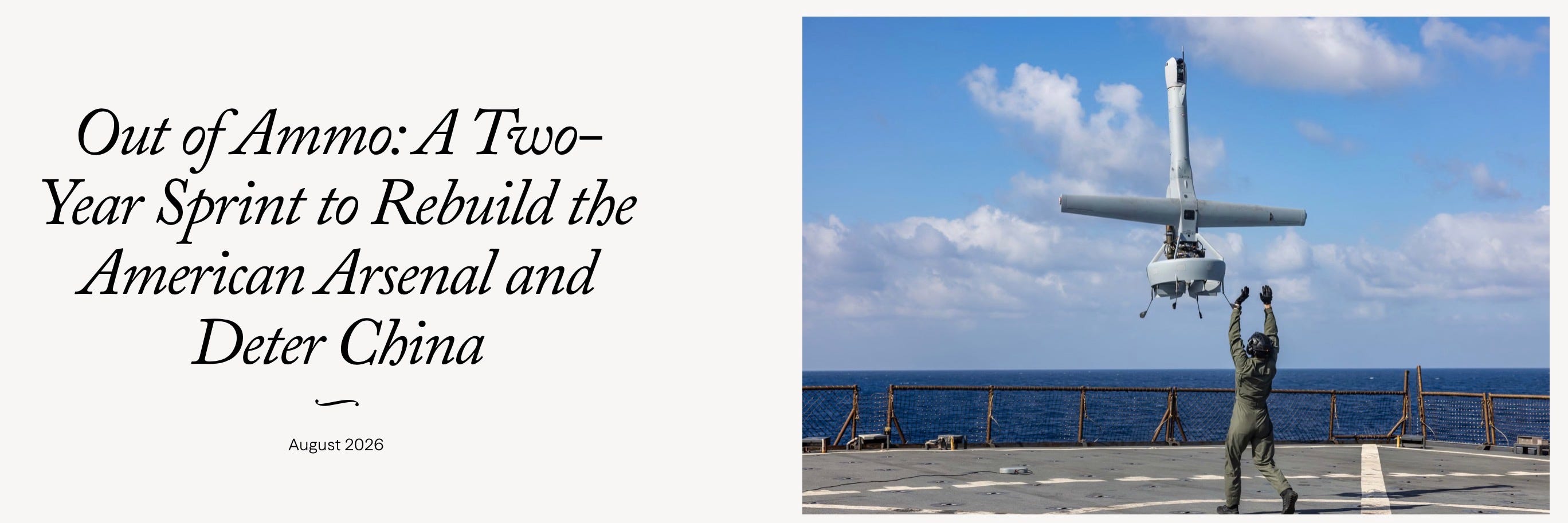
This report, published by the Council on Foreign Relations, begins with the proposition that the US weapons arsenal has been depleted and no longer has the capacity to deter a Chinese attack against Taiwan. It then proposes a range of options, from experts in defence and security affairs, to remedy the situation quickly. You can read the full report at this link.