

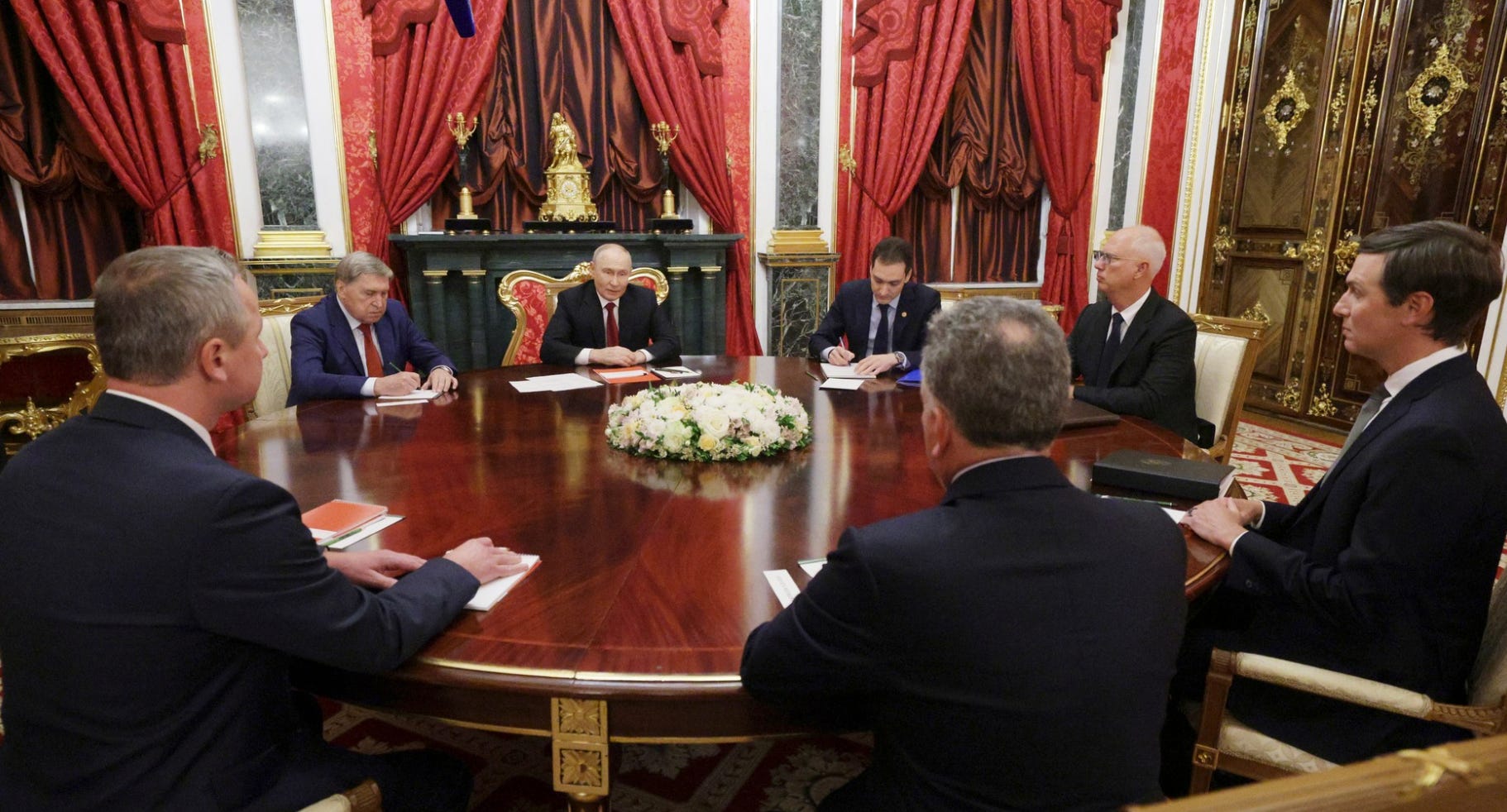
On the diplomatic track, our actions must be, and will be, just as strong and effective – one hundred percent. The plan for tomorrow’s diplomatic engagements in Kyiv, involving the U.S. team, has been approved. We are waiting for Steve Witkoff and Jared Kushner and are ready for a substantive conversation. President Zelenskyy, 6 September 2026.
The war Washington and Tehran are not quite fighting, not quite negotiating and which neither is winning, took a turn this week. Trump administration officials have settled into what several analysts are now calling a “no war, no peace” approach, mixing periodic strikes with sustained economic pressure rather than either a return to high-level combat operations or a full ceasefire.
On 31 August a US strike hit rocket launchers on Larak Island in the Strait of Hormuz, and on 5 September four American missiles struck an Iranian tanker near Kharg Island, in what has become “a tanker for tanker” campaign by both sides. Trump described the approach bluntly: “We’re going to hit them hard … there will be a response,” while maintaining the Strait remains “in extremely good shape.” Treasury Secretary Bessent’s Operation Economic Outcast added sanctions against an Istanbul bank accused of laundering Iranian oil revenue through China and Turkey.
A similar chasm between diplomacy and fighting is present in the war in Ukraine. Trump’s envoys Steve Witkoff and Jared Kushner have made a visit to Moscow, meeting Putin on 5 September, and are due to meet President Zelenskyy in Kyiv on 6 September. The Ukrainian government directed a unilateral four-day pause in strategic strikes during the talks. Putin ordered a 72-hour pause on strikes against Kyiv.
Welcome to this week’s edition of the Big Five.
Ukraine
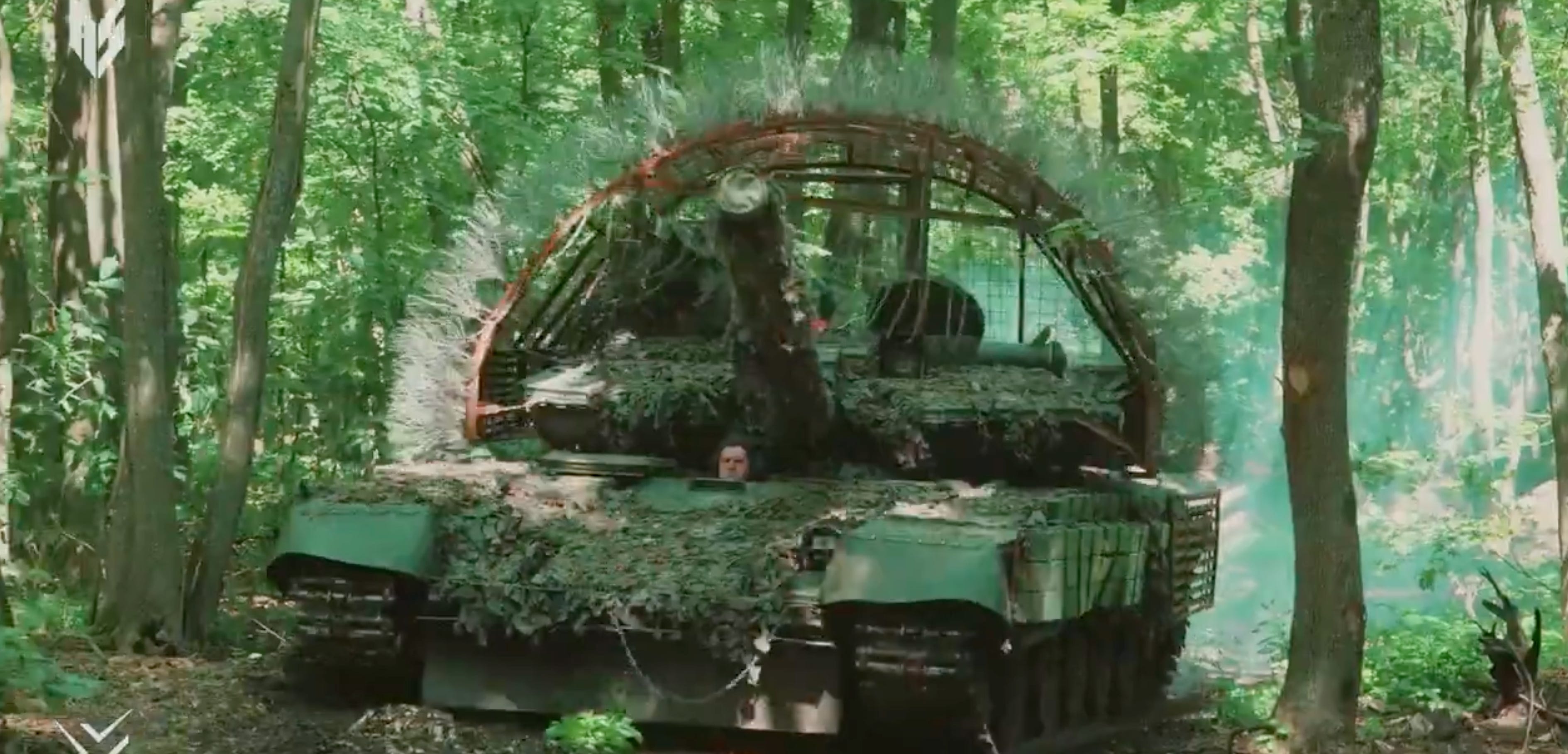
US Envoys to Moscow and Kyiv. After CIA Director John Ratcliffe’s low-profile Moscow trip last week, this week saw a more visible diplomatic effort from the Americans. Steve Witkoff and Jared Kushner travelled to Moscow to meet Vladimir Putin on 5 September, with a Kyiv visit and a meeting with President Zelenskyy to follow on 6 September. This is the first time either envoy has visited Ukraine during the Trump administration.
Kushner and Witkoff completed a 3-hour discussion with Putin, with few details currently available. But Putin has not changed his overall demands for the end of the war, which involve what he continues to describe as “removal of root causes for the war”, essentially, the destruction of the independent Ukrainian state and its culture. Indeed, the official Kremlin transcript of the meeting made no mention of any Russian concessions beyond the 72-hour pause on strikes against Kyiv.
Zelenskyy posted on social media that he had spoken with the US President’s envoys, but provided little information beyond that on the pause in strikes against the Ukrainian and Russian capital cities.
Zelenskyy had proposed a mutual pause in strikes to give the visit room to work, telling reporters “we care specifically about them, not Russia”. He directed Ukrainian forces to hold fire for four days regardless of what Moscow did.
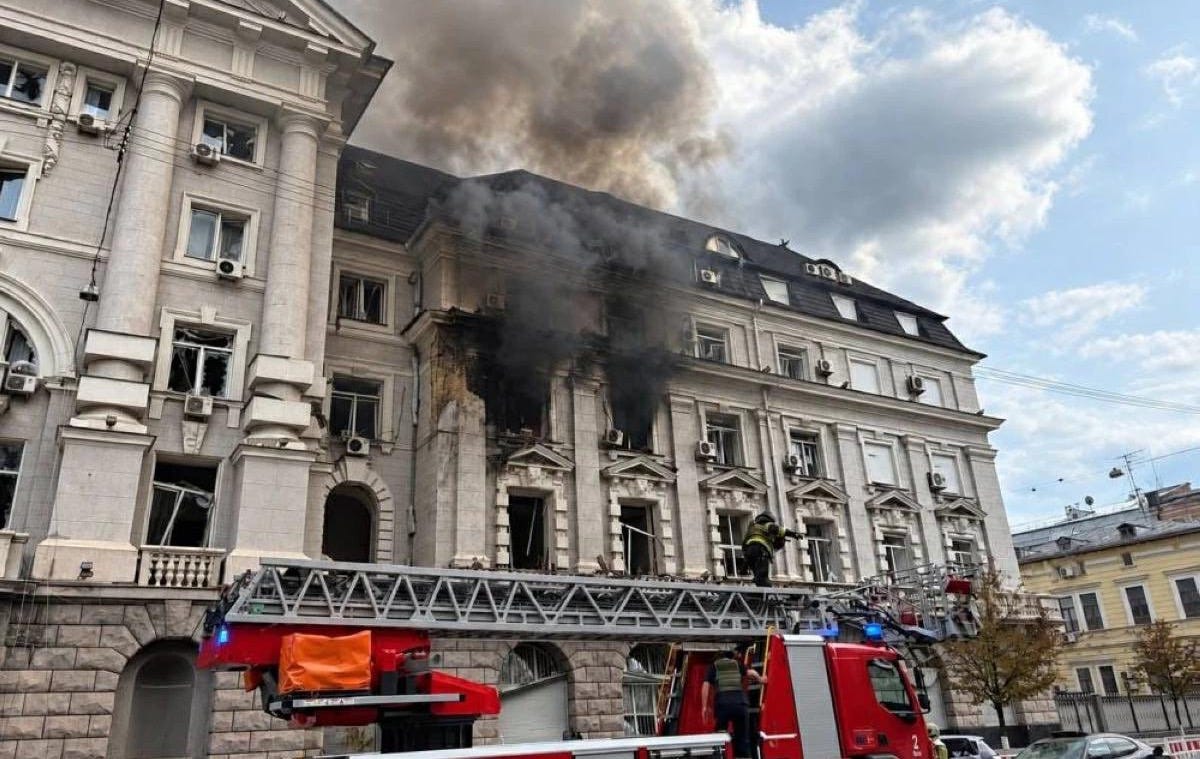
Russia’s initial answer was Kyiv’s ninth consecutive night of attacks, including a Geran-4 jet-powered drone that hit the office of acting SBU chief Oleksandr Poklad in central Kyiv on 4 September. Foreign Minister Andrii Sybiha called it “a major escalation that demands resolute responses,” and ISW read the strike as a targeted attempt on Poklad’s life rather than an accident of the wider drone attacks. Putin shortly afterwards ordered a 72-hour pause on attacks against the Ukrainian capital.
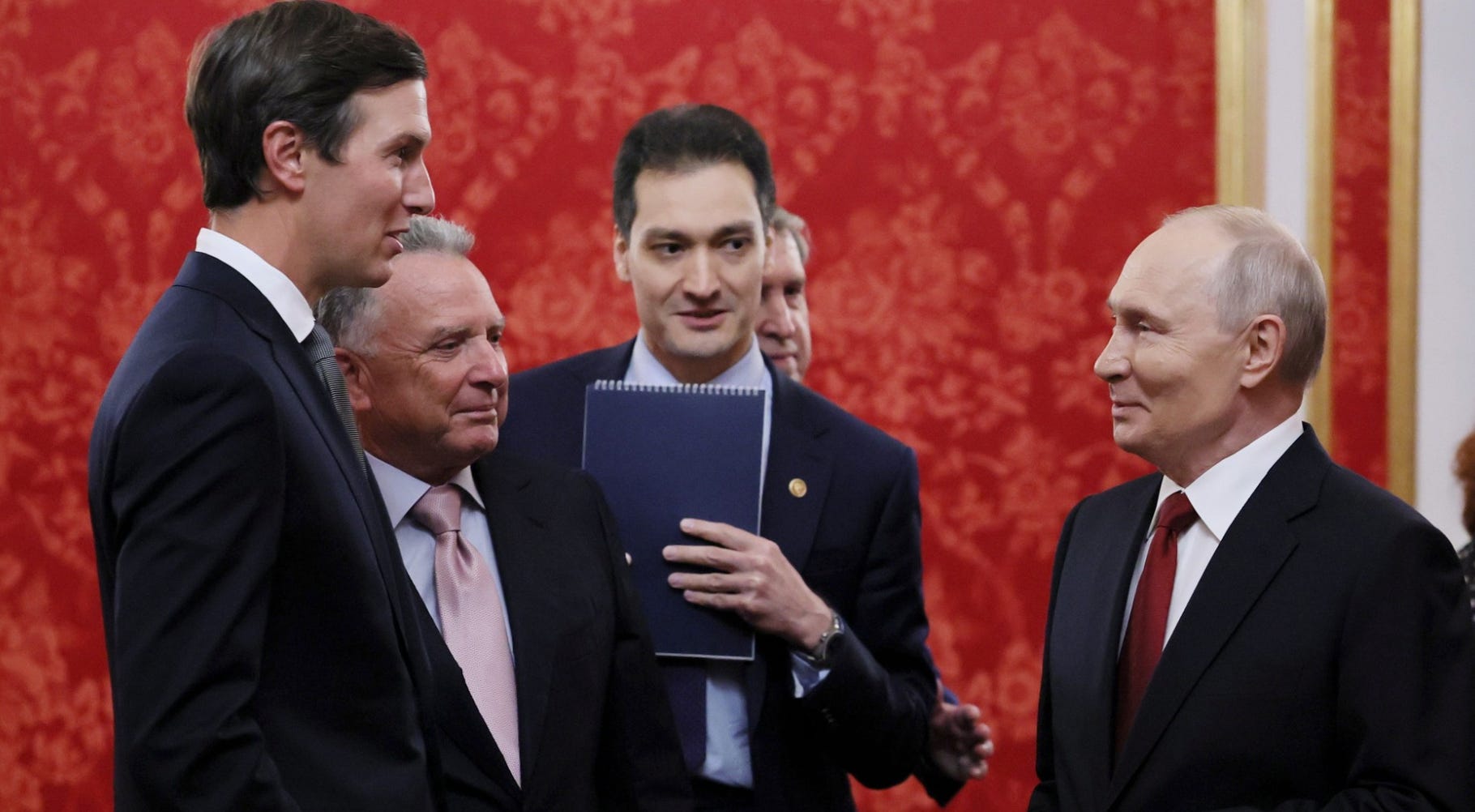
Ukrainian chief of staff in the President’s office, Kyrylo Budanov, provided a useful assessment: talks might restart in September, he said, but a genuine ceasefire before spring 2027 remains unlikely, even as “the war cannot be eternal.” Whether Witkoff and Kushner return from Kyiv with anything more than a diplomatic photograph, and whether Putin gave them anything beyond the same “realities on the ground” formula he has offered every previous visitor, will be one of the more important things to watch this month.
But the reality of the current diplomatic push is that it is attempting the same approach to diplomacy that has consistently failed during Trump administration 2.0.
First, it uses amateur negotiators instead of seasoned professionals from the US Department of State. As such, the Kushner-Witkoff duo does not have the deep institutional knowledge of either the Ukrainians or the Russians with whom they are negotiating. Critics and national security analysts have noted that their transactional approach can make them susceptible to accepting Russian framing for the conflict and potential solutions. Additionally, the use of amateur negotiators is a signal to Putin that Trump is not fully committed to the peace process.
Second, this is an intermittent rather than continuous process. A review of historical peace processes reveals that while a ceasefire may stop immediate hostilities, an enduring war termination arrangement requires addressing fundamental political, economic, and identity issues. Negotiating land redistribution, constitutional rights, security reform, and war crimes accountability demands the kind of technical rigour that cannot be rushed. And opposing nations rarely believe the other side will uphold an agreement. Prolonged talks serve as a testing ground where parties gradually build trust through incremental commitments, confidence-building measures, and verification mechanisms. Historical examples below:
Paris Peace Talks (Vietnam War) 1968–1973. Duration: Nearly 5 years.
The Camp David Accords & Egypt–Israel Peace Treaty (1977–1979). Duration: 18 months of intensive diplomacy following Anwar Sadat’s visit to Jerusalem in November 1977, culminating in 12 days of secret negotiations at Camp David in September 1978 and the official treaty in March 1979.
Good Friday Agreement (Northern Ireland)1994–1998. Duration: ~4 years of multi-party talks.
The Dayton Accords (Bosnian War, 1995). Duration: Final negotiations occurred over 21 days (November 1–21, 1995) at Wright-Patterson Air Force Base in Dayton, Ohio. The culmination of over three years of failed international peace plans.
Colombian Peace Process (FARC) 2012–2016. Duration: 4 years in Havana, Cuba.
Third, it is uncertain whether the main effort of the two American negotiators is peace or their own business interests. Unlike career diplomats bound by standard civil service ethics constraints, informal or special envoys frequently operate in spaces where private business networks and public diplomatic duties overlap, making independent oversight difficult. A persistent concern about the involvement of Kushner and Witkoff in peace talks is the very fuzzy boundary between nation-state diplomacy and private financial networks. Following his work on the Abraham Accords during the first Trump administration, Kushner launched his private equity firm, Affinity Partners. The firm secured over $3 billion in commitments, primarily in sovereign wealth funds from Gulf nations he had negotiated with while in office. Reports have indicated that while Witkoff was engaged in Middle East diplomacy, his family and associated private real estate/crypto ventures were soliciting billions of dollars in investment from several of the same Middle Eastern governments.
And, as the initial read out of the Putin-Kushner-Witkoff meeting in Moscow indicates, a solution to the war in Ukraine is not the only reason why they are in Moscow. Discussions also included “possible major Russian-American projects”, which hardly indicates an independent or transparent approach by the American negotiators for this process.
Finally, the two Americans have been much too willing in the past to amplify Russian messaging on the war, and accept at face value Russian views of their “progress” in this war. During the latest visit to Moscow, a video is now circulating of Witkoff telling his Russian hosts that “when we retire, we’ll have all these incredible stories and memories, and yours will be right at the top of it all.” This is a gross failure of empathy for Ukraine, which did not start the war and whose people have borne the brunt of its impacts including mass murder, looting, mass rapes, and a massive number of various war crimes perpetrated by Russia.
As such, we should remain sceptical about the chances of any enduring solution to this conflict emerging from talks led by the part-time, amateur diplomats who demonstrate too much empathy for Russia.
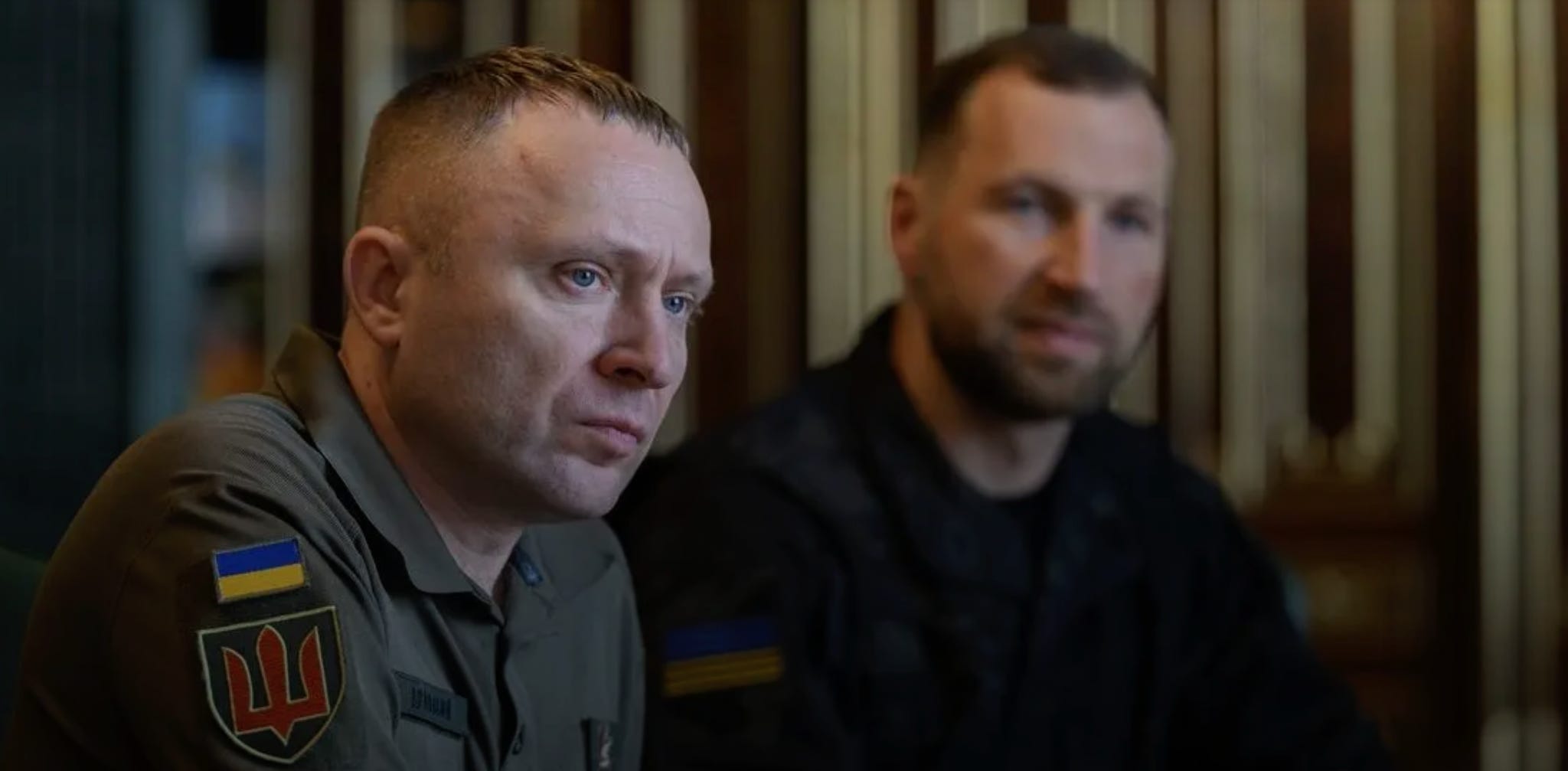
General Draptayi’s Leadership Philosophy. This week, the new Ukrainian commander-in-chief, General Mykhailo Drapatyi, published his leadership philosophy for his command of the Ukrainian Armed Forces. Such declarations are important for military leaders because they not only provide strategic priorities, but they also describe how command will be implemented across the force. As Drapatyi notes in his official release of the document:
This document does not replace existing strategic and operational plans. It defines my vision, priorities and principles of leadership as Commander-in-Chief of the Armed Forces. Separate documents will define the procedure for their implementation, specific tasks and performance indicators.
General Drapatyi outlines the following priorities:
Stabilise the Front.
Ensure a balanced system for the formation and management of the Armed Forcesˇ human capital.
Ensure unity of effort.
Accelerate adaptation and the implementation of innovations.
Transform the Armed Forces.
Implement the principles of Mission Command and integrate the capabilities of all components of the Armed Forces.
Care for our personnel, their families and veterans, and honour the memory of the fallen with dignity.
Preserve the trust of the Ukrainian people and our international partners.
These priorities reflect the wide range of responsibilities that a military commander in chief has to his soldiers, his commanders, his government and his society. It is a complex balancing act and involves operating at the highest level of military endeavours and at the military-political interface. It is a tough job, and the new Principles of Leadership document provides us with some insights into how General Drapatyi is thinking about his responsibilities.
You can read the full document at this link.
Russian Strikes Intensify in the Lead up to Diplomacy. The week’s bombardment made Zelenskyy’s request for restraint look almost naive in hindsight. Russia opened September with its fifth consecutive night of strikes on 1 September, killing sixteen and injuring 54 across Ukraine, with Kyiv and Odesa oblasts hit hardest. Six Ukrainian Railways workers were killed in Kyiv as ballistic and cruise missiles struck railway facilities, residential buildings, port and energy infrastructure in Odesa, and even the Orlivka ferry crossing on the Romanian border. Zelenskyy described Russian targeting logic as such: “Russia always plans its strikes in a way designed to cause maximum destruction to people’s lives”.
The Russian bombardment did not let up as the Witkoff and Kushner visit approached. On 4 to 5 September Russia launched 167 drones and ballistic missiles against Ukraine despite the Ukrainian unilateral pause, killing a further six and injuring fifty-one, striking a passenger train in Chornobaivka and an industrial facility in Dnipropetrovsk that alone killed five people.
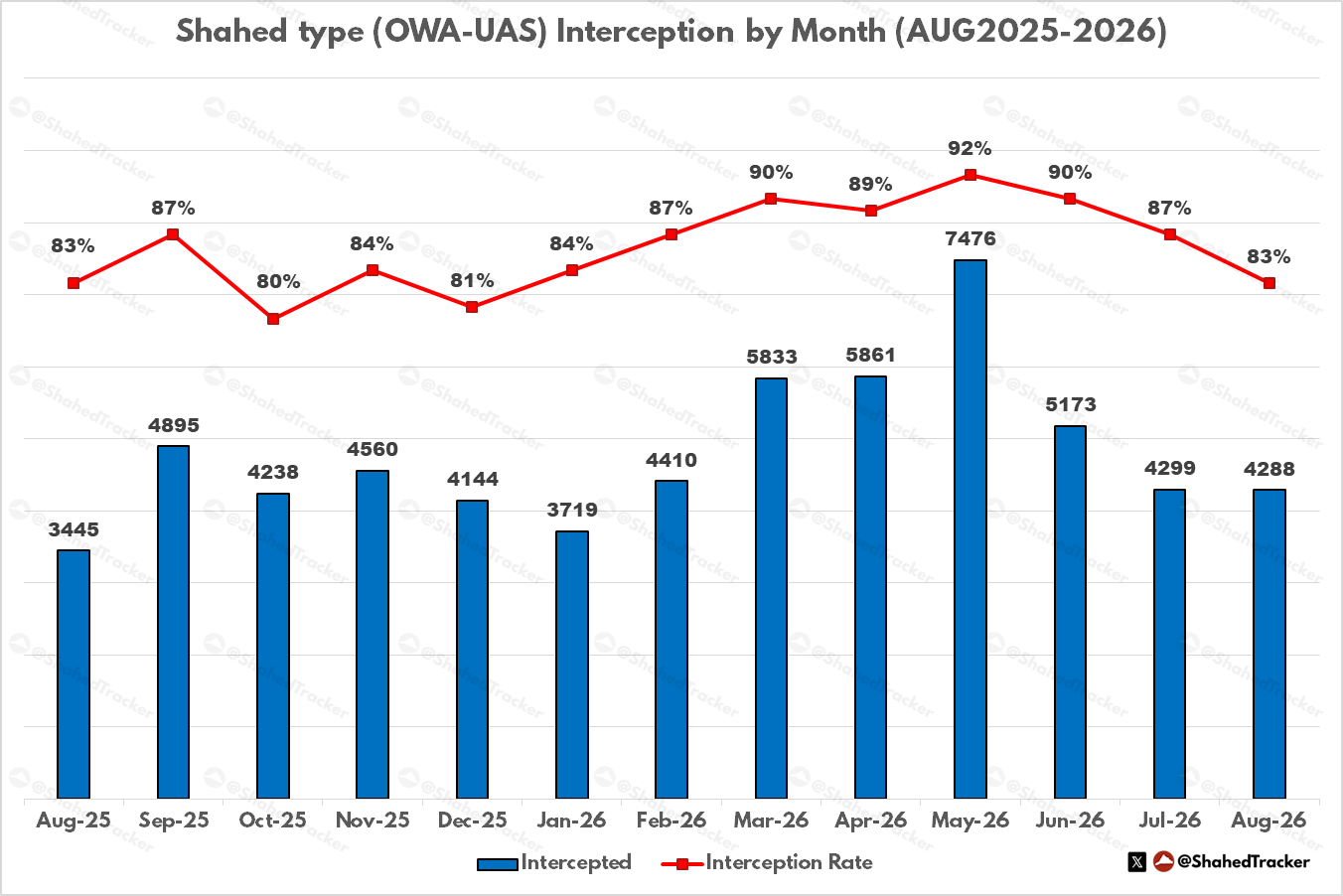
Ukraine’s air defences intercepted or suppressed the large majority of these packages, but the daily toll of missed intercepts falling on cities is likely to be an ongoing trend. Russia’s jet-powered Geran variants continue to complicate the efforts of Ukraine’s air defenders. These newer drones fly higher and faster than the piston-engine models Ukrainian gunners have spent nearly four years learning to defeat. Further, the mix of jet and propeller Geran drones in a single strike package is designed deliberately to stretch air defence crews across two very different threat profiles.
Coupled with the lack of Patriot missiles to intercept high-end Russian (and North Korean) ballistic missiles targeting Ukrainian cities, the coming months will probably be the most challenging that Ukraine’s air defence organisation – and the Ukrainian people – have faced for some time.
The Ground War. Russia Matters’ war report card for the four weeks to 1 September again shows the divergence between trackers that has become a running feature of this update: DeepState assesses net Russian gains of just five square miles over the period, while ISW’s figure is forty.
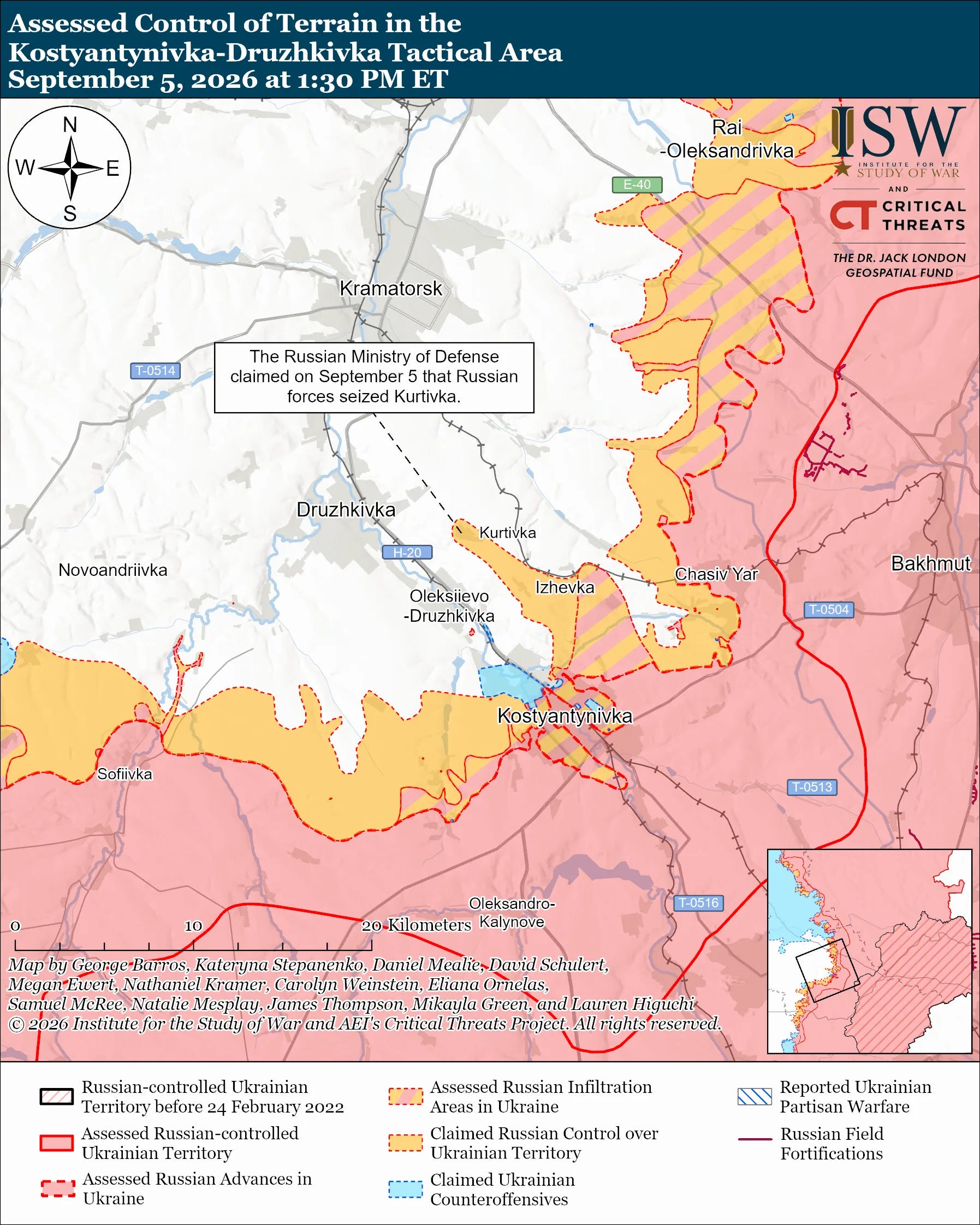
Around Kostyantynivka, ISW assesses Russian forces hold a majority of the settlement but have failed to complete its capture after months of urban combat. At Kupiansk, Ukraine’s Khartiia corps cleared four square kilometres between Dvorichna and Zapadne on 3 September.
This week, the Russians claimed that their forces had encircled thousands of Ukrainian soldiers. But, as Clement Molin notes in his recent analysis, “This does not correspond to the reality and is pure propaganda.”
Ukraine’s Long Range Strike Campaign Reaches Further Into Russia. Drones struck Russia’s second largest refinery at Kirishi in Leningrad Oblast on 30 August, destroying two crude distillation units and forcing a complete halt at a facility with an annual capacity of around 20 million tonnes, and the campaign only widened from there. On the night of 3 to 4 September, Ukrainian drones struck Rosneft and Lukoil fuel depots and an aviation fuel terminal at Sochi, roughly 600 kilometres from the front, alongside an S-300/S-400 air defence position near the Abkhazia border, while on the same night drones reached the Avangard explosives plant and the Sterlitamak petrochemical plant in Bashkortostan, some 1,300 kilometres from Ukrainian territory.
Ukraine Assessment
Witkoff and Kushner’s visits to Moscow and Kyiv are the most senior American diplomatic engagement with both nations in months. President Zelenskyy’s willingness to order a unilateral pause suggests Kyiv wants to be seen giving the process every chance, particularly in the eyes of the American president. Russia’s answer however, including the 72 hours pause in strikes against Kyiv and his statement during the meeting with the American negotiators – “I would like to ask you to convey my best wishes and words of gratitude to the President of the United States, Mr Trump.” – indicates that Putin still wants to influence Trump and ensure that he does not provide too much support to Ukraine.
Budanov’s judgement that talks might resume in September without a realistic ceasefire before spring 2027 looks like the most pragmatic assessment of the current diplomacy push by the Trump administration. Given the significant weaknesses of the current US diplomatic approach, in using amateur diplomatic negotiators in a periodic rather than ongoing process, expectations should be kept low.
Ukraine and Russia’s expanding deep strike campaigns against each other indicate that both nations are invested in their plans to gain leverage in a longer conflict rather than achieve a near-term settlement. At the same time, the bitter fighting along 1200 kilometres of front line continues, with both sides continuing to explore personnel initiatives to sustain ground operations into 2027, supplemented with hundreds of thousands of drones on the ground and in the air.
The Pacific
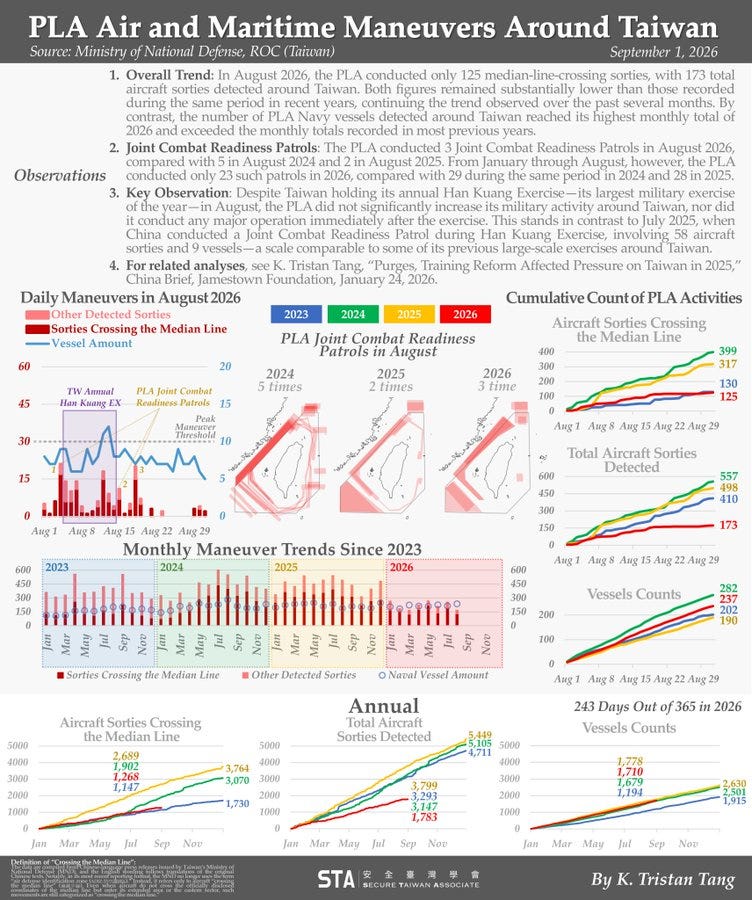
PLA Activity Around Taiwan. The PLA continues its exercises and coercive behaviour around Taiwan. The latest monthly update on PLA activity shows a slight decline in activity over previous years. As analyst Tristan Tang notes:
Despite Taiwan holding its annual Han Kuang Exercise—its largest military exercise of the year—in August, the PLA did not significantly increase its military activity around Taiwan, nor did it conduct any major operation immediately after the exercise. This stands in contrast to July 2025, when China conducted a Joint Combat Readiness Patrol during Han Kuang Exercise, involving 58 aircraft sorties and 9 vessels—a scale comparable to some of its previous large-scale exercises around Taiwan.
You can see the full monthly update below:
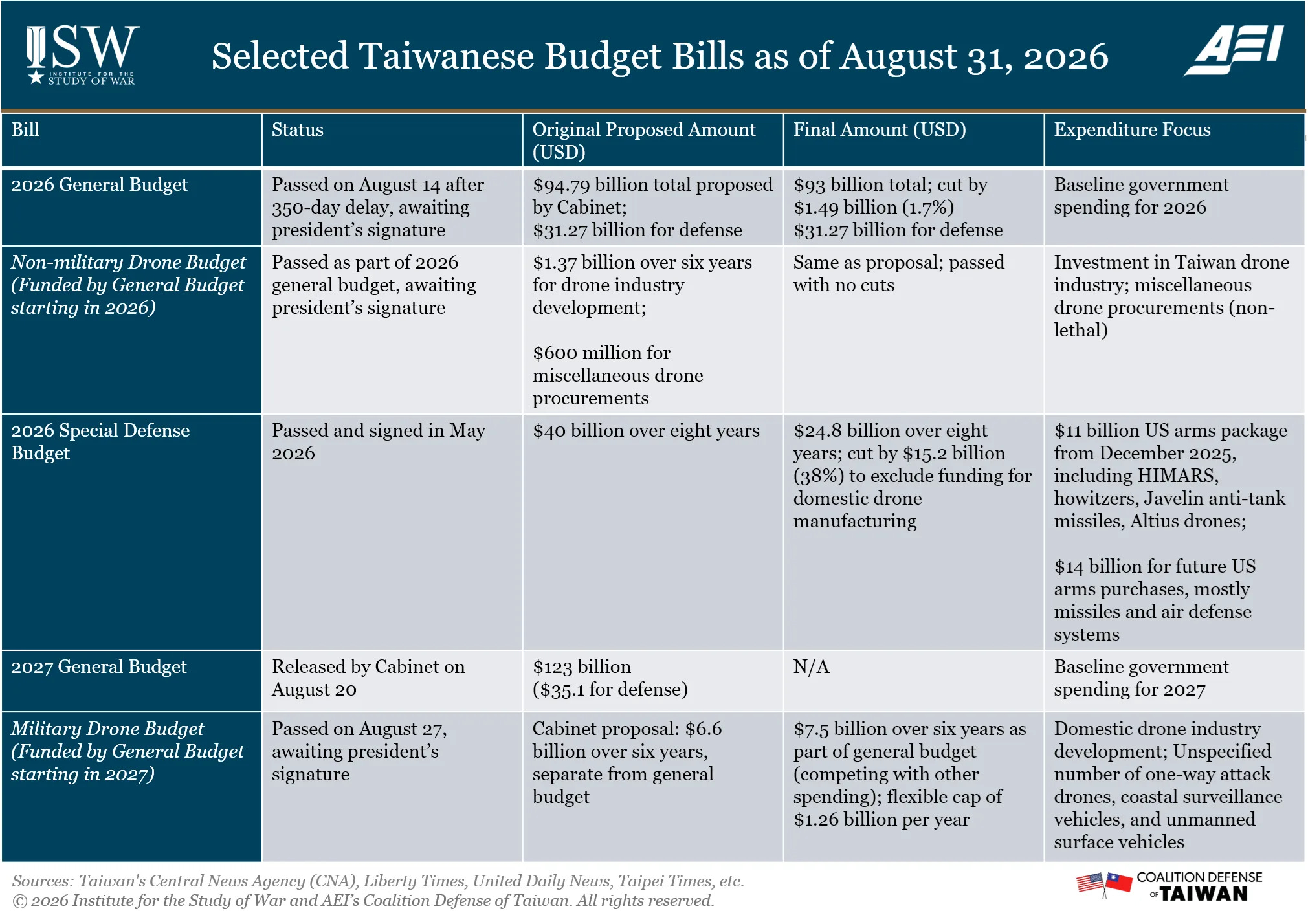
Taiwan’s Legislature Finally Funds Its Drones. Taiwan’s Ministry of National Defense used its annual report to the Legislative Yuan this week to warn that the PLA’s exercises are increasingly oriented toward “joint landing operations, including sea and air blockades or quarantine measures,” while still assessing that China currently lacks the capability to mount a full-scale landing. The report arrived as the Legislative Yuan passed a NT$240 billion, roughly USD 7.5 billion, special budget for unmanned systems, ending months of gridlock on the issue.
Taiwan’s parliament is also planning for longer-term resilience, with another NT$35.1 billion, an 18 percent increase on this year, proposed for 2027 defence spending. This includes greater attention going to fuel and energy security, which reinforces existing national resilience strategies. This is also a recognition that any sustained PLA blockade against Taiwan would have a significant impact on imported LNG.
The Institute for the Study of War published a very useful table on Taiwan budget bills, which you can see below:
Washington and Canberra Reinforce Posture and Partnerships Across the Pacific. At the Pacific Islands Forum in Palau, a nation that maintains formal ties with Taiwan, Australia and the United States announced a combined USD 580 million package for Pacific island nations on 2 September, with Australia’s contribution weighted toward maritime law enforcement and counter-trafficking capability and Washington’s toward energy infrastructure and grid resilience. This year’s forum saw China disrupt proceedings by attempting to exclude Taiwan and interfere with an initiative calling for advance warning of future Chinese missile tests.
This week saw the Australian relationship with Washington reinforced, with Defence Minister Richard Marles telling reporters in Washington DC on 3 September that “since we’ve come to government, you can see a through-line of growing American force in Australia.” Marles was visiting Washington for the 75th anniversary of the ANZUS alliance.
A formal announcement on expanded basing arrangements is expected at the next AUSMIN meeting, including 1,000 US Navy personnel due to be based at HMAS Stirling next year under the Submarine Rotational Force-West.
**********
It’s time to explore this week’s recommended readings.
This week’s recommendations include a good article exploring the pitfalls of the “warrior ethos” in military institutions. There is an informative article about the new world and international security environment that has emerged since January 2025, as well as a good piece on the future of AI. The Big Five is rounded out with an examination of societal resilience in Taiwan and a report on Russia’s ongoing development of the Shahed/Geran class of attack drones.
As always, if you only have the time available to read one of my recommendations, the first is my pick of the week.
1. Bin the Warrior Ethos
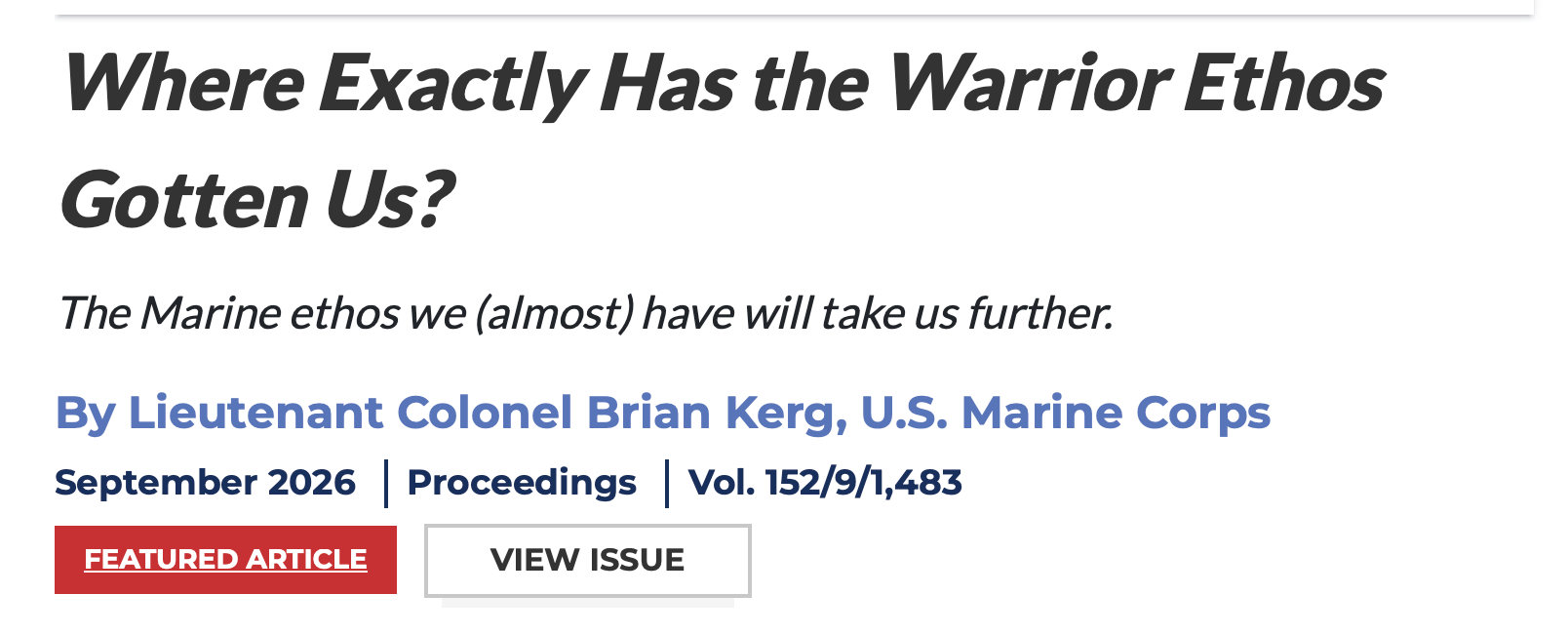
This article published by Proceedings begins with the following proposition: “the warrior ethos is no longer useful philosophy for any military service…the warrior ethos is largely a stumbling block to the professional development of soldiers, sailors, airmen and marines.” The author makes a strong case for this argument, describing the elements of the warrior ethos and how it undercuts military professionalism rather than support it. It is a good argument for a more modern professional ethos for military services and can be read at this link.
2. The Abandoned World Order
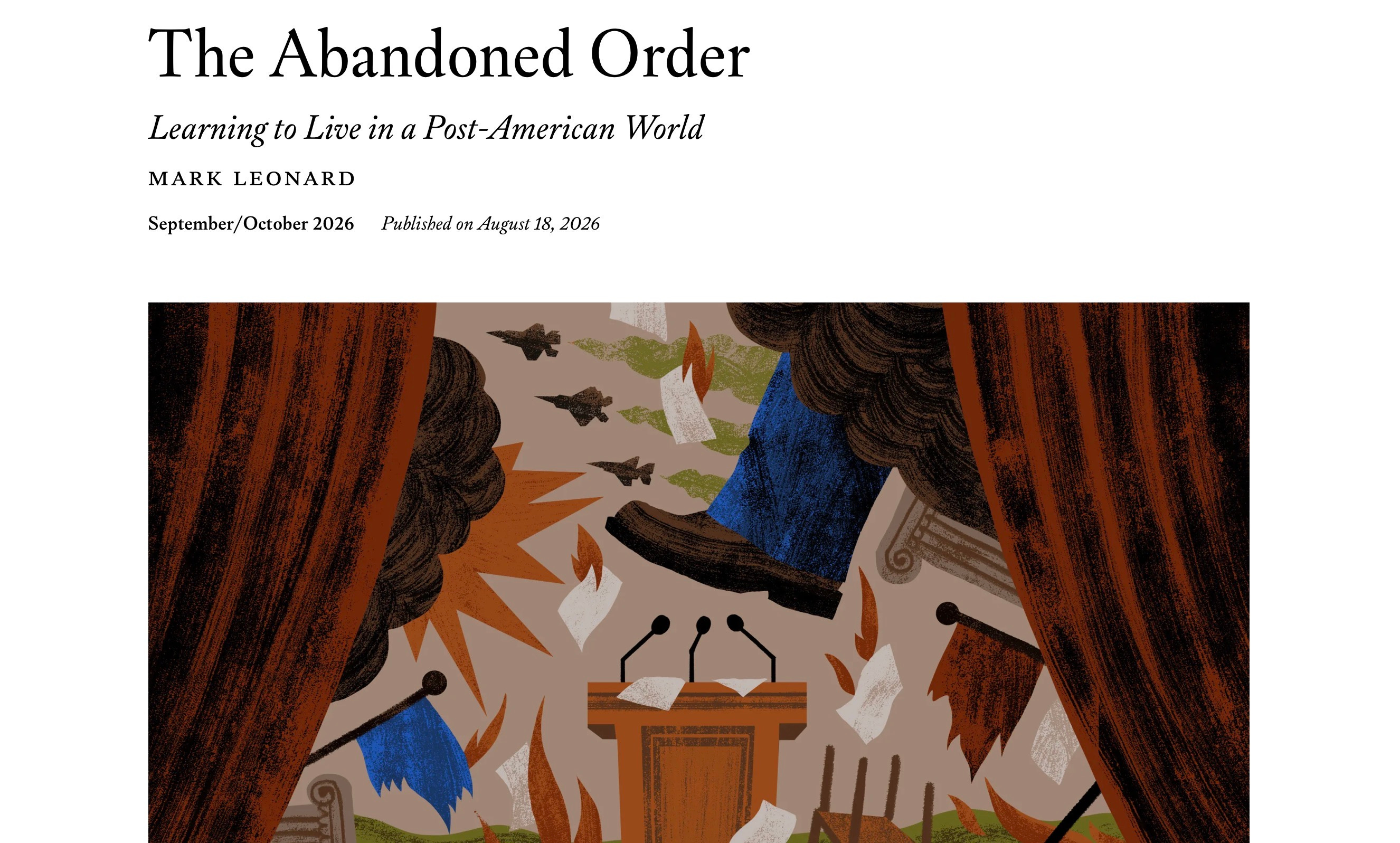
In this new article published by Foreign Affairs, the author argues that the United States has, in reality, withdrawn its support from the world order that we have all known and become used to since 1945, and that nations around the world must face this new reality. As he writes, “this moment does not constitute a short interregnum between a U.S.-led order and a Chinese-led one. For some time, the world will be without any order at all - swept by fragmentation, contagion, and strangulation or the temptation to weaponize a wide variety of geographic, economic, and technological chokepoints.” Subsequently, he proposes strategy options for nation-states to adapt and thrive in this new environment. You can read it all here.
3. The Singularity is Not What We Thought

This is a fascinating article that reviews recent developments in AI, including the recent Hugging Face issue. It also explores alternative visions of what the “singularity” is, and the role of humans in the development and use of AI. As the authors note, there are some experts deeply concerned about the current trajectory of AI, and they write that “the mood has shifted in the Bay. The exuberance of “You can see the future first in San Francisco” has been replaced with an abiding unease.” The article is available to read here.
4. The Continuous Evolution of the Shahed
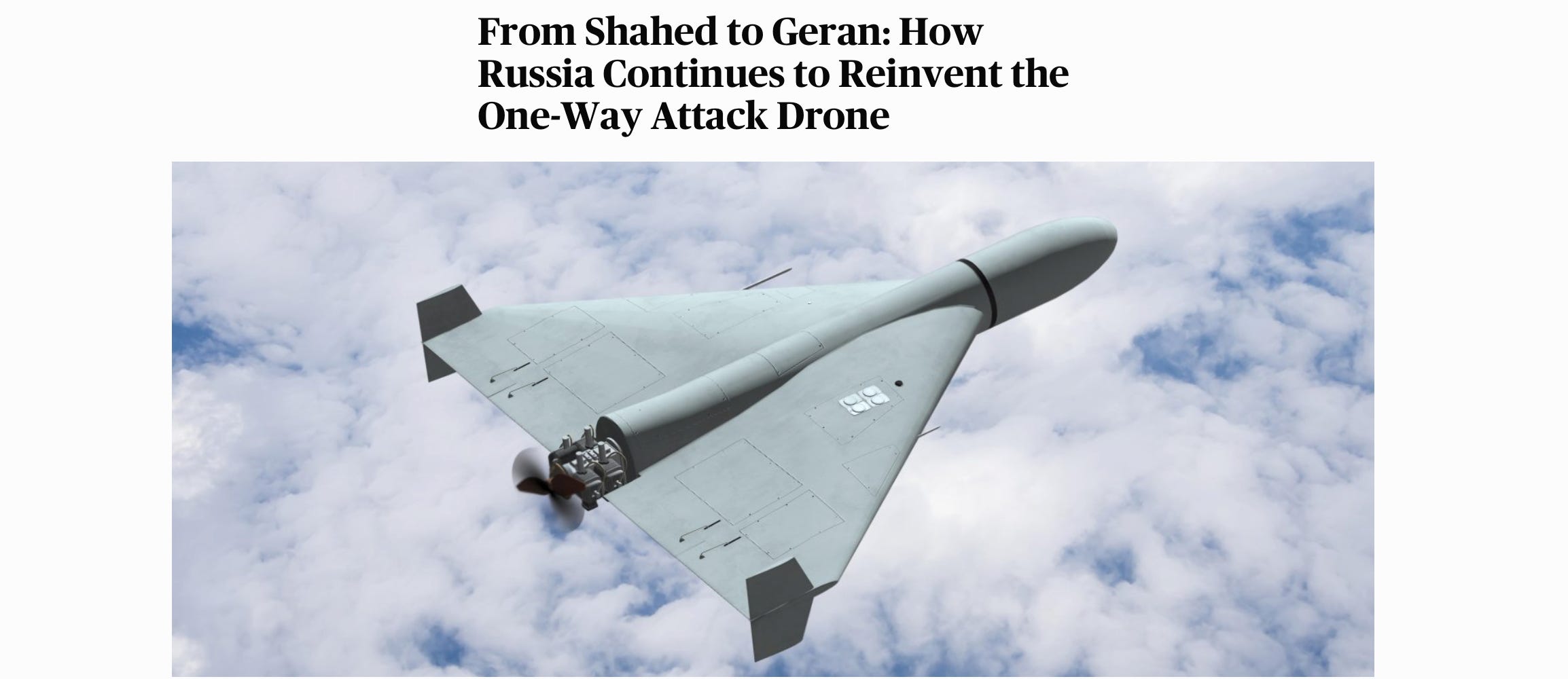
This report from the Centre for Strategic and International Studies examines the ongoing evolution of the Shahed/Geran class of attack drones by Russia. As the authors note, in modern war “advantage increasingly depends not on building the most advanced system at the outset, but on maintaining the organisational and industrial capacity to continuously iterate a system after it has entered combat.” The full report is available at this link.
5. Is Taiwanese Society Ready?
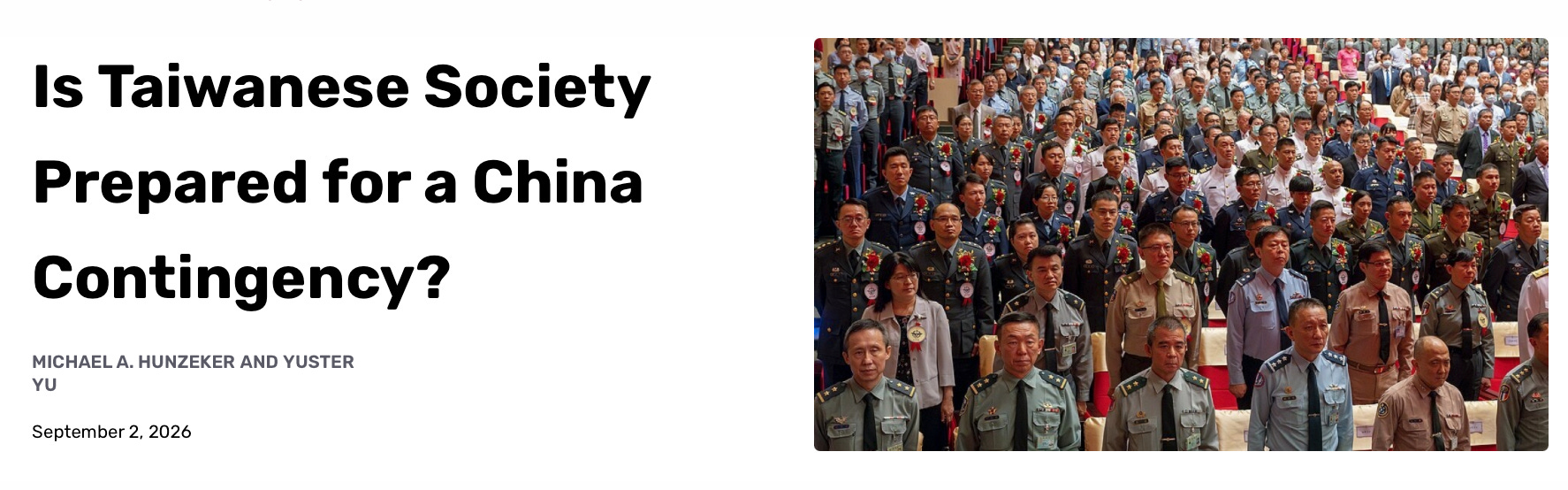
This interview, published by War on the Rocks, examines the progress or otherwise made by Taiwan in deterring Chinese aggression and preparing Taiwanese society for a variety of different blockade and invasion scenarios. The interview with Michael Hunzeker and Yuster Yu notes that “the Ministry of National Defense continues to resist treating civil defense and social resilience as part of its core job. Much of the real work on this front is being done by the Ministry of the Interior and by grassroots organisations, such as Forward Alliance and Puma Academy.” The article is available to read here.
Excellent as always. I would also recommend reading David French’s oped in the NYT today on the state of US defense strategy and preparedness. It is grim reading.
I think it's not just a case of there being no leadership with the new USA. It is a case of the former leader mutating into a belligerent and hostile agent who sees chaos and destruction amongst its former followers as a benefit to it. That is a not just a loss of leadership it is an existential threat from a source that has been embedded in the fabric of European society those nations it has now disowned. Europe needs to wake up to this fact and the possibility that it's greatest long term foe is not Russia or China but the USA. Yes Russia is the immediate concern but Europeans now need to consider what was once unthinkable a hot war with the USA over territory or resources. That is a challenge of a completely different magnitude to the loss of a leader.