

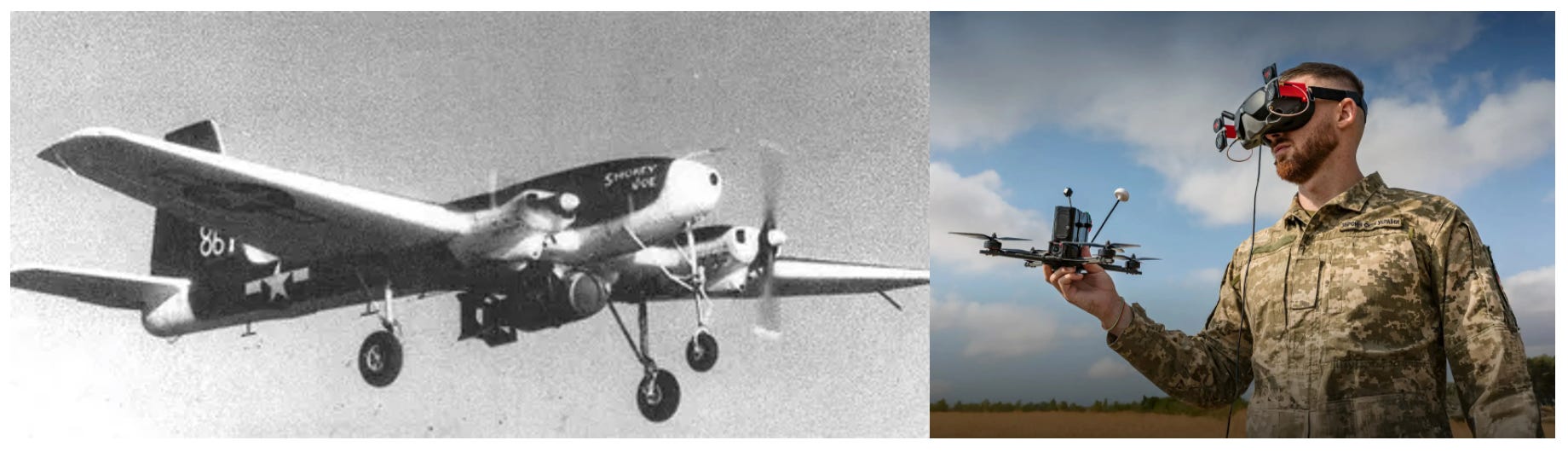
This year, I have invited experts who examine topics such as military strategy, drone warfare, the war in Ukraine, military transformation, and the security situation in the Pacific to write guest articles for publication here at Futura Doctrina. The first piece, written by Dr Frank Hoffman, covered the important topic of AI and critical thinking. It was published in February, and can be read here. The second, from Dr Oleksandra Molloy, an Australian-Ukrainian expert on uncrewed systems and drone operations, is available here.
Today, Dr Hoffman returns. In this article he explores the early 21st century manifestation of the Revolution in Military Affairs, and how clever middle powers might act as ‘smart movers’ to ensure their national security. It is a wonderful piece, and I am sure you will find it as interesting as I did.
Nearly a quarter of a century ago, the security studies community was challenged to better understand the underlying process of change in order to respond to a dynamic security environment.[i] We live in an age of accelerating change, perhaps not more complex than during the Second Industrial Revolution but arguably more compressed. Machines are proliferating in today’s battlespace; an observation the late Chris Coker made a decade ago that he called the Second Machine Age.[ii]
The need to understand the processes and sources of change has never been greater. A pending storm is brewing that will test our ability to provide for our collective defence.[iii] Complacency is not affordable.
This paper seeks to contribute to that challenge at the strategic level and explores how states might think about Revolutions in Military Affairs (RMAs) and innovation. Specifically, the article focuses on the diffusion of potentially disruptive technologies. Some historians have stressed the advantages of leading as the first movers in technology competitions. My approach offers an approach to conceive of a range of change strategies for adoption of these technologies, which I label ‘Smart Movers.’
As Artificial Intelligence evolves, we can anticipate political, social, and economic changes to occur.[iv] The same is true for how AI impacts the conduct of war.[v] There will be continuity with the past, but it is the discontinuities that we must endeavor to anticipate and shape.
There are many pathways to tomorrow, and numerous potential combinations of operational concepts and technologies to consider. A world of kinetic violence, pervasive connectivity and synthetic or artificial means will influence how states fight.[vi] To advance their security interests, states will have to exploit their imaginations and foresight to reshape their preparations for warfare. Clearly smaller states do not have the capacity to generate the full spectrum of defence assets of the great powers.[vii] Middleweight states will have to conserve their resources to gain maximum benefit. Uncertainty about which path to follow is pervasive. Yet, decisions are required and the outcome will influence the defence strategies, procurement priorities, education and force structures of all the Middle Powers.
Technology has changed warfare more than any other variable. While it is not the only factor, it remains the principal source of change.[viii] Technology can be a trigger or catalyst for changes in the character of warfare.[ix] The challenge is to understand the potential in a technology and take steps to harness it to solve real operational problems. To do that, one must recognize that technology cannot be leveraged without appropriate conceptual, doctrinal and organizational change.[x] Technology is not the sole source of success in wartime; there are many variables including leadership, strategy, training, relevant doctrine and force employment.[xi]
The advent of artificial intelligence poses another opportunity to debate RMAs. Some argue that this constitutes a dramatic shift in not just the character of warfare but a paradigm shift in the very nature of war itself by displacing human decision making and human factors such as fear and genius.[xii] Many scholars claim that war’s nature is immutable. However, when machine fights machine, it surely represents a distinctive change. That RMA, incorporating algorithms and autonomous systems, is just around the corner and will surely accelerate the conduct of war and its character.
Middle Powers in RMAs
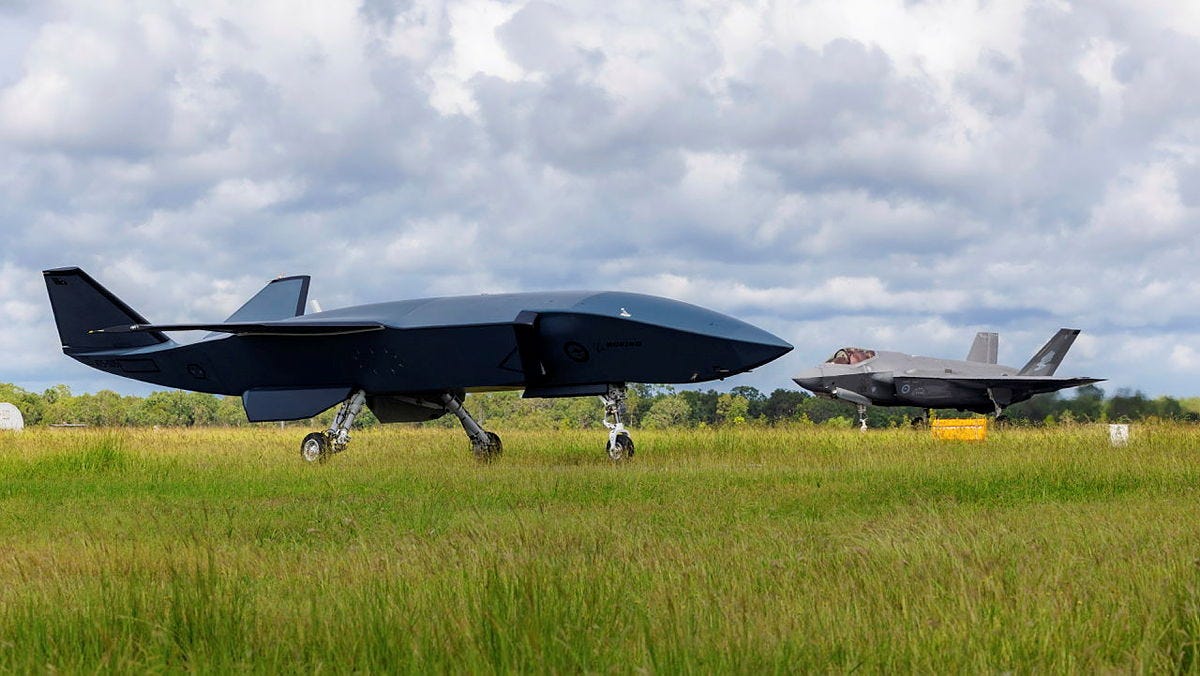
Middle Powers are rarely drivers of RMAs but they often are successful adopters. The strategies of middle powers remain relevant to international affairs, and their salience in today’s fluid geopolitical winds is worthy of continued study.[xiii] They can be nimbler since they are not as encrusted with the massive bureaucratic monoliths of the Great Powers. They can seek advantage in observing global developments and picking key capabilities that meet their needs.
In the commercial world there is a presumption that being the first to implement a new technology gives a competitive edge to the innovator.[xiv] Being first to market allows the innovator to grab market share and a stronger position in its industry. This is known as the First Mover Advantage (FMA).[xv]
Likewise, security studies analysts claim that the initiator of a novel capability in a major warfighting domain can gain a significant competitive advantage.[xvi] To some security scholars, First Movers get a clear competitive edge. As noted by Dr. Andrew Krepinevich:
militaries that succeed in leading the way into a new and far more effective way of waging war during periods of military revolution can gain an enormous advantage over their rivals. Correspondingly, those that fail to keep pace can find themselves operating at a severe disadvantage.[xvii]
Intuitively, First Movers can gain sizable rewards when and if an innovation is successfully fielded. However, that gain is balanced against higher costs and risks. Being a first mover is not without risk, especially given the pervasive uncertainty about future scenarios and the trajectory of emergent technologies. It is not unusual for a second mover to overtake the original leader in military or commercial innovations. It is possible for a Second Mover to ‘disrupt the disruptor’ with a better mousetrap or improved features.[xviii] Second Movers accept less risk and avoid lengthy and questionable research and development costs.
The Second Mover Advantage (SMA) is derived from learning from the First Mover’s introduction of a new capability. This learning exploits all the investments the First Mover made in research and development, including experimentation. Second Movers avoid the trials and the mistaken dry holes of developing new weapons or systems. Yet, the risk they accept is a chance that the First Mover will garner the largest share of the market and largest profits. In the security world, the risk comes from the potential for conflict where the Second Mover has not yet absorbed and refined the new mode of warfare and its related technology. It risks lowered effectiveness and defeat in initial battles while catching up.
Second Movers do not have to compete against opponents in symmetrical terms. While the promotion of RMAs is commonly viewed as the realm of great powers, there are cases where middle powers have been first movers. One could make a case that Ukraine [xix] and Iran[xx] have demonstrated the capacity of medium-sized powers to produce and demonstrate dramatic game changing capabilities in unique ways. Obviously, Kyiv did not invent the drone, nor AI, but it has innovated by combining these technologies in novel combinations in multiple domains. It has created a new generation of applications and fast-paced evolutions that accelerated what some call the Age of Automated Warfare.[xxi]
Recently, drawing upon contemporary conflict, General Mick Ryan has highlighted the benefits of being a Fast Follower.[xxii] Fast Following is “emulation conducted under competitive pressure and at speed.” [xxiii] Ultimately, the follower can slingshot out and beat the competition with a better or more efficient solution. It is an appropriate pathway for small and medium powers today in the drone warfare competition.
Middle Power Options
Middle powers have a number of options to consider when facing strategic decisions about which RMA competitions are critical and which are worth investing in. These strategic decisions include many variables, but two drivers frame the basic options; the pace/scale of the threat, and the speed/expected evolution of the relevant technology.
The diffusion literature identified three options for states; emulation, offsets, and innovation.[xxiv] This article proposes a fourth strategy option, deferral, for inclusion. The four strategies can be defined as:
Emulation is best understood as copying the basic technology and fielded product or system developed by the first mover. Once a new capability is demonstrated in wartime, with the revealed operational method and organisation, it is often copied and diffuses into other states.
Offset. An offset strategy seeks to compensate for the competitive advantage gained by the First Mover, generally by seeking efficient defensive responses that negate or reduces the FMA. It may not involve the novel technology or implementation solution of the first mover. Technological asymmetry can be a viable strategy achieved by offsetting vice copying.[xxv] Schmitt calls this “circumvention,” a deliberate effort to exploit an adversary weakness (and avoid strength.[xxvi] The use of convoys to offset German submarine warfare is one wartime example, and Turtle Tanks in the Russo-Ukraine war could be another.
Innovation. Another option is to use the fundamental technology but in a different and innovative way. Rather than copy the same solution, the Second Mover elects to seek different operational capabilities in the regime competition. Wildcatting is a creative form of hedging to abet innovation.[xxvii] The Russian employment of fiber-optic cabling is an interesting example of wartime innovation within an existing revolution.[xxviii]
Deferral. This is a strategic choice to not invest in a potentially disruptive technology or mode of warfare. This decision may reflect the limited maturity of the new technology, or the limited fiscal and organizational capacity of a state. It may also reflect a perception that the threat is acceptable for the near to mid-range. Leaders in the British and German Navies deferred on developing submarine capabilities during their intensive capital ship arms race before World War I, until pressed by progress by other powers.
