

Separating the incubation period from the take off period of a mature innovation reveals the importance of determining the demonstration point for each major military innovation. The demonstration point for each MMI occurs when the potential of its full capabilities is reasonably known in the international system through an action by a first mover, rather than the capability merely being the subject of internal exercises or debates. This is when the clock begins ticking on potential adoption by other states.
Michael Horowitz, The Diffusion of Military Power
Part One of this article, published here, established the conceptual logic and historical durability of fast following as a military practice. The case studies that were examined, from the Western Front to the skies over Hanoi, demonstrate that this dynamic has repeatedly been decisive across a century of modern warfare. The enabling conditions for fast following are core features of war rather than exceptions to it.
Part Two turns to the contemporary application of fast following in war.
No conflict in the post-Cold War era illustrates the fast-follower dynamic as vividly as the war in Ukraine since Russia’s full-scale invasion in February 2022. Both nations have fast followed each other, repeatedly, at the technical, tactical and institutional levels simultaneously. The imitation cycles that took months or years in the 20th century have contracted to weeks and, in some domains, days. This acceleration reflects the proliferation of cheap sensors, open-source intelligence, commercial drone manufacturing and the unprecedented transparency of a war fought in front of the world’s cameras.
This part examines the Ukraine-Russia adaptation spiral in depth, tracing fast following across drone warfare, electronic warfare, naval innovation and institutional design. It then draws from these cases a set of concrete recommendations for Western military institutions that wish to build a deliberate and systemic fast-following capability rather than relying on the sporadic and accidental emulation that has characterised much of their recent practice.
The argument here is that fast following is not a niche skill or an emergency measure; it is a core competency for military institutions in an era of continuous and accelerating competitive pressure. It must be hard-wired into learning systems, acquisition processes, and leadership cultures accordingly.
Ukraine and Russia as Fast Followers Since 2022
No conflict illustrates fast following more vividly than the war in Ukraine, where it has run continuously in both directions and at three distinct levels: the technical copying of a weapon, the tactical copying of a method, and the organisational copying of an institution. Neither belligerent has enjoyed a durable first-mover advantage, because each has copied and improved on the other within weeks.
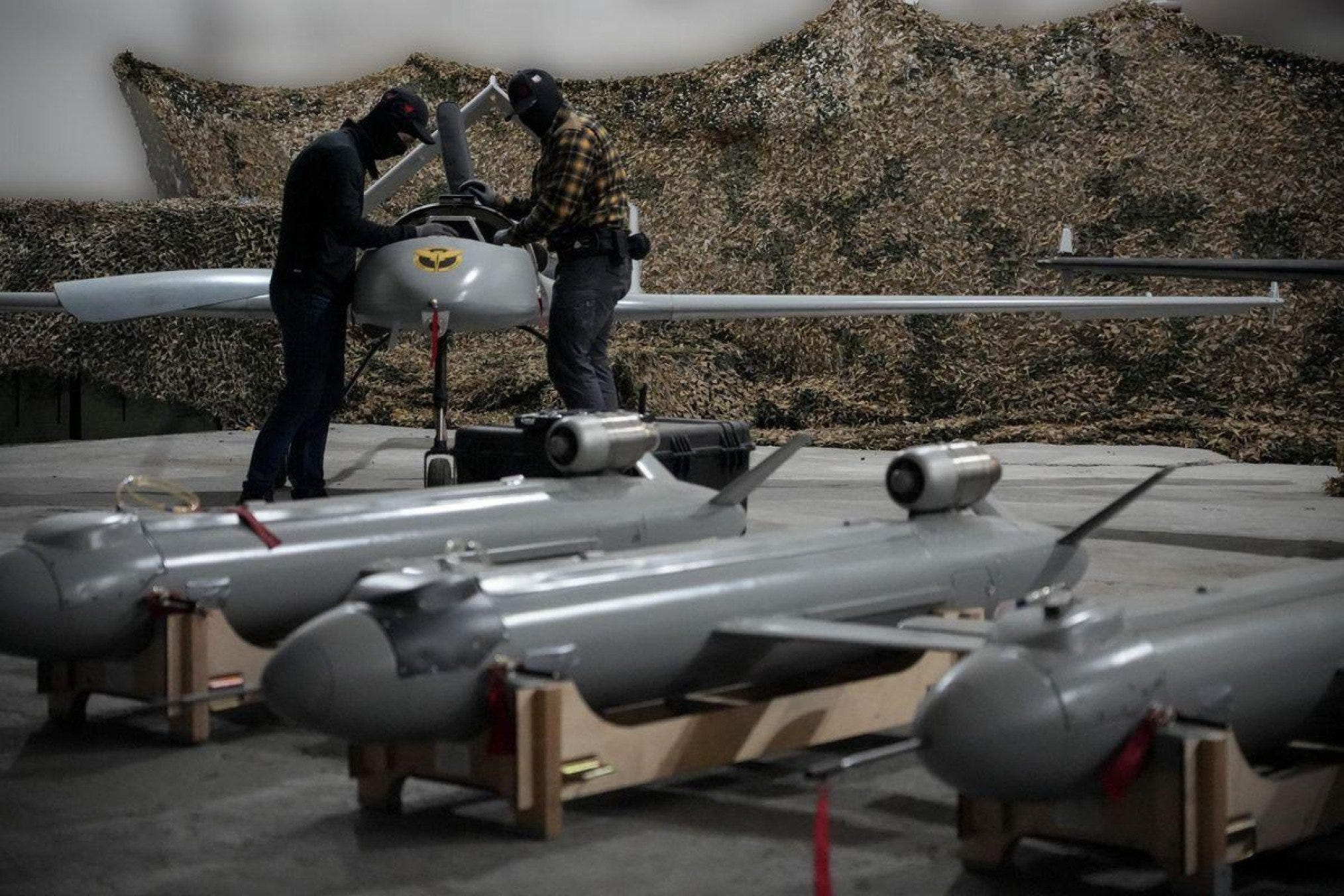
Russia as a fast follower. Russia has fast followed both an ally and its adversary. Its most important act of emulation has been to adopt a partner’s weapons. Russia did not invent the long-range strike drone that now characterises its nightly bombardments of Ukrainian cities. Instead, it took the Iranian Shahed-136, localised its manufacture as the Geran-2, produced it in the tens of thousands, and then iterated through faster and jet-powered variants to complicate interception. This is fast following in its purest form: acquire a proven foreign design, build it at scale, and improve it.
Russia has also been a determined fast follower of Ukraine. Through 2022 and 2023, Ukraine pioneered cheap, mobile air-defence fire groups to hunt Russian drones; Russia observed their success and copied both the organisation and the tactics for its own air defence. The pattern recurred across the drone war as a whole. After an initial period in which Ukrainian agility and a vibrant volunteer technology sector gave Ukraine an advantage, Russia studied Ukrainian practice, matched it, then outproduced it. By late 2025 much of the drone contest had turned in Russia’s favour.
Ukraine as a fast follower. Ukraine, for its part, has been an equally determined fast follower, most strikingly on fibre-optic drones. It was Russia that first deployed fibre-optic first-person-view drones at scale, in the Kursk fighting from August 2024, using the unjammable cable-guided weapons to devastate Ukrainian logistics and help force Ukrainian troops out of the salient. Ukraine, which was initially caught out, raced to catch up, its new drone branch fielding fibre-optic systems in direct response.
