
Not All Adaptation is Good
An examination of sub-optimal battlefield adaptation, why it happens and how the new Russian motorcycle assault operations may be an evolutionary dead end.

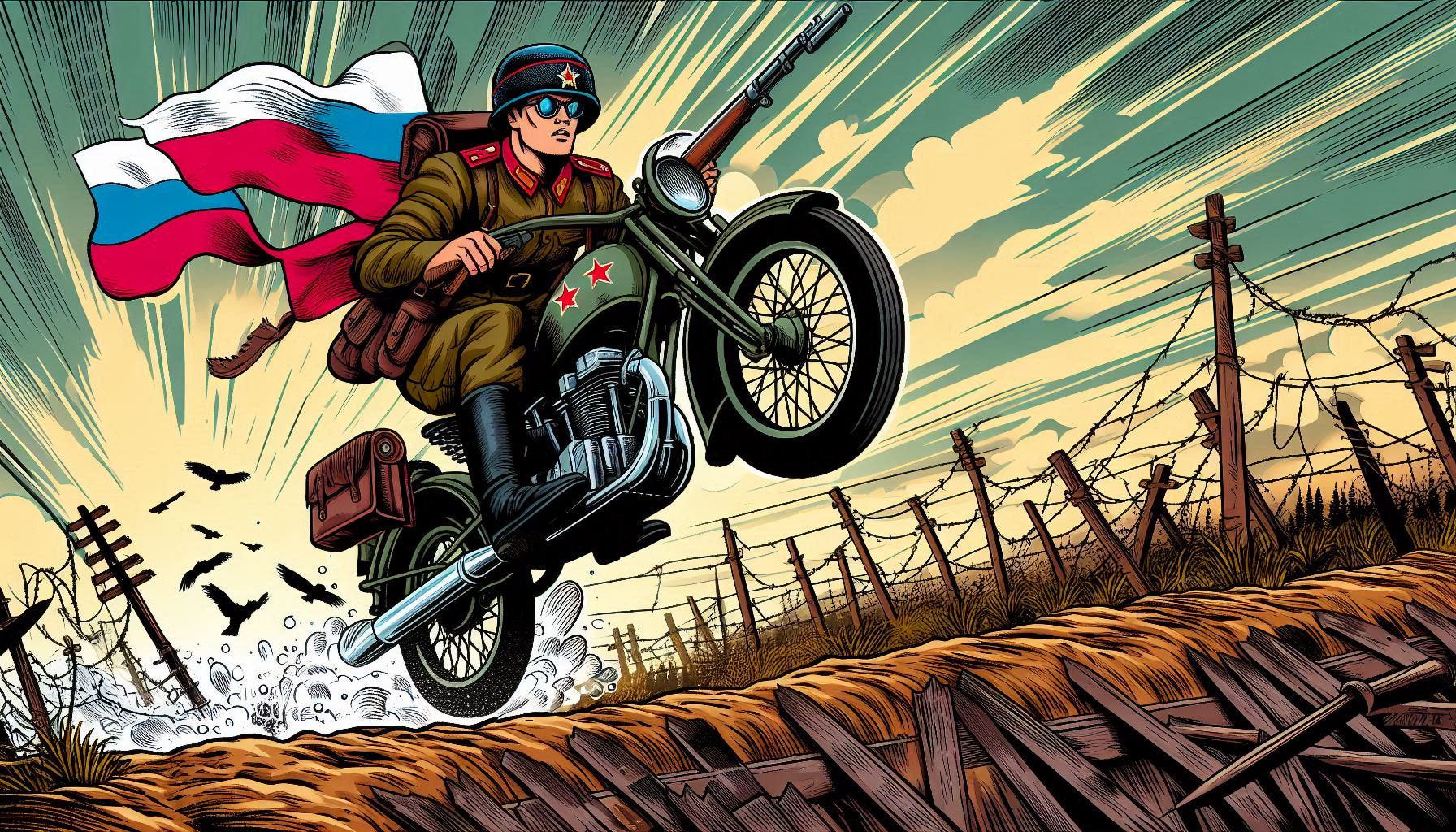
The requirement that a force must adapt while it is in combat is built into the inherent nature of war. Frank Hoffman, Mars Adapting.
Throughout the course of the war in Ukraine since Russia’s full-scale invasion of February 2022, it has been possible to observe and chart how both Ukraine and Russia have learned, learned how to learn better, and adapted. The adaptation activities by Ukraine and Russia have occurred on the battlefield, at the strategic level and in political affairs.
I have had the opportunity to write about this topic on many occasions over the past three years, exploring topics such as the theory and imperatives for military adaptation, the adaptation of Ukraine’s strategic strike complex, the learning and adaptation that resulted in Russian turtle tanks and a range of other topics. Adaptation is such a crucial topic in war that I dedicated half of my recent book about the war, The War in Ukraine: Strategy and Adaptation Under Fire, to this subject.
The Ukraine War adaptation battle has also now metastised into a global adaptation war. I explored this in a recent article. Russia is nurturing a learning community with Iran, North Korea and China. This ‘learning and adaptation bloc’ sees its participants sharing battlefield lessons, collaborating in technology development and sanctions evasion, while also sharing and collaborating on methods of coercion, subversion, misinformation and, of course, learning and adapting. While there are weaknesses in this relationship, as the Russian and Chinese responses to Israel’s bombing or Iran demonstrated, the development of this authoritarian learning and adaptation bloc is occurring at an unprecedented pace.
The adaptation that has occurred in Ukraine has not always been a smooth process. Nor has it been evenly distributed between Ukraine and Russia or evenly dispersed within the combat forces of either nation. But it is reasonable to assert that Ukraine and Russia have both learned how to learn better over the course of this war. The adaptation battle between Ukraine and Russia, which extends from ground combat to aerial strikes to affairs in the electromagnetic and cognitive realms, sees both sides continuously introducing new doctrine, technology, training and support concepts to achieve their objectives.
Under pressure to achieve battlefield success during war, minimise losses of personnel and equipment, or to promise cheaper ways to achieve missions away from the battlefield, there is significant pressure on military leaders on the battlefield and at the strategic level, to innovate. Not all these attempts at adaptation succeed. The war in Ukraine has seen all forms of adaption, including those that have improved military effectiveness of the belligerents and those that have not.
But not all adaptation is effective.
Over the past year or so, one particular Russian innovation has emerged that I want to examine through the lens of potential failed adaptations. This ‘innovation’ – if it can be described as such – is motorcycle assault operations. This article will explore the drivers for such a concept, but more importantly, how it might provide a useful set of insights into how military institutions can sometimes follow ideas that end up being maladaptive, expensive in lives and operationally futile.
