
Rushing to Failure with Current Peace Talks? The Big Five, 8 February edition
My regular update on war and great power competition. This week, a focus on the reports of a March or June peace agreement deadline for Ukraine, and my Big Five recommended reads.

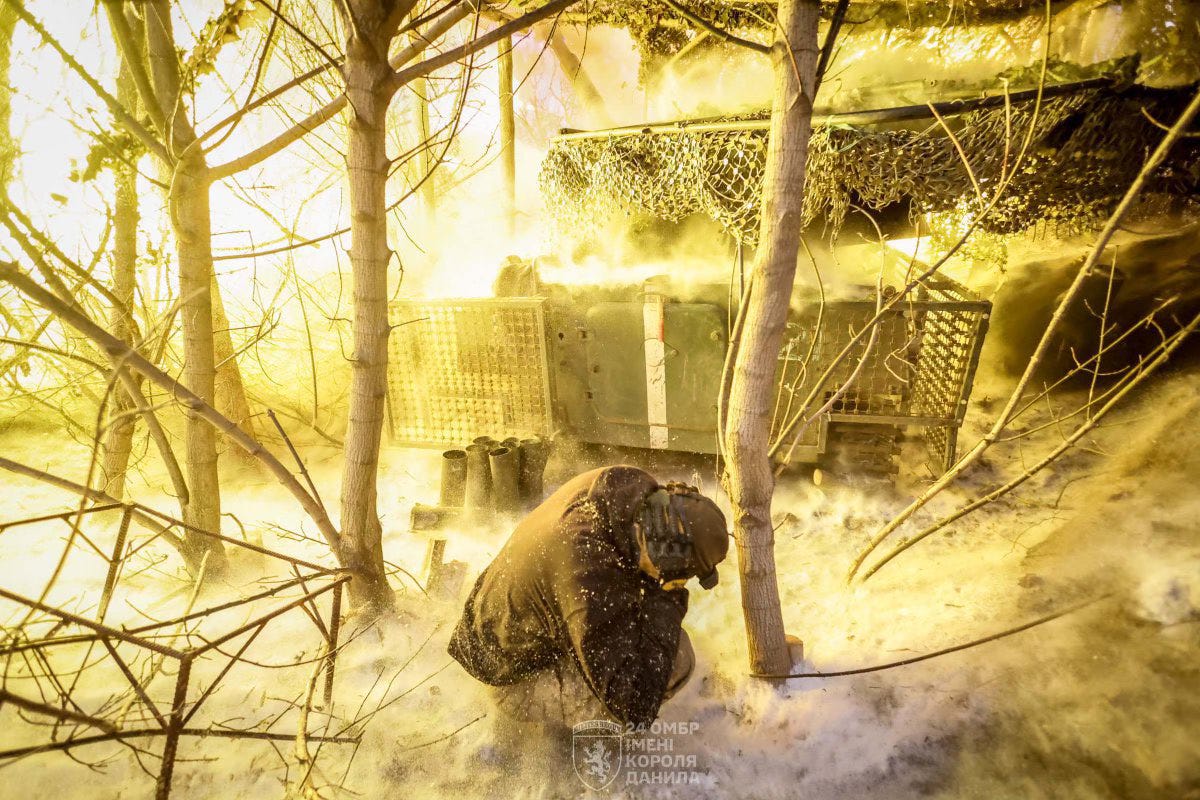
“You want it bad, you get it bad”. Phrase heard by author at U.S. Marine Corps Command and Staff College.
It has been another fascinating week observing international and military affairs.
Fighting continues along the length of the front line, with the Ukrainian Commander-in-Chief, General Syrskyi stating this week that Ukrainian forces were conducting operations along the length of the 1200km long frontline.
Russia conducted very large attacks on Ukraine on the evenings of 3 February (521 missiles and drones) and 7 February (447 missiles and drones). Because of the increasing penetration of Russian drones and missiles that are attacking Ukrainian infrastructure, President Zelenskyy has directed a shakeup of Ukraine’s air and missile defence system. As he stated on 6 February:
The short-range air defense component – focused on countering attack drones – must operate far more effectively and prevent the problems we are currently facing.
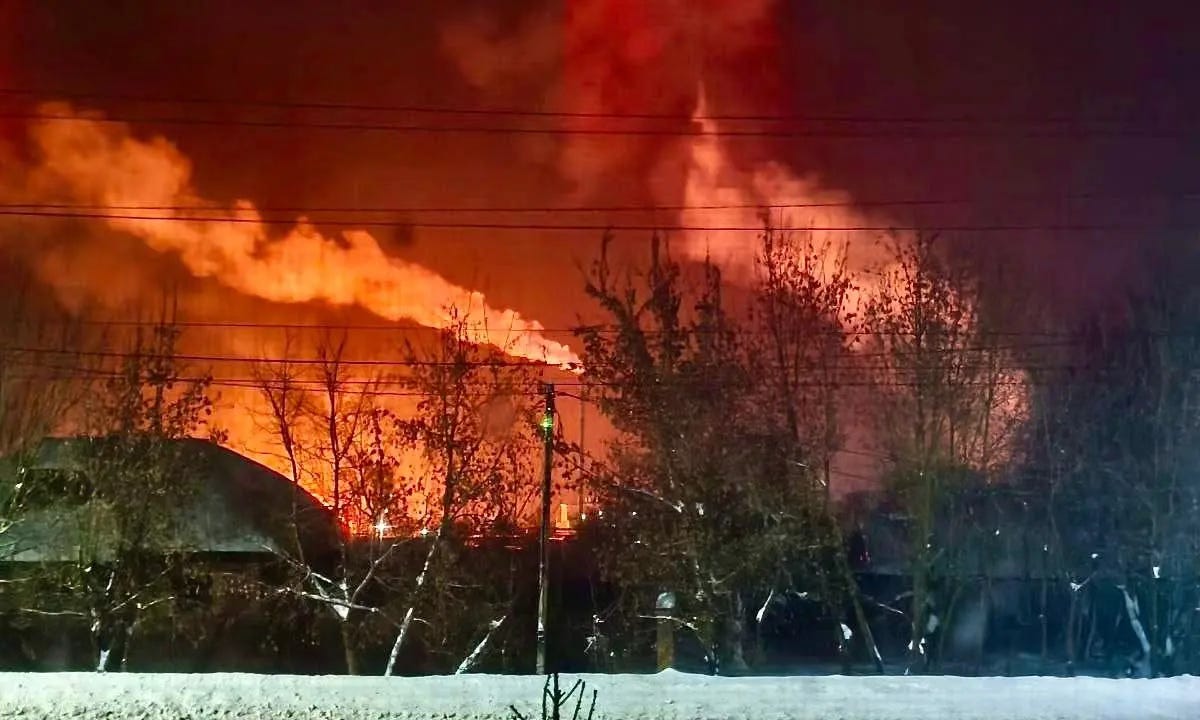
Finally this week, Ukraine hit a Russian factory that produces fuel for its cruise missiles, and Elon Musk also turned off Starlink for Russian frontline forces in Ukraine.
In my update this week, I have again decided to write about a single topic. This week the focus is on whether the American negotiating team is rushing to failure in wanting a March or June deadline for a peace deal. I hope it proves informative.
Welcome to this week’s edition of The Big Five.
Ukraine
Peace: Rushing to Failure?
Reports have emerged that the American team negotiating the Ukraine peace deal want to fast track a ceasefire and peace deal. Reuters has reported several sources have informed it that the United States would like to see a deal next month, and that this is followed by a Ukrainian national referendum on the issue. This would then be followed by national elections. Separately, President Zelenskyy has told reporters that the Trump administration want to end the war by June.
Why might the Trump administration want to fast-track a peace deal? There are several reasons.
First, Trump wants to deliver on his election promise to end the war in Ukraine and ‘end the killing.’ Every politician wants to at least try and deliver on election promises. The promise to end the war in Ukraine within 24 hours was a prominent and oft-repeated promise by Trump in the lead up to the 2024 presidential elections. His desire to do so appears genuine, even if that means Ukraine is forced into a very unfavourable deal.
Second, Trump and his supporters see economic opportunities in Russia, which a peace deal might enable. The potential of reinvigorated economic relations between America and Russia has been raised by Trump on multiple occasions since his re-election. Putin has pitched opportunities for joint economic projects to lure Trump into an improved relationship with Trump, including one for Arctic development in 2025. Putin also appointed the head of Russia’s Direct Investment Fund, Kirill Dmitriev, to lead peace negotiations with the Trump negotiating team. Most recently, Ukraine has claimed that Putin has pitched an almost irresistible 12 trillion dollar deal with America, should there be a peace agreement.
Third, the Trump administration probably feels it has sufficient leverage now over the Ukrainian government to force them to accept a deal that is unfavourable for the Ukrainian people. While military aid has been curtailed over the past year, the United States still provides intelligence and training to the Ukrainians, and also sells weapons to European nations so this can then be provided as aid to Ukraine. But as Ukrainian and European defence capacity expands, this leverage will decline. And, even if the Trump administration does have leverage now, it may not be sufficient to strong arm Ukraine into a deal that sees its security and prosperity compromised in the long term.
Fourth, the Ukraine issue is something that Trump, Vance and others probably want off the table before the mid-term elections this year. This is strongly hinted at in the Reuters article, where one source describes how "the Americans are in a hurry." From a political perspective, this is understandable. Given the issues with ICE and the declining job approval numbers for the Trump administration, a focus on domestic issues for the mid-term elections is does make sense from a certain point of view. But to do so in a way that might compromise Ukraine’s chances of a sovereign, prosperous nation is strategically and morally problematic.
Fifth, some in the Pentagon and the wider American strategic community want to focus on just one thing: hemispheric defence. Others in the administration want to do both hemispheric dominance and strategic competition. As the recent National Defense Strategy, and frequent statements by administration officials make clear, Ukraine is now seen as primarily a European problem. The 2026 U.S. National Defense Strategy (NDS) states that:
Fortunately, our NATO allies are substantially more powerful than Russia…Our NATO allies are therefore strongly positioned to take primary responsibility for Europe’s conventional defense, with critical but more limited U.S. support. This includes taking the lead in supporting Ukraine’s defense.
Finally, one of the most important foundations for Trump’s desire to remove this issue from the administration’s agenda is that he and some others in his administration don’t see Russia as a threat to the United States. There is decades of evidence that counters this view. The 2022 version of the NDS describes Russia as “an acute threat”, and the 2018 NDS described Russia as a nation that seeks to “shape a world consistent with their authoritarian model—gaining veto authority over other nations’ economic, diplomatic, and security decisions.”
But facts and evidence play no role in the view of Russia by the some members of the current U.S. administration. The new U.S. National Defence Strategy is evidence of this. In it, China is an economic competitor and Russia is a problem for Europe. Or, as the 2026 NDS describes it: “a persistent but manageable threat to NATO’s eastern members.”
Therefore there many reasons why the U.S. administration and their Ukraine negotiations team might be seeking to rush along peace talks. But despite this desperate ‘wanting’ by Trump and others to get a peace deal in the next few months, there are a variety of risks involved in a rushed peace process, which significantly outweigh any benefits of such a deal.
First, will European nations be ready to step up and provide the deterrent capabilities - and rapid military responses - should Russia almost inevitably break the terms of any peace deal? Europe has come some way since 2022 in its thinking and resourcing for Ukraine and European defence. But whether it has the capacity and willingness to step into the hot zone in the event of a Russian attack on Ukraine after a ceasefire in the next couple of months must be highly debatable.
Second, Putin and the Russians over the course of the past year have shown zero inclination to change their strategic demands of the Ukrainians. Putin’s objectives -to destroy Ukraine’s sovereignty, its foreign economic and security partnerships and any capacity to realise its full potential as a prosperous young democracy - remain undiminished. Thus, both Ukraine and Russia are still some distance apart in achieving compromise.
Third, Putin cannot afford peace right now. He has fundamentally reshaped his nation as one that is engaged in a long term struggle against Ukraine and its western supporters. To declare victory now, when Russia is not anywhere close to such a victory, could be quite difficult - if not fatal - for Putin. I explored this topic in my last Big Five post one week ago.
Fourth, a short term peace deal will probably not allow for a resolution of issues related to Russian occupied territory, the return of kidnapped children and the rights of Ukrainians in those territories. Every minute that Russia occupies Ukrainian terrority, it is removing Ukrainian history, culture and governance. Russia is changing education, forcefully pressing Ukrainians into Russian military service, kidnapping children and exploiting Ukraines mineral and agricultural wealth. These issues will take time to resolve, and a rushed peace deal is unlikely to provide an enduring solution, despite the urgency of returning Ukrainian territory back to Ukrainian government control.
Fifth, in a rush to get some kind of Russian agreement, Ukraine may be forced to give up hopes of bringing war criminals to justice. The issue of justice, one that is important to Ukraine as well as those who believe in international law, has not been mentioned in the scope of peace negotiations so far. If it is ignored, or short-shifted in a rushed peace deal, it provides one of the foundations for future conflict between Ukraine and Russia.
Sixth, organising and conducting a national referendum and national elections in Ukraine within months is a significant security and logistical challenge. The logistics of an election under wartime conditions, even if there is a ceasefire, will be difficult with millions of displaced Ukrainians inside Ukraine and hundreds of thousands of soldiers still serving on the front line to guarantee the peace. The issue of Ukrainians displaced outside their nation is also a significant one - provision must be made for these people, who were forced to leave Ukraine, to participate in the referendum and national elections. To suggest this might be achieved in a satisfactory manner on top of every other economic, societal, military and diplomatic challenge Ukraine has right now is to probably believe in miracles. Although, to be fair, Ukraine has shown the world in the past four years it is capable of achieving miracles.
Finally, there is no conceivable future where Putin keeps his word about any peace deal achieved in the coming weeks or months. He and his forces have ignored multiple agreements reached during this war, as well as truce agreements related to the war in Ukraine that Russia began in 2014. Easter and Christmas ceasefire agreements have been routinely ignored by the Russians. And of course, the 2014 aggression by Russia broke the arrangements that were agreed to in the 1994 Budapest Memorandum. Beyond Ukraine, Putin broke the 2008 French-brokered ceasefire in Georgia, and broke the 1996 peace agreement in the wake of the first Chechen War.
To seriously think that Putin can be trusted to keep any ceasefire negotiated at this point of the war, when he cannot afford a peace deal if he wants to avoid political turmoil and angry veterans at home, strains credibility. If we squint a lot, and pretend Putin has the slightest bit of human empathy, he might be able to restrain his impulses for a short time. But given his delusions of empire, and his need to portray Russia as “a winning country” to his own people, it is inevitable that Russia would recommence military operations against Ukraine. He is not going to change his essential nature.
Therefore, rushing to a peace deal in the coming weeks because of Trump administration imperatives rather than seriously taking account of the political and military realities on the ground in Ukraine and Russia, is a very significant risk to Ukraine and America.
Rushing to a hastily agreed peace treaty could see Putin looking for an opportunity to make America look weak. Putin understands that even if he breaks a ceasefire, it is unlikely that Trump would want to use American military forces, or boots on the ground, to re-establish the peace. This is even more so the case in a mid-term elections year.
But the greatest risk of a rushed peace deal, one that is pushed through because of strategic impatience in the White House, is to compromise Ukraine’s future. A rushed process will result in a sub-optimal peace agreement that hurts Ukraine. It would hurt its ability to defend itself, and would hurt its ability to continue building the prosperous society it established after the Cold War. And, it abandons those Ukrainians who have found themselves occupied by Russia, and subject to constant terror by Putin’s brutal security services.
The Ukrainians want peace more than any other people. But as all the recent polling conducted in Ukraine has indicated, including the latest survey by the Kyiv International Institute of Sociology finds, 52% of respondents categorically rejected any proposal to transfer the entire Donbas to Russian control in exchange for security guarantees. Ukrainians desperately want peace, but not at any price.
As the saying goes, “if you want it bad, you get it bad.”
If the impulse for a real peace and to stop the killing is truly felt by the U.S. President, he should ensure that it is done right the first time, even if it takes a little longer than the March / June deadlines.
*******
It’s time to explore this week’s recommended readings.
In this week’s Big Five, I have included an excellent piece that explores the application of AI to military command and staff processes, while offering cautionary advice about ‘contacting out’ too much of military command functions to machines. There is a report about PLA activities in 2025, a link to the latest Snake Island Institute technology update, America’s new arms transfer policy, and finally, a good report on lessons from Ukraine for European nations.
As always, if you only have the time available to read one of my recommendations, the first is my pick of the week.
Happy reading!
1. AI Command and Staff
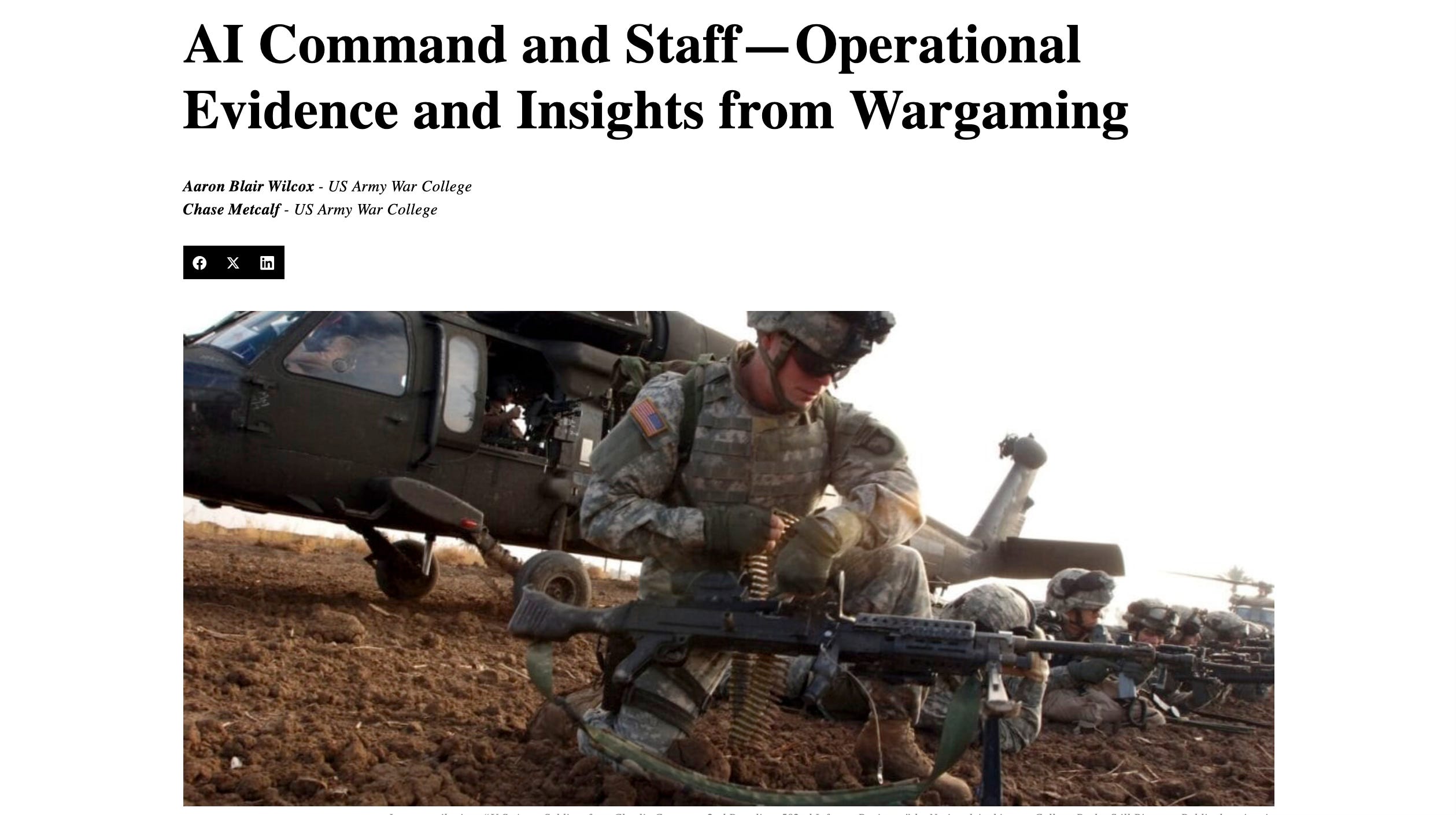
In this article from the winter edition of Military Strategy Magazine, the authors explore the applications of AI in the command and staff processes of military institutions. Unlike many articles that explore AI in a military context, this is written by two senior military personnel with deep expertise in military planning and staff processes, which lends it a high degree of credibility. As they write in the article, “AI may assist with the science of control, but it cannot assume the art of command…In the frenzy of using machine augmentation to make better decisions faster, military leaders and planners cannot lose sight of their role in the command process.” You can read this article at this link.
2. Tracking Increased PLA Tempo in 2025
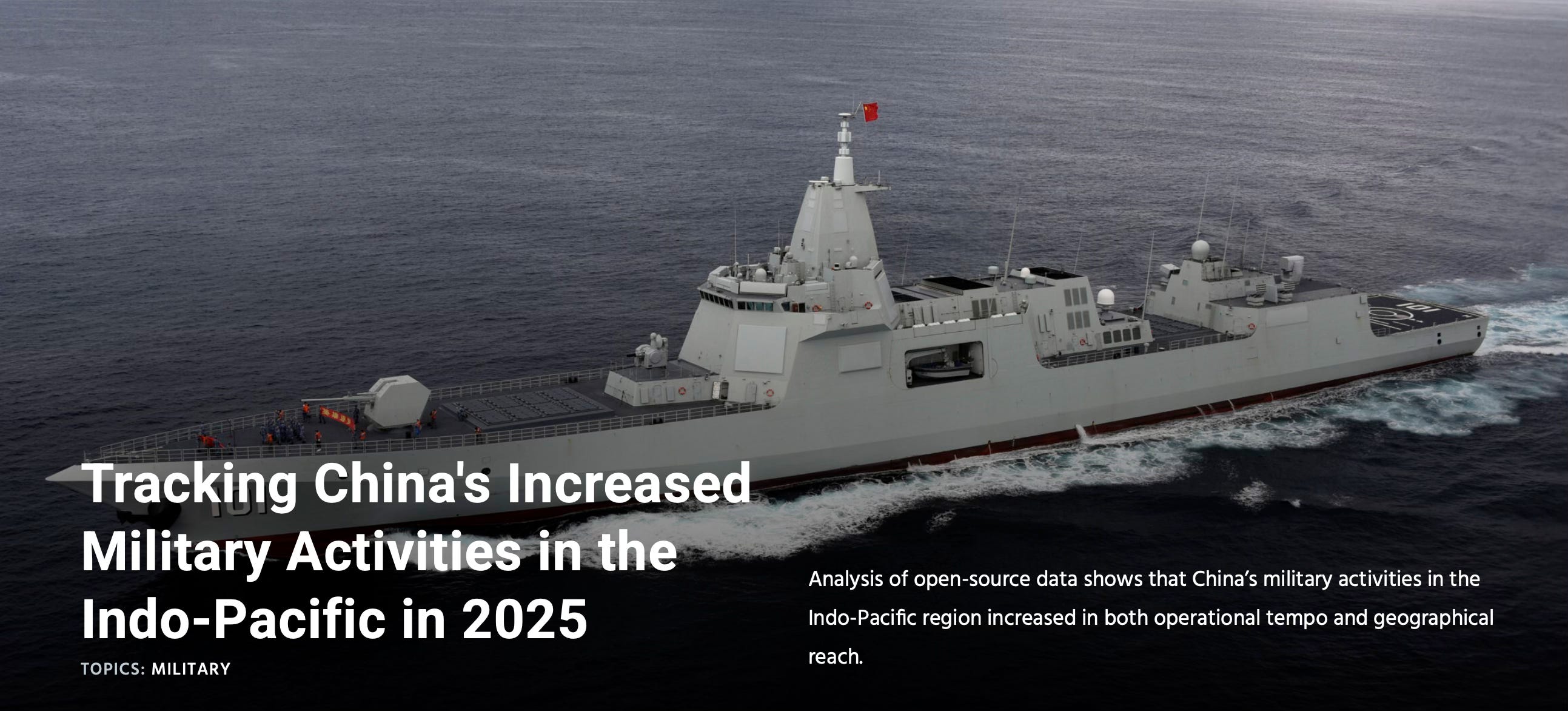
In this article published by the CSIS China Power project, the author use a variety of open source data to assess the level of PLA activity in the western Pacific during the 2025 calendar year. They explore air and sea activity around Taiwan, the vicinity of Japan, in the South China Sea, joint exercises with Russia as well as their increasing deployments out into the Pacific beyond the first island chain. You can read the full report at this link.
3. Snake Island Institute - Defence Tech Monthly

The Ukrainian think tank - the Snake Island Institute - issues a monthly update on technological developments and trends in the Ukraine war, and the implications of these for the general trajectory of the conflict. This month’s edition covers a wide variety of topics, including the implications of denying Starlink capability to Russian forces, Ukraine’s deep strike campaign, the Dataroom initiative and the ongoing evolution by Russia of its Geran family of drones. The publication is available at this link.
4. New U.S. Arms Transfer Strategy
This week, the Trump administration released an executive order that detailed a ‘new’ arms strategy which was described as an “America First Arms Strategy”. There are a couple of good ideas, as well as lots of existing ideas and policy. The core ideas are to rebuild American defence industry with arms sales overseas, and to prioritise the transfer of American military equipment and weapons to those nations that invest more in defending themselves. The full document is available to read at this link.
5. Lessons from the Jungle

In this new report from The Hague Centre for Strategic Studies, a new assessment of lessons from Ukraine is provided. For long time followers of the conflict, there is nothing particularly new here. That said, the report provides a useful compilation of relevant lessons in one place. You can read the report at this link.
It might be better for the Trump Administration to find out sooner rather than later whether a deal is possible.
Thank you for your thoughtful analysis. Where is Europe? Does anyone believe that Ukraine will get a fair deal negotiating with Putin and Trumpists looking for new business opportunities in Russia? No lasting peace will come from this. Where’s the rest of the world?