
The Big Five - 6 July edition
My regular update on global conflict. This week: 1000 drones and missiles target Ukraine in a 4-day period, Hegseth's personal war against Ukraine, and Trump's futile phone call with Putin.

Welcome to this week’s edition of The Big Five.
First, my apologies for not putting out a Big Five for the last couple of weeks. I was on a plane quite a bit, and then getting over some jet lag while also getting back to work at home on two major reports as well as putting the finishing touches on my PhD (more on that topic at some point in the future).
In this edition of The Big Five, I explore issues concerning the war in Ukraine from the past week, as well as news from the Pacific region. As always, I have included my top five national security and war reads.
Ukraine
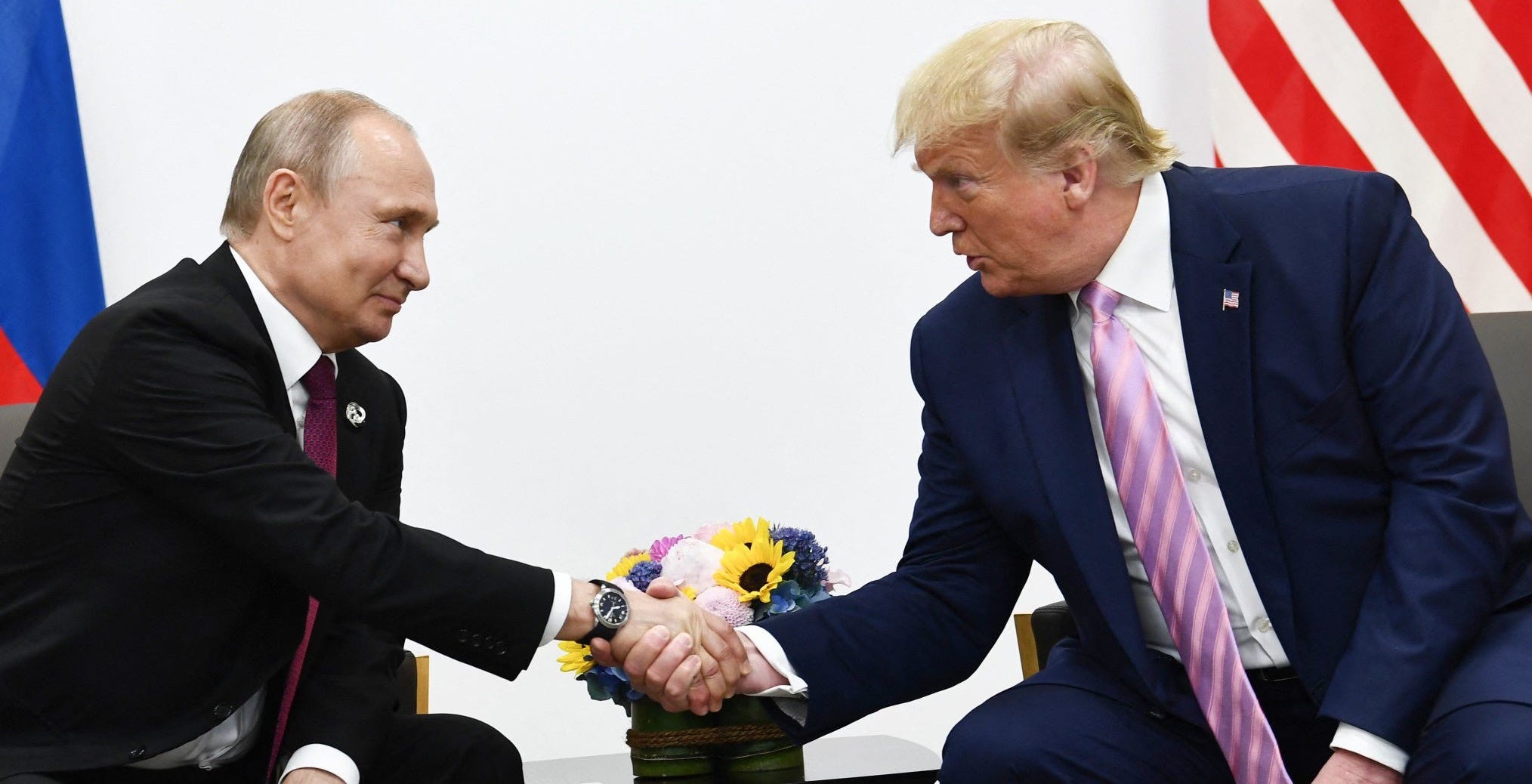
Trump’s Futile Phone Call. This week, President Trump held another phone call with the Russian president.
Speaking with reporters afterwards about his phone call with Putin, Trump stated that "I'm very disappointed with the conversation I had today with President Putin because I don't think he's there. I didn't make any progress with him today at all."
Trump also spoke to the Ukrainian president after his call with Putin. Zelenskyy described how he and Trump "spoke about opportunities in air defense and agreed that we will work together to strengthen protection of our skies" and that they had "agreed to a meeting between our teams."
Zelenskyy also posted on his social media that:
We had an extremely fruitful conversation with the President of the United States yesterday, during which we discussed air defense. I’m grateful for the readiness to assist. Patriot systems are the key to defending against ballistic threats.
In the past 24 hours, President Trump had this to say about his discussion with Putin during the week:
I told you I was very unhappy with my call with Putin. It just seems like he wants to go all the way and just keep killing people. No good. It's not good. I wasn't happy with him.
OK. So do something about it.
In the meantime, Putin keeps slaughtering Ukrainians while kicking sand in the face of Trump.
Breaking News: Trump has (again) stated that he doesn’t like Putin killing people, and might send more Patriot batteries and missiles to Ukraine.
Hegseth’s War Against Ukraine. What has U.S. Secretary of Defense Hegseth got against Ukraine?
For the third time in six months, the U.S. Secretary of Defense has unilaterally suspended military aid to Ukraine. Apparently, despite advice that the shipments to Ukraine would not impact on U.S. military readiness, he went ahead with the halt anyway. While the previous decisions, which occurred in February and May this year, were quickly reversed, it provides further evidence of the disfunction currently surrounding policy decision-making inside the Pentagon. It also demonstrates a profound and worrying disconnect between the U.S. Commander-in-Chief, and his chief defence advisor.
The halt in aid occurred just before Trump’s latest call with the Russian dictator. Take from that what you will. In a more competent and strategic administration, I would propose the two were linked. In this instance, who knows?
In remarks in February, Hegseth noted that “everything was on the table” in negotiations to end the war in Ukraine. So far, these ‘negotiations’ with Russia have led to absolutely nothing except more dead Ukrainians, and a growing confidence among authoritarian powers that they have the measure of the U.S. President and his TACO impulses.
Hegseth has steadfastly resisted any discussion about Ukraine joining NATO, and claimed it is unrealistic for Ukraine to return to its 2014 borders. Can you imagine Churchill or Roosevelt in 1941 stating that it was unrealistic for France to return to its 1939 borders?
In an April 2025 op-ed, Max Boot wrote that: “It’s time for Hegseth to go. The job should be given to someone who has the right experience and qualifications to lead one of the world’s largest and most complex organizations in these increasingly dangerous times.”
This week again proved why this is the case.
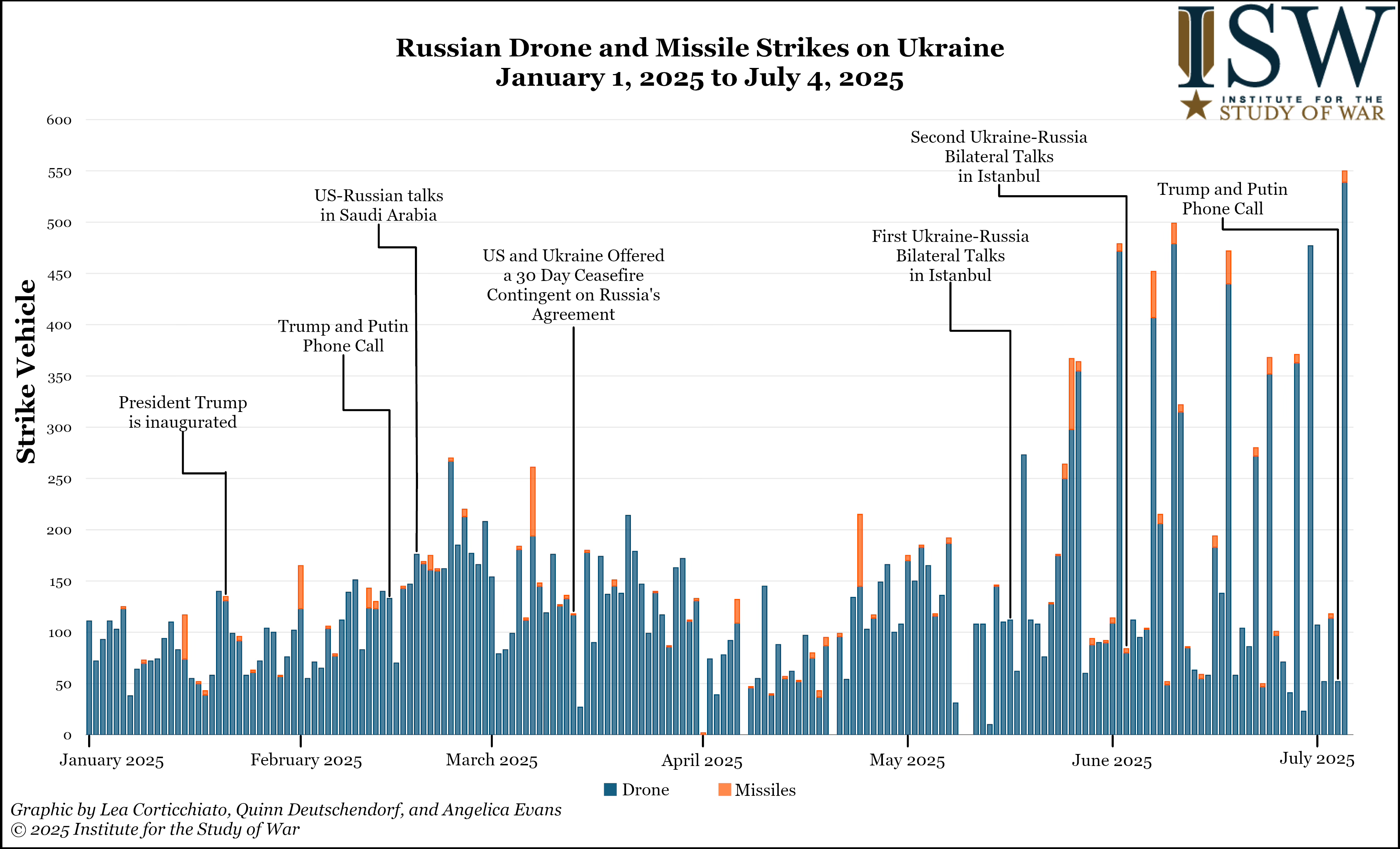
1000 Drones and Missiles in Four Nights. This week, Russian hit Ukraine with its largest ever drone and missile strikes. The 550 drone and missile strike of 4 July occured just after the most recent Trump-Putin phone call (see coverage of that above) and as the United States was about to celebrate its Independence Day. I am sure this was just a coincidence.


The 4 July attacks set a new, brutal record for Putin’s largest drone and missile attack on Ukraine. It caused significant civilian injuries and extensive damage. Not only does it demonstrate that Putin now believes that American intervention on behalf of Ukraine is almost unthinkable, it also provides yet another demonstration of how unprepared western nations are for the potential threats inherent in modern war.
As I wrote earlier this week, confronting this threat is not just about improved drone and missile defences. Civil defence, infrastructure resilience and societal cohesion are all part of Ukraine’s defence against such Russian assault. These are areas western nations (especially my own) have under-funded or avoided for over three decades.
With their growing production of missiles and drones, and their confidence that Trump will sit on his hands while Russia conducts its attacks, the Russians have escalated their aerial assault on Ukraine in the last few months. The graph below from The Institute for the Study of the War paints a very grim picture of what Ukraine is now enduring on a nightly basis. It also provides an insight into the kinds of support that western governments need to provide Ukraine so that it can not only weather these attacks, but convince Putin that his theory of victory - wait until the West loses patience with Ukraine - cannot succeed.
This issue was the topic of a recent article written by Ukrainian analyst, Mykola Bielieskov. He writes that “Russia’s increasingly deadly drone campaign is having a demoralising impact on the population throughout Ukraine. Addressing this challenge is now one of the most urgent and complex tasks facing the Ukrainian military.”
But, there is much that might be done to redress this situation. Ukrainian innovation is part of the challenge, and as Bielieskov notes, “it is clear that the Ukrainian military needs to adopt new approaches to address the growing drone menace. The most cost-effective solution would be to produce interceptor drones capable of protecting Ukrainian cities. This process is already underway but must be urgently scaled up to reflect the size of the task ahead.”
But it will also take a concerted effort by Europe, America and other countries like Australia, Canada and Japan, to step up now, provide more interceptors and also provide cash injections into Ukrainian defence industry so that it can increase production of counter-drone technologies.
Russia’s Paltry Gains. The figures are in for Russia’s ‘progress’ in its ground offensives against Ukraine in the month of June. In that month, the Russians managed to gain just over 600 square kilometres of Ukrainian territory. They ‘achieved’ this at the loss of over 32,000 casualties as well as hundreds of vehicles and thousands of drones.


While the Sumy area has seen some of the most intensive fighting in recent weeks, the Russian main effort is still centred on the Pokrovsk and Lyman areas. As the maps below show, Russian ‘progress’ remains halting and limited.


For those who are still tempted to believe that Russia is winning in Ukraine, I would ask you to undertake a quick thought experiment.
Imagine it is July 2006. It is three and a half years since American, British and Australian troops crossed into Iraq in order to find weapons of mass destruction and topple the regime of Saddam Hussein. Currently these forces have occupied just 19% of Iraq (the same percentage of Ukraine currently illegally occupied by Russia). Over the period since the invasion of Iraq commenced, the coalition forces have lost one million casualties.
Would we say the coalition forces are winning?
Putin knows he is not, and cannot, win his personal crusade against Ukraine and the Ukrainian people through military force. This is why he invests so much in misinformation and coercion against Western politicians and citizens to convince them of Russia’s (fake) interests and (also fake) inevitable victory. This endeavour has been far more successful so far than his hapless military forces have been.
And it has been more successful because we have allowed it to be so.
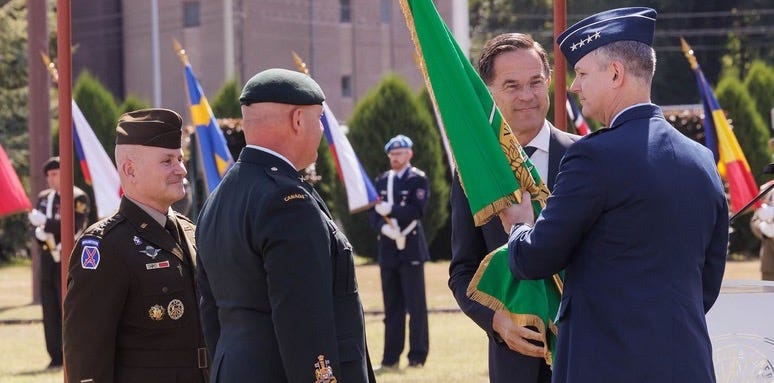
A New SACEUR. This week, General Chris Cavoli completed his tour as the Supreme Allied Commander at NATO. He has handed over the reigns to U.S. Air Force General Alexus G. Grynkewich. General Cavoli has presided over a reinvigoration of NATO war plans and the coordination of military aid to Ukraine. Congratulations to General Cavoli on completing with distinction a very tough assignment.
The Pacific
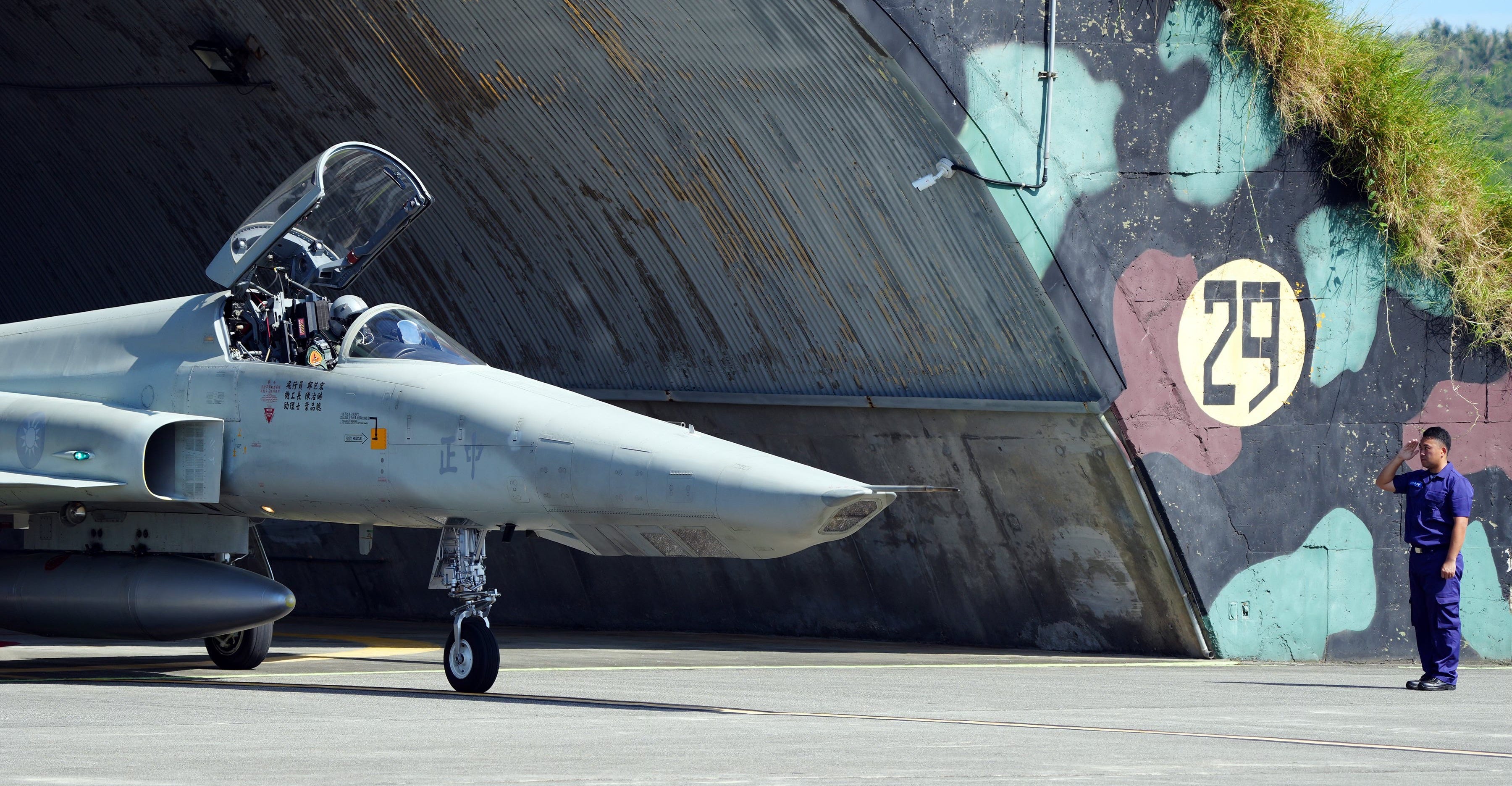
Taiwan’s 2025 Han Kuang joint military exercise. The Taiwanese Defense Minister Wellington Koo announced this week that military-civilian coordination operations and civil defence drills will take place during the forthcoming Han Kuang joint military exercise in order to provide greater realism. This 41st version of the exercise is due to commence on 9 July.
The exercise scenario will include a Chinese blockade and invasion of Taiwan. The 2025 iteration of Han Kuang will run double the length of previous exercises, at ten days, and will incorporate what is reported to be the largest-ever mobilization of military reservists. This should provide important lessons about the current state of readiness of reservists as well as allow training in the integration of Taiwan’s regular and reserve forces.
Alongside the military component of the exercise, the Taiwanese government will coordinate nation-wide civil defence drills.
Newsweek has also reported that Taiwan “is expected to stage another test of its newly acquired HIMARS rocket launchers alongside indigenous anti-air, anti-ship and ground-attack missiles.”
A report by Focus Taiwan describes how:
Regarding the key focuses of the Han Kuang drills…they are based on lessons from last year's exercises, including a continued emphasis on decentralized operations, comprehensive logistical support, rules of engagement, strengthening rapid decision-making, improving synchronization of joint operations, boosting civilian-military coordination and clarifying military action authorization mechanisms.
To provide context for this year’s exercise, I have also included a link to a report about the 2024 Han Kuang exercise by John Dotson, director of the Global Taiwan Institute. You can read his report in full at this link.
Chinese Operations Around Taiwan. The latest data for Chinese military activity around Taiwan shows that June was a very busy month. June saw the second highest level of Chinese military operations around Taiwan for 2025. This year, as the graph below demonstrates, it turning out to be the busiest one so far for Chinese military aggression towards Taiwan.


What does all this mean?
It probably does not mean an invasion is imminent. But it does mean that the PLA is gaining confidence in its ability to conduct sophisticated joint operations further from home. The Chinese have worked to uplift their joint planning capabilities and their normal operational readiness, and the sortie generation rate for their aircraft is indicative of this.
This is obviously assisted by the growing size of the Chinese military. The figures below, taken from the annual Pentagon reports on China’s military capacity between 2022 and 2024, are part of the story of the increasing level of Chinese military activity around Taiwan. In short, China has more stuff to do more things with.
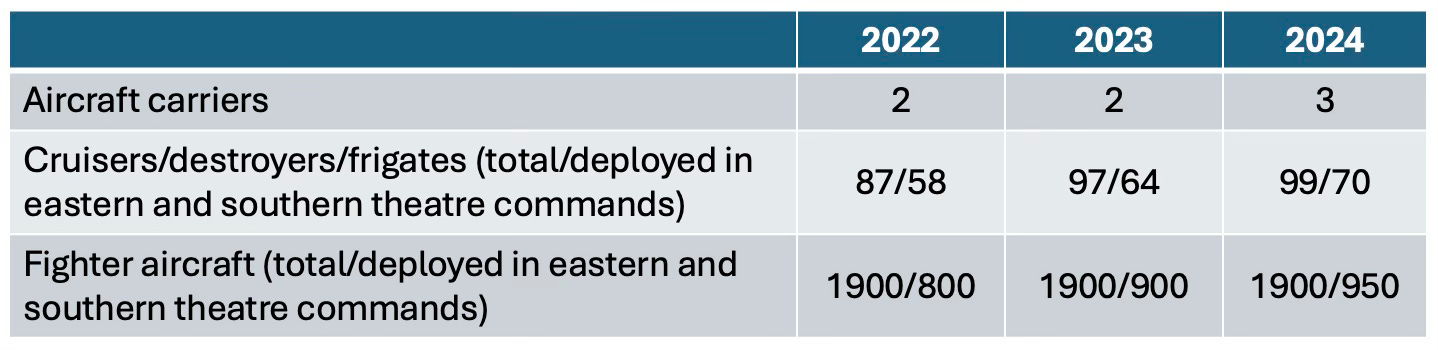
It is also worth noting that besides the military hardware used on a daily basis against Taiwan, the Chinese have also been building the military means to coerce different behaviours from Taiwan and those that might support Taiwan during a war. The principle coercive instrument is the Peoples Liberation Army Rocket Force (PLARF). It has slowly built its arsenal, which the figures from the last couple of years show.
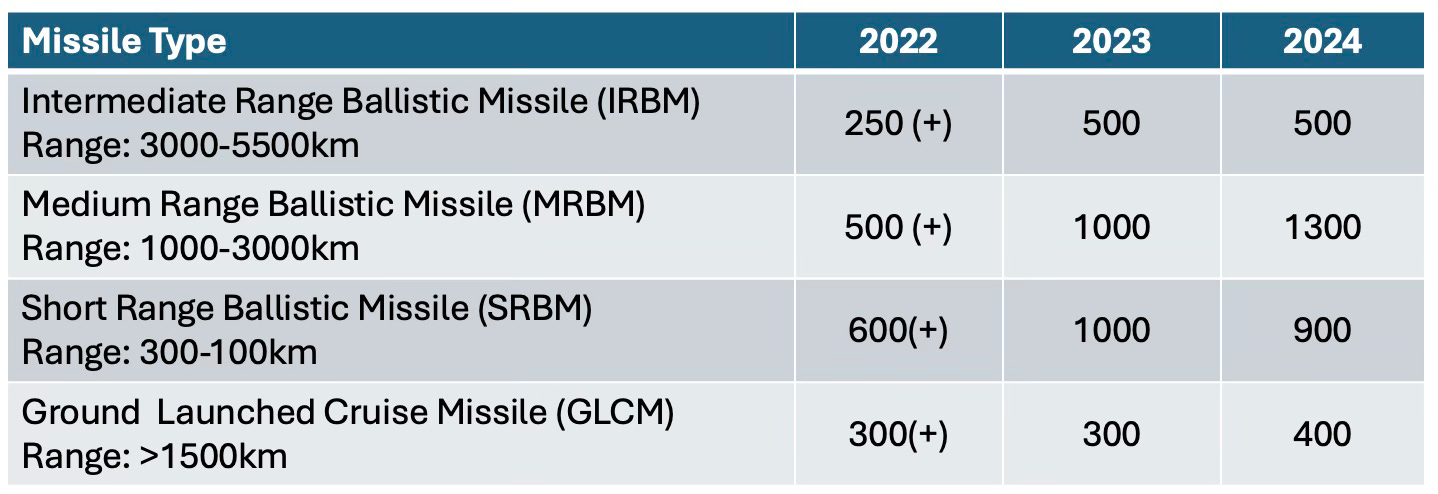
Given the shortfalls in drone and missile defence, as well as civil defence capabilities that I discussed above, many nations in the Pacific are quite vulnerable to this Chinese missile ‘diplomacy’.
*******
It’s time to cover this week’s recommended readings.
I have included an excellent assessment of the challenges facing those who are preparing the 2026 U.S. National Defense Strategy, written by Frank Hoffman. There is also an examination of how Russia has stepped up missile production, and the Ukrainian drone wall. I have also included a piece that explores secrecy in Chinese political decision-making, and the Big Five is rounded out with a report on Russia’s recruitment of foreigners to fight in its war in Ukraine.
As always, if you only have time to read one of my recommendations, the first one is my read of the week.
Happy reading!
1. The Next National Defense Strategy

In this article for Parameters, Frank Hoffman examines the challenges facing those charged with producing the next U.S. National Defense Strategy (NDS), due in 2026. As Hoffman notes, the strategic environment has changed considerably since the first Trump administration, and the national security policies of the second Trump administration have upended some of the strategies put in place by the Biden administration. Coupled with an increasing national debt, the new NDS faces multiple different issues to resolve. As the author notes, “the wars of the future are here—ready or not.” You can read the full analysis at this link.
2. Russia prepares a strategic missile plant for ‘eternal war’
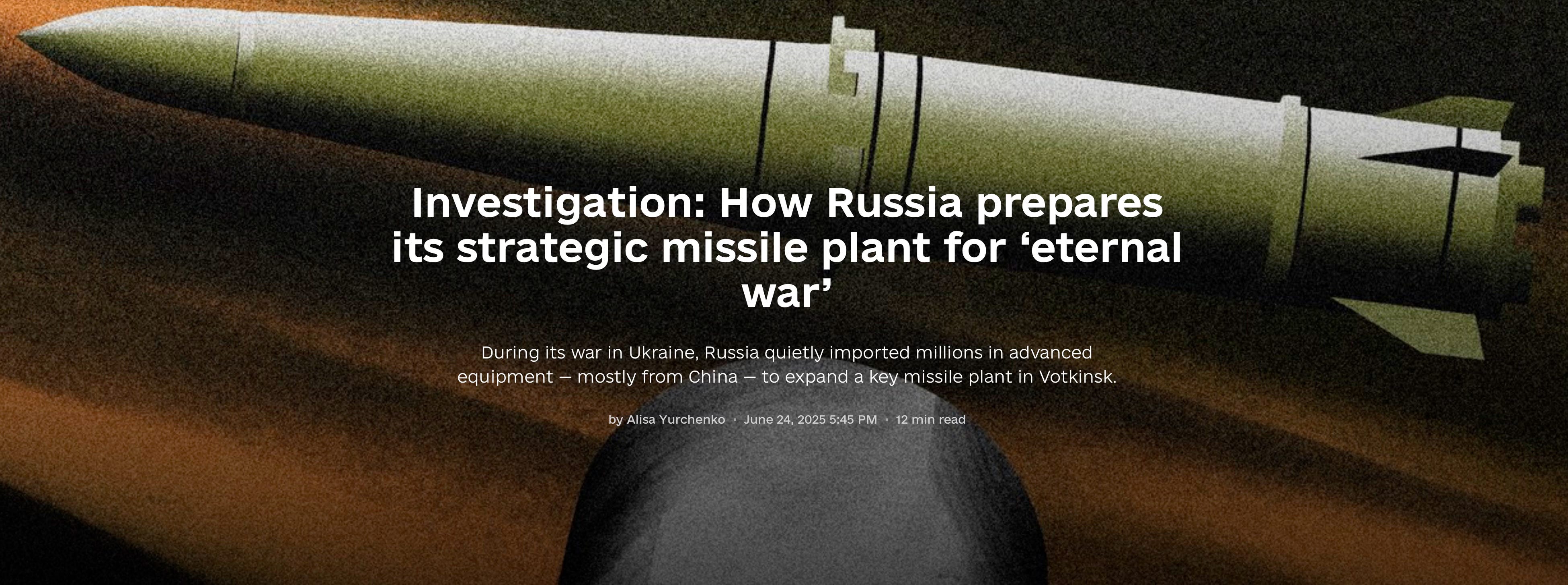
The Kyiv Independent has been one of the essential sources for information about the war in Ukraine since Russia’s full-scale invasion in February 2022. In the last couple of years, it has also published excellent in-depth analysis of various aspects of the war. Recently, it published a report on Russia’s expansion of its munition production capacity, and in particular, the acceleration of missile production at the Votkinsk missile plant. This is an important topic, as it permits insights on the mobilisation of industry for modern war. You can read the full report here.
3. The Drone Wall
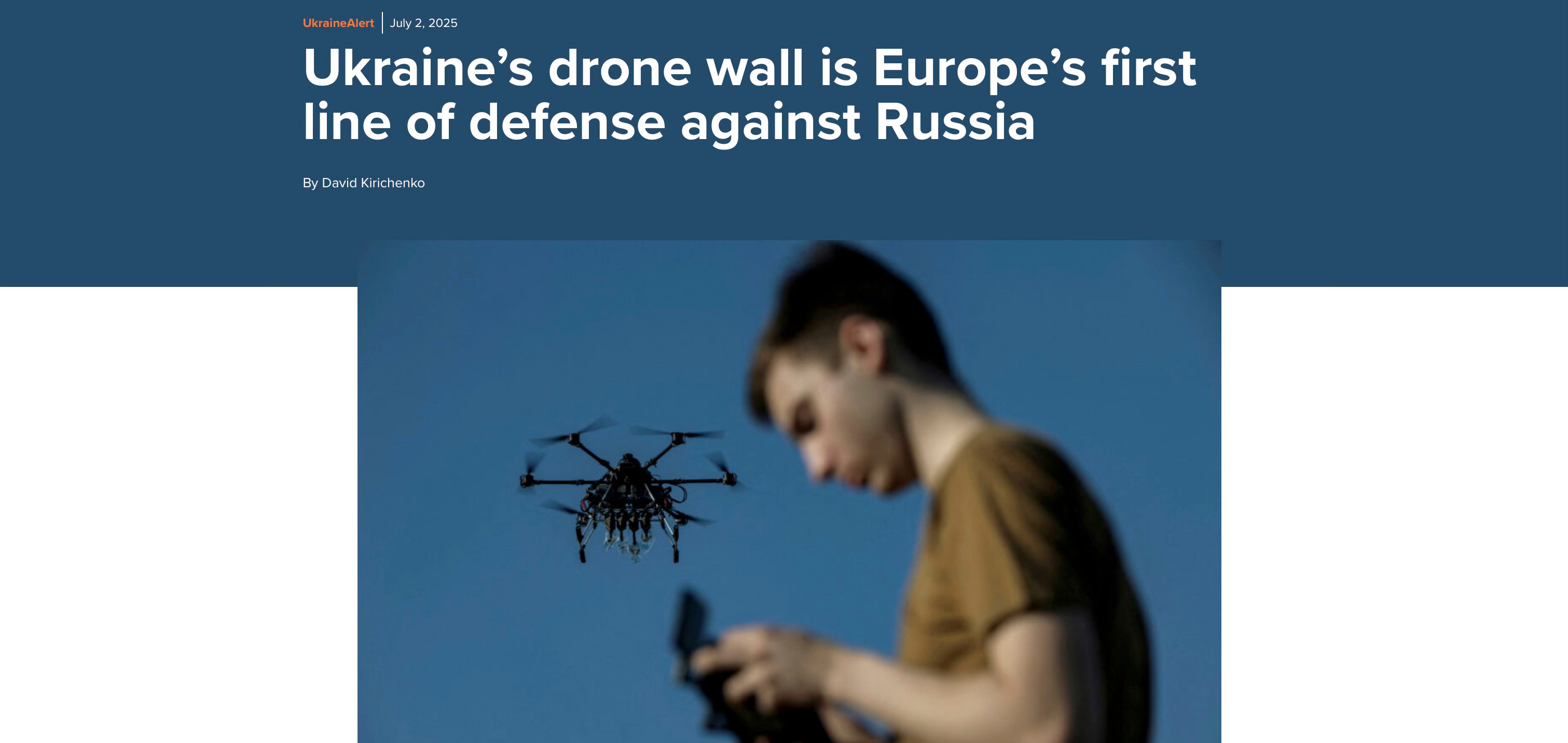
David Kirichenko has been an astute observer of the war in Ukraine, and in particular, developments in uncrewed systems. Recently, the Ukrainian government announced the development of a Drone Wall for western Ukraine, something I examined in a recent article here. Kirinchenko has provided a timely update into this major Ukrainian undertaking, and its implications and lessons for the defence of the rest of Europe against Russian aggression. You can read the article at this link.
4. Decoding Xi
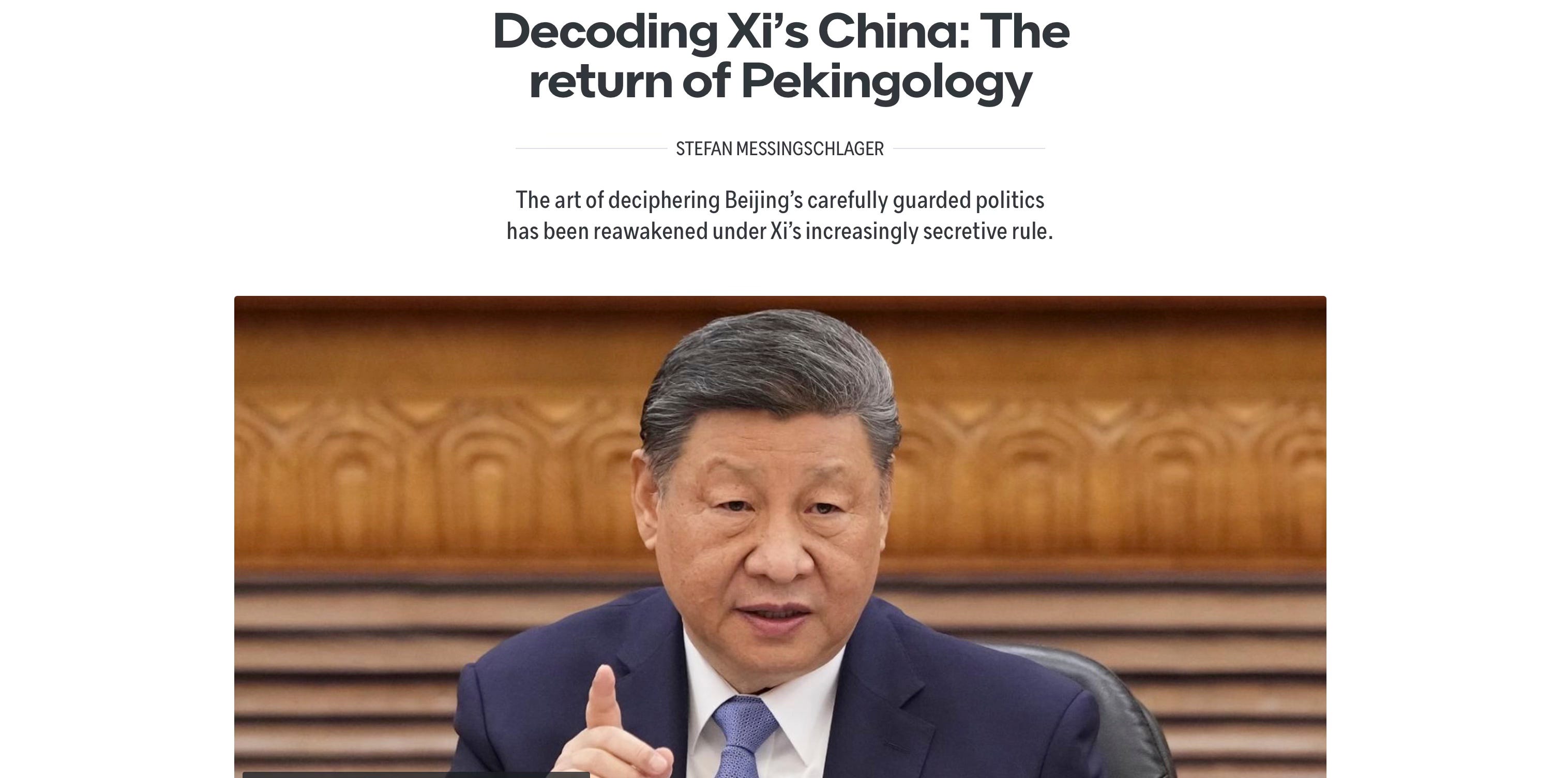
This article from the Lowy Institute, where I am a Senior Fellow for Military Studies, provides a good look at how the Chinese Communist Party has become increasingly secretive during the reign of President Xi. As the author notes, “despite unprecedented access to information, the inner workings of China’s political elite remain strikingly opaque” and that we are seeing a “return of Pekingology” to divine Chinese political decision-making. You can read the article here.
5. Russia’s Foreign Legion
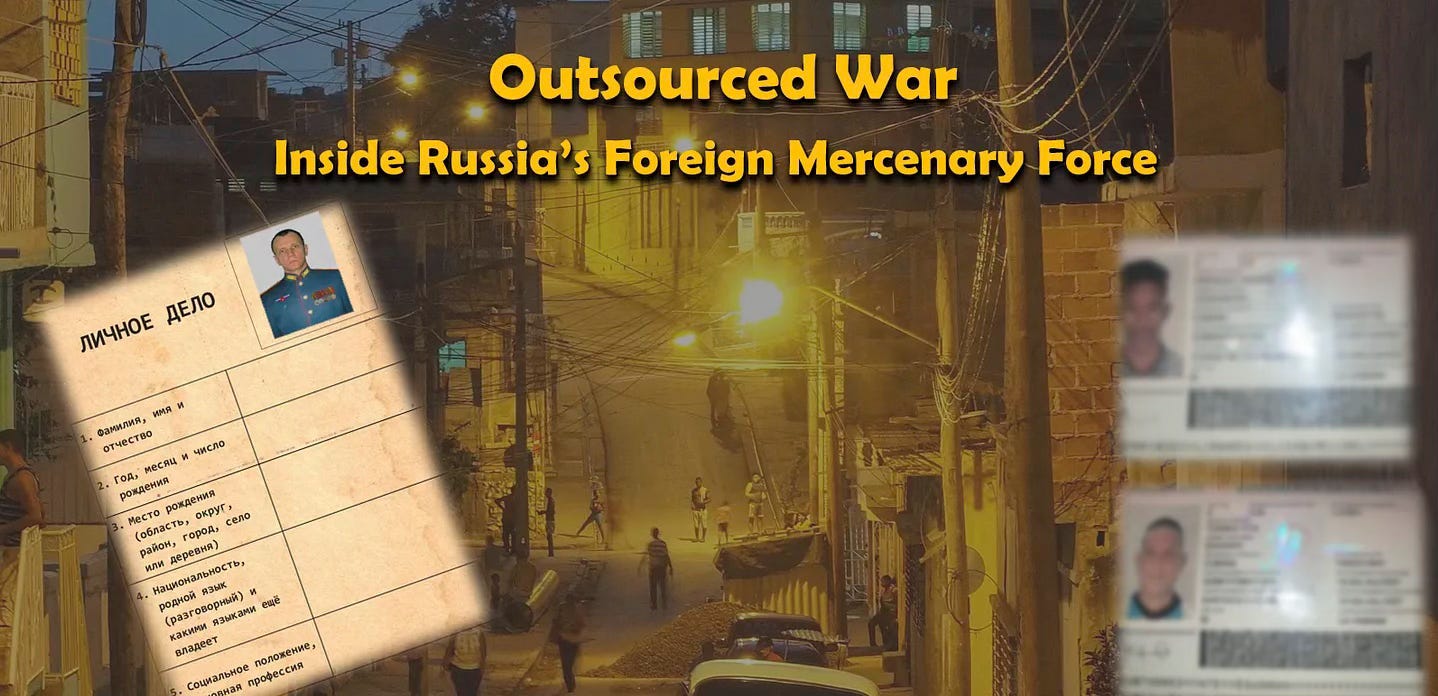
If you are following the war in Ukraine, Tatarigami and Frontelligence Insight are essential sources of analysis about the conflict. In this report, the Frontelligence team examines the Russian military and how it recruits and employs foreigners to serve in its forces in Ukraine. The report also provides an estimate of how many foreigners have joined Russia’s military. You can read the report at this link.
There are claims that the shipment of arms to Ukraine was unilaterally halted by Elbridge Colby, the Under Secretary of Defense, without the knowledge or consent of higher ups. https://www.theconcis.com/p/the-call-the-cover-up-and-the-colby
Please do not continue to downplay Russia's on-going path to victory by using scare quotes ("Russian progress)", calling territorial gains "paltry," or citing the "cost" in Russian lives as a mitigating factor. Their battlefield losses, even if tripled, do not change Russia's thinking or behavior -- any more than sanctions or economic hardships do. A square kilometer here, 600 there... These can add up, can speed up, definitely influence morale on both sides. Meanwhile Russia consolidates their grip on the occupied regions, blows up cities, agitates for removing Zelensky and other figures in authority, and -- the worst -- lets time normalize the governing situation. The world gets used to all this, doesn't care anymore... That's true Russian victory.