
The Greenland Expedition
A fictional account of an American military expedition to Greenland. I hope this situation will be resolved short of military operations. But to prevent the worst, we need to imagine it.

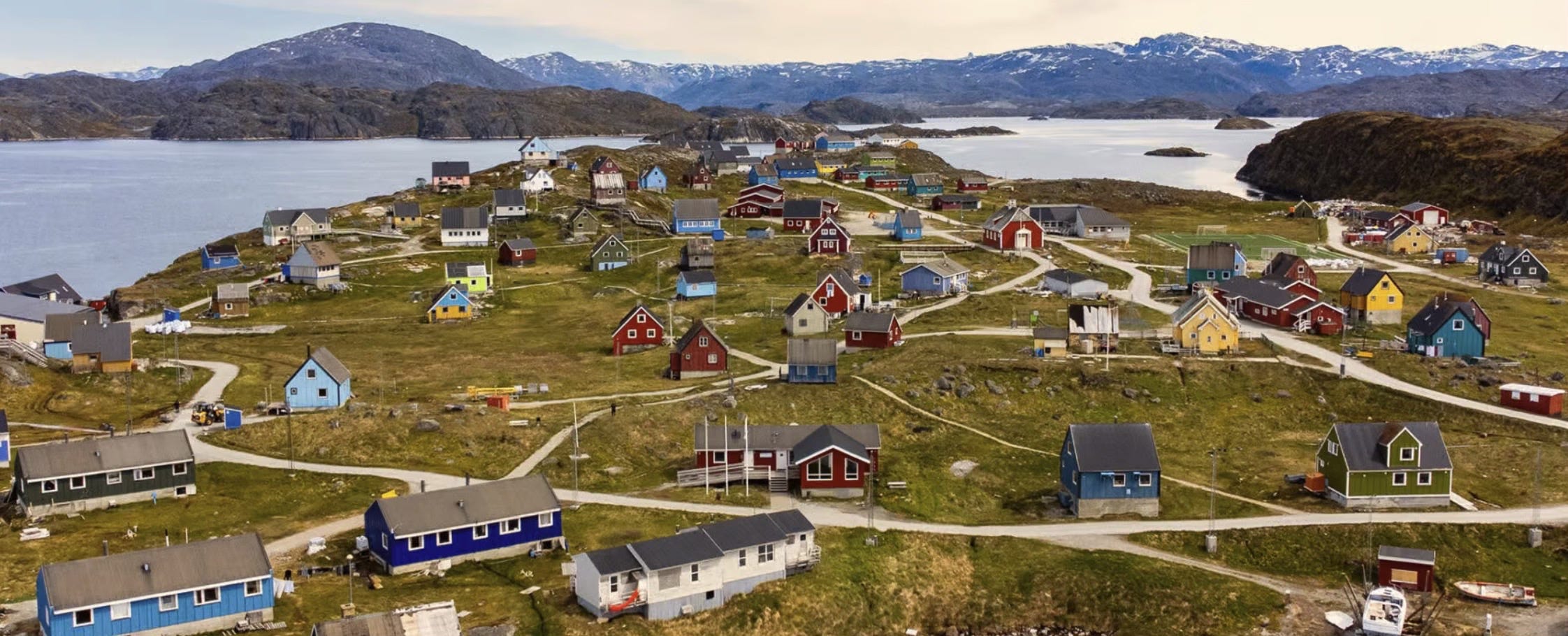
The following is a fictional narrative about an American expedition to Greenland in the coming year. It is written from the first-person perspectives of a military officer and civilian policy official in the Pentagon.
Eschewing the style of think tank papers, I have instead sought to provide a readable and more accessible account of what a very worst-case scenario for an American takeover of Greenland might look like. Indeed, any kind of military action should be considered worst case.
Like most others, I hope and expect that this troubling situation will be resolved in the coming months well short of military operations. But the world is an uncertain place, and there is no guarantee of that.
Sometimes, to prevent the worst occurring, we need to imagine it.
For ourselves, we shall not trouble you with specious pretences—either of how we have a right to our empire because we overthrew the Mede, or are now attacking you because of wrong that you have done us… We will now proceed to show you that we are come here in the interest of our empire. From The Melian Dialog, Thucydides.
We live in a world in which you can talk all you want about international niceties and everything else, but we live in a world, in the real world, Jake, that is governed by strength, that is governed by force, that is governed by power. These are the iron laws of the world that have existed since the beginning of time. Stephen Miller, White House Deputy Chief of Staff for Policy, 5 January 2026
Lieutenant Colonel White, U.S. Army
Fort Richardson, Alaska
14 May 2026
The flight over the Pole would take about eight hours, including at least one air-to-air refuelling enroute. That didn’t include the time spent mustering the troops, issuing weapons, ammunition, radios, and other items we would need for this operation. It also didn’t include the time to issue our parachutes, shrug them on along with the other combat equipment we all wore, undertake buddy checks, assemble at our aircraft and get boarded.
This was all a well-honed drill, something we had all done many times before. But even a well drilled battalion of paratroopers takes time to get into their air. Training exercise, readiness check or operational mission, it took time to do well.
I had been excited when we had first received a warning order from our brigade headquarters. I had been summoned to the brigade headquarters, and in the SCIF, had been briefed by the Brigade S3 and then the commander on a new compartment for a highly classified planning activity. My parachute battalion, one of two parachute infantry battalions in the brigade, would be the tip of the spear for the contingency that was the subject of that planning.
At first, the object of the mission took my breath away.
I was a combat veteran of course and had done my time in Iraq and Afghanistan as a junior officer like most in my generation of army officers. But back then, even though the mission was somewhat blurry at times, we had a reasonable sense that the enemy was not like us. We knew, if needed, we could engage and kill our adversary without legal or moral qualms.
This would be different.
One of the members of my syndicate at Leavenworth when I attend Command and General Staff College there had been a Danish officer. He too had served in Afghanistan. He was an armour officer and had led a troop of Leopard 2 tanks for a six-month tour in the south of that troubled land. Like me, he had been in a few gun fights, and I knew from friends in that part of the country that the Danes were happy to engage in a stand-up fight against the Taliban.
Not all of our so-called ‘coalition partners’ were willing to do so.
So, my Danish syndicate mate and I had formed a close friendship during the year at Leavenworth. We had shared beers over war stories and hosted each other’s families for cook outs when the weather permitted. Both of us had also been selected for a second year at Leavenworth to attend the School of Advanced Military Studies, or SAMS. Known throughout the U.S. military as a Jedi Knight course for operational planning, the year had been a professional and intellectual highlight.
I suppose my time at SAMS was part of the reason my battalion was chosen to participate in the early planning for this operation. That, and the fact that the commander of the other battalion had only just assumed command. I had been with the battalion for nearly 18 months, and both the brigade and division commander probably thought they had a good sense of my strengths and weaknesses.
As the U.S. Air Force C-17 transport aircraft carrying my chalk of paratroopers lifted off the tarmac in Alaska, I thought back on the year at SAMS. It had been heavy in theory and history. The ideas of Clausewitz had resonated with most of us, particularly the concepts of uncertainty, surprise and the human elements of war. Regardless of how transparent that clever think tank analysts thought the battlefield had become, those of us who had seen war knew that it was no such thing.
War remained the province of chance and the unknown despite the technology and the efforts of the tech bros to convince the administration otherwise.
So, despite our planning, our battalion sand table exercises and rehearsals, our frequent and detailed intelligence updates, and the energetic motivational speeches we received from people that included the brigade and division commanders, we did not really know the full scope of what we were flying into.
Would this be a simple parachute operation to intimidate the locals, and small company of Danish infantry at the objective into surrendering? Or would we have to fight – to fight the soldiers of a nation I had served with on combat operations, trained with at school, and who are our allies?
While the situation might not be something you anticipated, you foresaw all of the uncertainty that I feel right now, Clausewitz you old bastard.
*******
Mr Black
Washington DC
H-1 hour, 15 May 2026
Being called into a meeting about military options for Greenland was the last thing I expected that day.
Last October had been the start of my third year in the Office of the Secretary of Defense. After three years of school in Baltimore and then two more years completing a Master’s degree at Johns Hopkins School of Advanced International Studies, which we all called SAIS, I had looked around for jobs in government. The really smart graduates sought out jobs on Wall Street and paid off their student debts within a couple of years of gaining employment there.
Me, I was never interested in the economic side of things. I had trouble creating and living by even a basic personal budget. My student debt didn’t help. Nor did the costs of living in the national capital region.
But I loved defence and national security policy. So, after applying to several different agencies, and a couple of think tanks in the DC area, I was accepted for a junior policy officer position in the Strategy, Plans and Forces section of Office of the Secretary of Defense.
It took a while for me to finalise all the administration that went with the job, including Pentagon badges, security clearances, and just learning to navigate my way around the massive office building that was the Pentagon. But after six months, I was comfortable that I had developed a basic grasp of the physical and bureaucratic geography of the building.
For a while, I was not able to attend meetings and had been employed in fairly meaningless administrative jobs. But, as time went by, and I became more of a known quantity within the policy shop, I was invited to more meetings and allowed to draft more policy options briefs for my boss.
Thus, it was on a day last October that my boss was out of the building due to a root canal operation, I was invited to sit along the back wall for an initial scoping activity for a new compartment that was involved in updating the contingency plan for taking control of Greenland. At that time, it felt a little like the old Rainbow Plans before the Second World War, which included plans for war against Britain and its dominions (including GARNET for New Zealand and SCARLET for Australia).
No one seriously thought they would be required, but they were developed as part of strategic due diligence.
The Greenland CONPLAN, at least back then, felt the same.
Then Venezuela happened.
