
The New Adaptation War
Battlefield, strategic and international collaboration and adaptation are accelerating and intensifying, resulting in a global Adaptation War. Is this a new revolution in military affairs?


The requirement that a force must adapt while it is in combat is built into the inherent nature of war. Frank Hoffman, Mars Adapting.
Over the past three years, both sides in the Ukraine war have learned and adapted. Both sides have learned to learn more quickly and to proliferate lessons into their military and industrial systems. In the past six months the adaptation battle has intensified. It has technical dimensions, but also organisational and doctrinal aspects as well. Ukraine’s adaptive stance is driven by an existential threat that is not apparent to western nations not currently at war. Russia too is now learning and adapting quickly. Where they aren’t innovative, they are fast followers.
Adaptation, in technology and tactics, is now moving at a speed that is probably incomprehensible to western politicians and defence bureaucrats.
Ukraine’s learning system, which is not always fully joined up from the tactical to strategic levels, offers lessons on how western militaries might improve and speed up their learning and adaptation processes and cultures. On the other hand, Russia has learned to learn better and faster as the war has progressed. This makes it a more dangerous adversary for Ukraine, as well as a much more capable and dangerous military to threaten Europe.
Perhaps the most important feature of the interactive adaptation struggle is that it can no longer be described purely as an adaptation battle. While there are important issues to research and analyse from the battlefield and at the strategic levels of war, there is now an important international dimension. Ukraine is sharing lessons with its partners and Russia has fostered the development of an active learning community with Iran, North Korea and China.
The learning and adaptation enterprise spawned by the war in Ukraine, as well as the war in the Middle East, is now international. Ukraine, and the west, are therefore involved in an intensive Adaptation War with authoritarian powers.
The aim of this article is to examine the three components of this global Adaptation War. The article concludes by undertaking an initial exploration of the following question: is the new global learning and adaption war a new revolution in military affairs?
The Adaptation War: Three Components
During war, adaptation takes place at multiple levels. The new Adaptation War has three important components: battlefield, strategic and international adaptation systems.
Battlefield Adaptation. At the most basic level of military operations, armies, navies, air forces, and their supporting networks must be able to fight and win battles and campaigns. Thus, battlefield adaptation is the sum of actions that underpin learning and improvement on the battlefield, the dissemination of those lessons to other battlefield elements, as well as the training that prepares reinforcements and new units. In essence, this is the learning and adaptation that helps win battles as well as larger campaigns. This includes the capacity to learn and then improve military effectiveness for the employment of major forces in the achievement of strategic aims in a theatre of war.
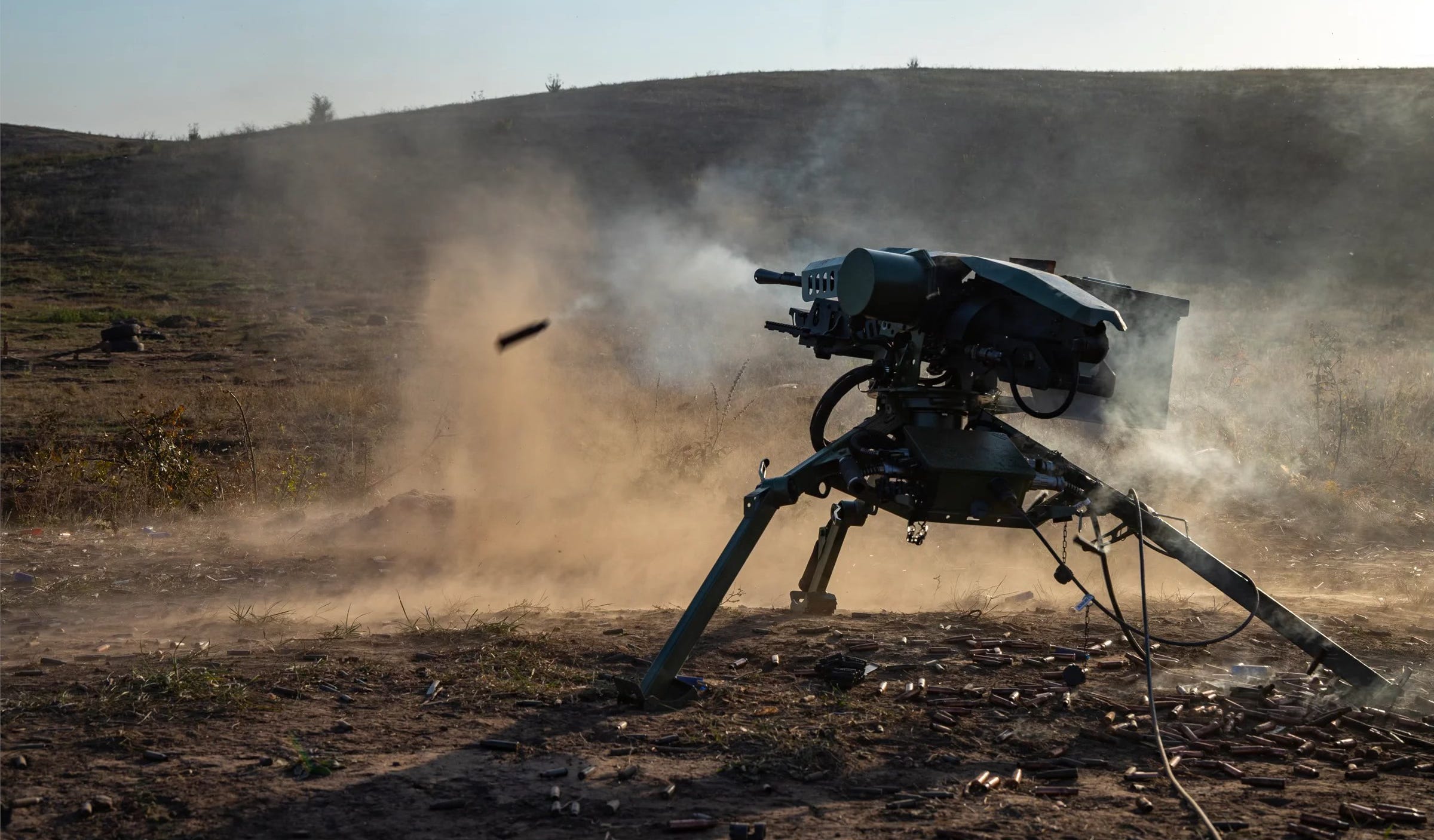
Both Russian and Ukraine have demonstrated the capacity for battlefield learning and adaptation during the war. Ukrainians accept that they have no choice but to learn and adapt, but that they also have to continuously speed up their learning and adaptation given Russian improvements in this subject. Key Ukrainian battlefield adaptations have included:
Distributed digital C2 and fires enable rapid tactical kill chain.
Fibre optics control for UAVs and UGVs.
Increasing the use of autonomous systems in Gen 2 robotic war, including the maritime operations by drones and the ground and air attack during the 2024 Battle of Lytpsi.
An expansion in use of deception, decoys and dummy equipment.
Focus on force preservation over retention of territory at all costs since early 2024.
Improvements in defensive operations in 2024 and early 2025 including widescale use of defensive fortifications in the east, and more focused targeting of Russian artillery in 2025.
Multiple interlocutors during my recent Ukraine visit indicated that the ability of Russian military organisations to learn and adapt has vastly improved over the course of the war. Russia has ‘learned to learn better’ and it has sped up its learning and adaptation cycle across most aspects of military affairs in the past year. Some interlocutors indicated that they felt that the Russians had in some areas surpassed the Ukrainians in tactical learning, analysis, doctrine and training changes in the past year. Russia is now a much more capable and dangerous military institution before the war, and it will use this to improve its operations in Ukraine as well as to threaten Europe.
The Russians are close observers of Ukrainian operations, and they actively copy Ukrainian tactics and methods that they believe work well. This observation was made on several occasions that the Russians are ‘fast followers’ and they can scale up their changes – in tactics or technology – faster than Ukraine can.
Some examples of Russian adaptations over the past year include:
Improvements to infiltration tactics. This has been an ongoing effort by the Russians to counter the pervasive drone—ISR-strike complex that dominates the region either side of the ‘zero line’ along the eastern and southern fronts.
In urban areas, the Russians often use civilian-clothed (and sometimes unarmed) personnel as scouts and forward reconnaissance.
Russian meat tactics continue to improve and become more sophisticated. The Russians have become good are finding weak points in Ukrainian units or along stretches of the frontline. They have also been very good at discerning when unit rotations are taking place and using this knowledge to attack the Ukrainians at their most vulnerable.
Improved human-machine teaming for aerial and ground autonomous and remotely operated systems, which includes widescale deployment of fiber-optic controlled drones.
Streamlined tactical and operational strike kill chains.
Reinvigorated and broadened EW operations.
Strategic adaptation. Strategic adaptation is the learning and adaptation that has an impact on the making of national and military strategy and the direction of the war overall. In short, it is the learning that underpins winning wars. If strategic adaptation is to take place, some of the fundamental assumptions held by political leaders about the objectives and kind of war being fought must also adapt based on strategic learning.
This level of adaptation is also founded on understanding one’s adversary and continuing to build that knowledge as the war develops.
One of the defining elements of the Ukrainian war effort has been the massive surge in civil adaptation to assist the operations being conducted by military forces, the intelligence services and border security forces in Ukraine. From day one of the war, private citizens have assisted with provision of drones, supplies for soldiers and funding larger research efforts in private entities.
