
The Systemic Learning Disorder in Western Military Institutions
Western military institutions, including in Australia, are failing to energetically learn from modern wars.

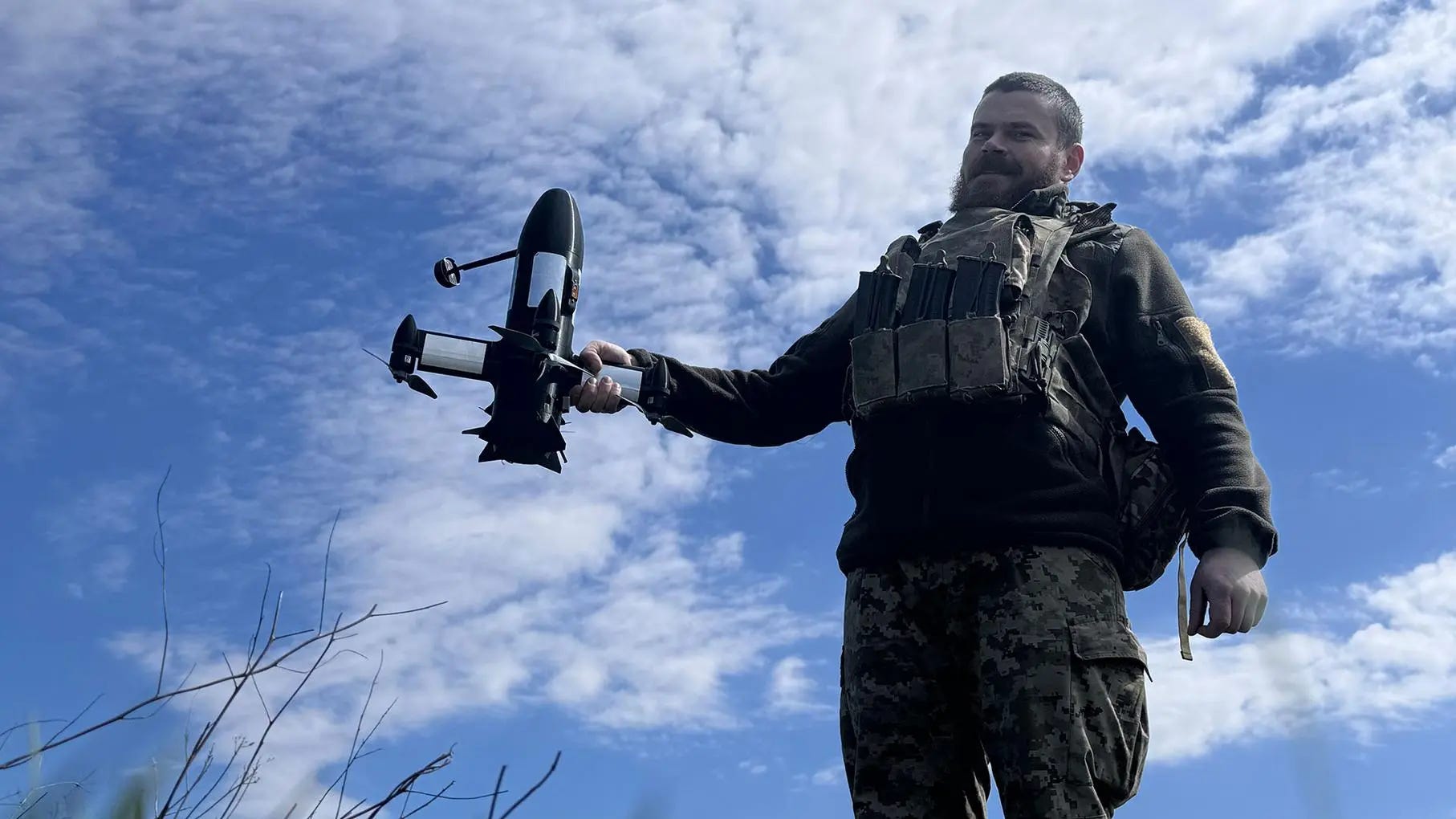
Today, my new report on the systemic learning disorder in western military organisations - their inability to learn and adapt quickly from other people’s wars - is published by the Lowy Institute. Key findings in the report include the following:
Western military institutions exhibit a systemic learning deficit that prioritises exploitation of existing competencies over exploration of new solutions. The result is dangerously slow adaptation to battlefield innovations, demonstrated in Ukraine and Iran despite unprecedented access to openly available evidence.
The inability to rapidly implement proven innovations is a failure of organisational culture, of promotion systems that reward conformity over innovation, and of political leadership that fails to demand institutional accountability for learning.
If Western nations are to compete with the new authoritarian learning and adaptation bloc formed by China, Russia, Iran, and North Korea, an array of rapid organisational, cultural, technological, and leadership philosophy changes is needed in military institutions, including in Australia.
Below is the introduction to give you a taste for the contents of my report.
Technological advances will not change the essential nature of war. Fighting will never be an antiseptic engineering exercise. It will always be a bloody business subject to chance and uncertainty in which the will of one nation will be pitted against another, and the winner will be the one that can inflict more punishment and absorb more punishment than the other side. But the way punishment gets inflicted has been changing for centuries, and it will continue to change in strange and unpredictable ways.[1] — Max Boot
In 2023, a Russian A-50 airborne early warning aircraft was attacked on the ground at the Machulishchy airbase near Minsk. Located 200 kilometres from the Ukrainian frontline, the Russian Air Force had not imagined, nor prepared for, an attack on this location. In March 2026, a United States Air Force (USAF) E-3 Sentry airborne early warning aircraft, parked in the open at a Saudi Arabian airbase approximately 700 kilometres from Iran, was destroyed during Operation Epic Fury, the American–Israeli campaign against Iran.[2] There was one key difference between these attacks: the USAF had years of warning about the threat, which it did not heed. It demonstrated a lack of learning from other people’s wars.
At the strategic level, an even more recent glaring failure to learn is obvious. The Trump administration has failed to learn the central political lesson from the war in Ukraine: even supposedly much weaker nations in a war have agency. Such belligerents can demonstrate the will to resist foreign military aggression for years, if needs be. This has been the case for over four years in Ukraine and appears to be the case in the Iran war.[3]
The contrast between Western institutional learning inertia and the speed of adversarial learning is one of the defining strategic facts of this decade. Western governments and militaries have been slow to institutionalise the lessons of Ukraine and Iran. Their adversaries have not. China, Russia, Iran, and North Korea have built an authoritarian knowledge market in which battlefield insights — from drone employment to electronic warfare, from industrial mobilisation to strategic coercion — flow more rapidly than many Western institutions have acknowledged. When one member of this bloc learns, all of them can learn.[4]
Organisations can exhibit persistent failures to learn. The foundational work of theorists [CC1] [MR2] Chris Argyris and Donald Schön distinguished between “single-loop” learning — correcting errors within existing frameworks — and “double-loop” learning, which requires questioning the underlying assumptions themselves.[5] Military institutions are archetypal single-loop learners. They excel at tactical adaptation within doctrinal boundaries but can be structurally resistant to revising core doctrines. Organisations can fall into “competency traps” where they reinforce familiar routines even when those routines no longer serve the environment.[6]
While military units in the West have demonstrated an admirable vigour to learn the lessons of foreign wars, this same energy has not been apparent in their broader military and political institutions. Indeed, mainly because of the speed of change, much of the transformation in war of the past half-decade appears to have eluded defence bureaucracies. This deficit of learning is due to a combination of emphasis on pre-existing ideas, failure to accurately understand what occurs in foreign wars, application of disputed or misleading lessons, and failure to sustain the implementation of useful lessons.[7]
A learning deficit afflicts Western military institutions, including the Australian Defence Force (ADF).[8] This is not a resource problem nor a deficit of relevant information. It is a challenge of organisational culture, individual and institutional humility, leadership philosophies, and political inattention. In an era when war has never been more visible, choosing not to learn is a strategic decision with grave consequences.
This paper contains four sections. The first examines the nature of military learning and why it is so difficult to do well in peacetime. The second and third sections offer case studies in Western learning failure: the counter-drone war and the evolution of offensive operations.[9] The fourth section draws together the analysis into recommendations for the Australian Government and the Department of Defence. The paper concludes with a call for a different kind of institutional leadership, one prepared to nurture “responsible rebellion”.[10]
You can read the full report (for free) at this link.
Notes
[1] Max Boot, War Made New: Technology, Warfare and the Course of History 1500 to Today, (Gotham Books, 2006), 471.
[2] Tyler Rogoway, “Russian A-50 Radar Jet Intact after Claimed Drone Attack in Belarus”, The War Zone, 28 February 2023, https://www.twz.com/first-image-of-russian-a-50-radar-jet-after-claimed-attack-in-belarus; Tyler Rogoway, “Images Show E-3 Sentry Totally Destroyed from Iranian Strike (Updated)”, The War Zone, 29 March 2026, https://www.twz.com/air/images-purportedly-show-e-3-sentry-totally-destroyed-from-iranian-strike.
[3] While not a specifically military lesson, this is worthy of additional study, as are the links between political and military learning deficits. TheIranian regime, since the commencement of hostilities in February 2026, has steadfastly refused to surrender or concede to the Trump administration’s multiple threats. See: Lorenzo Tondo and Jason Burke, “Iran Rejects Trump’s Demand for Unconditional Surrender as a ‘Dream’”, The Guardian, 8 March 2026, https://www.theguardian.com/world/2026/mar/07/iran-trump-unconditional-surrender-war-masoud-pezeshkian.
[4] Mick Ryan, Adaptation War: Confronting the New Adversary Learning and Adaptation Bloc, (Special Competitive Studies Project, 2025), 4–5.
[5] Chris Argyris and Donald A. Schön, Organizational Learning: A Theory of Action Perspective, (Addison-Wesley, 1978).
[6] Barbara Levitt and James G. March, “Organizational Learning”, Annual Review of Sociology 14, (1988), 319–340.
[7] Brent L. Sterling, Other People’s Wars, (Georgetown University Press, 2021), 275–280.
[8] It was not until three-and-a-half years after Russia’s full-scale invasion of Ukraine that the Australian Minister for Defence commissioned a lessons study from the war or dispatched a military attaché to Kyiv to facilitate structured learning. The Australian Defence Force currently deploys few drones and no armed drones, and its capacity to conduct counter-drone operations for deployed forces and critical infrastructure is, in practical terms, very limited.
[9] The case studies of failed learning in this paper might be joined by others. One example is how Ukraine has transformed war at sea with its operations in the Black Sea. Other areas for further study might include the conduct of cognitive warfare, combat medical evacuation, and national resilience in war. Coverage of Ukraine’s war in the Black Sea includes David Kirichenko, “Step by Step, Ukraine Built a Technological Navy”, USNI Proceedings, Vol. 151/5/1,467, May 2025, https://www.usni.org/magazines/proceedings/2025/may/step-step-ukraine-built-technological-navy; Peter Dickinson, “Ukraine is Shaping the Future of Drone Warfare at Sea as Well as on Land”, Ukraine Alert Blog, Atlantic Council, 12 June 2025, https://www.atlanticcouncil.org/blogs/ukrainealert/ukraine-is-shaping-the-future-of-drone-warfare-at-sea-as-well-as-on-land/; and, H.I. Sutton, “Timeline of Ukraine Invasion: War in The Black Sea”, Covert Shores, 8 May 2026, https://www.hisutton.com/Timeline-2022-Ukraine-Invasion-At-Sea.html. On cognitive warfare, see Frank Hoffman “Assessing Cognitive Warfare”, Small Wars Journal, 14 November 2025, https://smallwarsjournal.com/2025/11/14/assessing-cognitive-warfare/; and, Cognitive Warfare, NATO, https://www.sto.nato.int/wp-content/uploads/chief-scientist-report-cognitive-warfare-final.pdf.
[10] Martin Dempsey, No Time for Spectators: The Lessons that Mattered Most from West Point to the West Wing, (Missionday, 2020), 185–205.
Thanks Mick! I’m sure you’ve already written about this, but for Western leaders and bureaucrats war has (very understandably) a strong negative coding: leaders who think and talk about it are viewed negatively. Elite institutions have largely abandoned military history, and look askance at the “hard” elements of national power. I get it, no one wants to glorify war. But the smartest people need to study war and prepare for conflict, to deter it and to ensure democracies can win it. Our adversaries do not have the same compunctions; they are fast learners because they simply have different mental maps of what they want the future to look like. Until Westerners get a better theory of mind for aggressive authoritarian states, we will lag behind. As Michael McFaul recounts, Putin said to him: “You look at us, and we look like you. And you make the mistake that because we look like you, we think like you. But we don't.”
Dwight Eisenhower warned us about the military - industrial complex, like an old solider the warning faded away. Forgotten wisdom is relearned at great expense. Thanks for the article; may your words save lives.