

Putin puts on a convincing show of stubbornness so that this has become accepted as permanent feature of the conflict. Sir Lawrence Freedman, Comment is Freed, 8 September 2026
The uneasy calm between Washington and Iran continued this week without anything emerging that looks like peace. Neither side has translated the current pause in combat operations into talks. Mohsen Rezaei, secretary of Iran’s Supreme National Security Council, dismissed Trump’s talk of progress outright: “No talks until Iran’s conditions are met. Period!” Trump, for his part, swung from dismissing negotiations altogether on 2 September to telling reporters by 16 September that he hoped “we’re toward the end of the war,” a shift that is more indicative of improvisation than strategy.
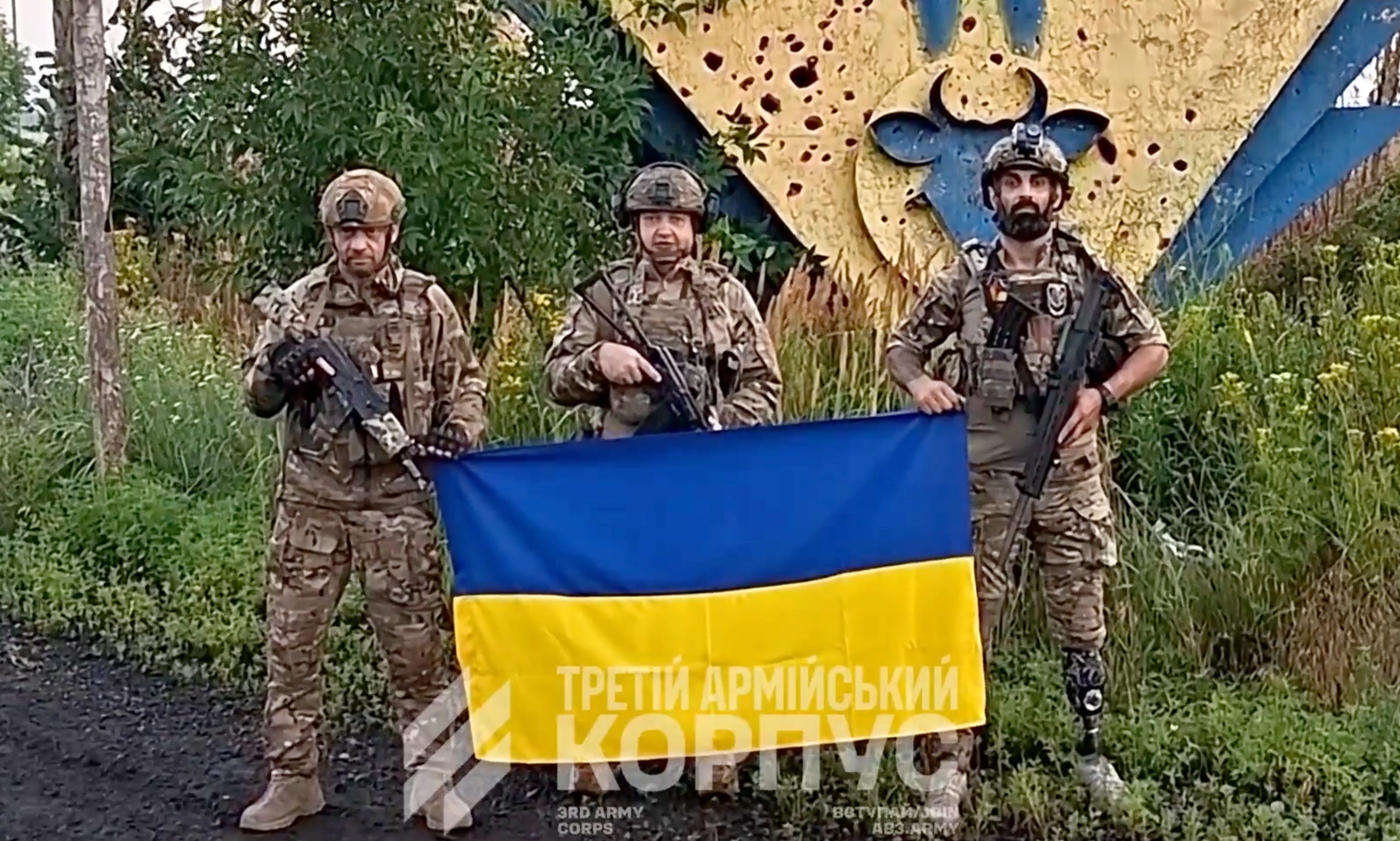
In Ukraine, the same pattern of stalled diplomacy and active war applied even as one part of the picture briefly inverted. Ukraine’s 3rd Army Corps used the week to disclose a counteroffensive it had been running in near total secrecy for four months, its first sustained tactical initiative of the year, while Congress finally sent Trump a sanctions bill aimed squarely at both Moscow and Tehran, a reminder that the two wars this update tracks are now legally as well as strategically linked. None of that translated into Russia easing its bombardment of Ukrainian cities and railways, or into Putin treating this week’s State Duma elections, including those held in occupied Ukrainian territory, as anything other than a demonstration that the war will continue on his terms.
Welcome to this week’s edition of The Big Five
Ukraine
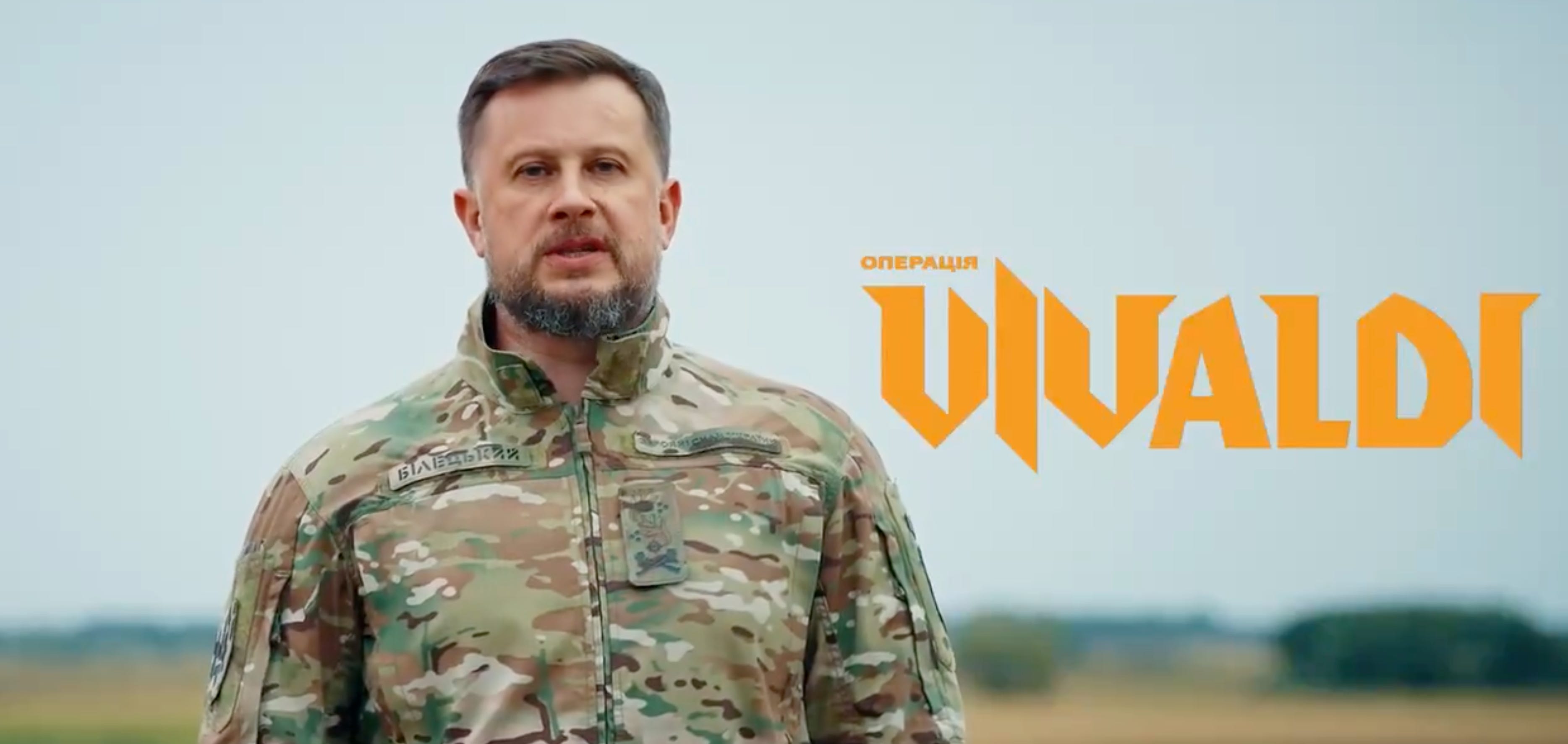
Vivaldi: The Summer-Autumn Counteroffensive. The week’s big story was the official disclosure of an ongoing Corps-level Ukrainian counteroffensive in eastern Ukraine. It represents the second significant Ukrainian counteroffensive this year (the first was in the south) and indicates Ukraine has developed new offensive techniques that are having an impact on ground combat operations.
Brigadier General Andrii Biletskyi, commander of the 3rd Army Corps, confirmed on 15 September that his forces have been running an offensive codenamed Vivaldi in northern Donetsk Oblast near Lyman since roughly May, conducted under very strict operational security. There have been open-source stories about this for the last couple of weeks, including my report here once news broke about the counteroffensive, but it was good to get an update from the commander on the ground.
Ukraine claims at least 75 square kilometres cleared of Russian infiltration units, and a further 10 square kilometres liberated around Novoselivka, Oleksandrivka, Yarova and Korovyi Yar, with the settlement of Seidnie also retaken. Several open-source analysts, working from geolocated footage put the true figure considerably higher, at 200 to 240 square kilometres. This gap is probably the result of the Ukrainians not yet wanting to announce information about some ongoing elements of the operation, and reporting lags.
Biletskyi made an interesting comment that telegraphs that this operation is far from over:
Vivaldi has four seasons. This is only the first.
Russian military commentators have struggled to spin the results. Russian military analyst Valery Shiryaev reportedly described the situation near Lyman as worse for Russian forces than the earlier rout at Kupiansk, an interesting admission given how that battle has already been treated as a low point for Russian infiltration tactics.
Ukraine’s claimed toll on the Russian units involved, roughly 1,500 soldiers, more than 12,000 drones and hundreds of vehicles and artillery pieces, is unverified. But the updates issued throughout this week by the 3rd Army Corps tell a story of mid-range strike operations (out to 120 kilometres in depth) being used to isolate the battlefield (using artillery, glide bombs, drones and EW), destroy Russian drone operations centres and to interdict Russian logistics of the 20th and 25th Russian Combined Arms Armies.
Part of this was blinding and crippling the Russian Rubicon drone organisation in front of the 3rd Army Corps, forcing its withdrawal. This is not only important for the conduct of the counteroffensive but heralds new counter drone tactics to support the return of manoeuvre to land combat operations. The 3rd Army Corps issued a short release that described this key element of its Operation Vivaldi, noting that:
3rd Corps fighters disabled Rubicon’s command system: they destroyed its logistics, ammunition depots, drone launch sites, newly formed units, and experienced UAV operators…The Russians lost the ability to quickly replenish the unit with resources and trained personnel.
This suppression and destruction of enemy drone units, especially the coordination mechanisms for its use in reconnaissance, surveillance and strike, is now a central element in the reconnaissance battle, the conduct of manoeuvre and exploitation / securing of gains. I would hope that Western military institutions are studying this closely.
After a year in which Ukraine’s public narrative has been almost entirely defensive, Ukraine’s government was willing to sit the results of its four-month offensive in the east rather than announce it in progress, only revealing it once the results were judged worth publicising. That says something about how the Ukrainian government is now managing expectations at home and abroad.
Whether Vivaldi’s next movement expands on current operations, or simply consolidates what has already been taken, is one of the more interesting battlefield questions for the coming months. As I wrote last week, offensive manoeuvre is not dead, and Vivaldi has demonstrated this. But military institutions have needed time to make the intellectual and structural reforms necessary to adapt to the saturation of drones across the battlespace. I wrote in that piece from last week that:
Despite the difficulty in ground operations manoeuvre observed in eastern Ukraine over the past few years, offensive operations are still possible in modern war. But they need the intellectual effort to develop new techniques to make them viable and repeatable at scale. This includes new thinking about incorporating autonomous systems at scale and across domains, more widespread employment of electronic warfare, new thinking about deception and operational security, and the application of AI to support command decision-making as well as rapid learning and adaptation.
These efforts represent the really hard work of military institutions. Such hard thinking to transform and build military effectiveness for a new era of war was observed during the First World War to break the trench stalemate, during the Second World War to develop successful amphibious operations that underpinned D-Day and operations in the Pacific such as those at Okinawa, and in the 1970s and 1980s to develop evolved air-land operations to overcome Soviet mass. We may be seeing a similar form of intellectual development to provide a solution to a crucial operational problem – liberating more occupied Ukrainian territory – happening now in Ukraine.
Ukraine’s new commanders, revised ground force command and control, unified short-, mid-, and long-range strike capabilities and new ways of thinking about offensive operations have demonstrated the ability and willingness of the Ukrainians to go on the attack where conditions are favourable. Their ground operations in 2026 have ensured that Russia has definitively failed in its 2026 ground offensive operations. This has denied Putin the ability to achieve any of his wider war aims and destroyed Russian narratives that it might one day achieve a victory over Ukraine. The Ukrainian successes in 2026 have probably influenced the position of the Trump administration toward the war.
Does Vivaldi Herald a New Phase of the War? We may be approaching, or in the midst of, a shift to a new phase of this war. The characteristics of this new phase might include the following:
Ukraine implementing new offensive manoeuvre techniques which neutralise Russian infiltration tactics while suppressing drone operations that provide Russian situational awareness.
The use of these offensive operations to liberate territory and destroy Russian forces at the same time.
Integration of tactical and operational land manoeuvre into a larger mid and long-range Ukrainian strike campaigns.
Exploitation of gains on the ground and in long-range strike to influence opinion in Europe and America, put pressure on Putin, and shape the stop-start peace talks.
Rapid development of new interceptors in the short term to degrade effectiveness of Russian jet drones. Concurrently, Ukraine is working on active and passive measures to reduce the impact of Russian ballistic and hypersonic missiles including more strikes on missile factories and units in their home locations deep in Russia.
Russian escalation through increased participation in ground combat and missile strike operations by North Korea.
Russian escalation through increased strikes on civil targets to degrade Ukrainian morale in the winter and shift the narrative back to one of “inevitable Russian victory” (as laughable as that now is).
Russian escalation of its war against European nations including subversion, sabotage, breaching sovereign airspace, and potentially, strikes on targets inside Europe related to the war in Ukraine.
Efforts by both sides to influence the Trump administration in the lead up to, and immediate wake of, the US mid-term election.
Both sides believe that they can achieve an advantageous outcome in the war.
Trump Signs Russia Sanctions Bill. After months of delay, the House of Representatives passed the Lindsey O. Graham Sanctioning Russia and Iran Act on 16 September, following the Senate’s 86 to 11 vote back in August. President Trump has now signed the bill into law.
The bill adds to the current sanctions framework and is aimed at the Russian officials, oligarchs and defence-industry suppliers sustaining the war in Ukraine. It also restricts foreign banks that transact with sanctioned Russian institutions, targets the shadow fleet moving Russian oil, and gives the administration authority to impose additional duties on countries that help Moscow evade the international sanctions regime that is already in place.
The bill allows President Trump to impose tariffs of up to 100% on the five largest purchasers of Russian oil and natural gas. This will have the largest impact on India and China, but it may also have an impact on those nations that source large amounts of refined products from these countries. India is a major global refining hub, operating massive facilities like the Jamnagar refinery, and it exports high-value petroleum products to international markets such as the Netherlands, the United Arab Emirates, Singapore, South Africa, Australia, Israel and the United Kingdom
China’s refined oil exports (comprising diesel, gasoline, and jet fuel) are heavily oriented toward regional markets across Asia-Pacific and major bunkering hubs. Major customers of these Chinese products include Singapore, South Korea, Indonesia, Malaysia, the Philippines, Australia, Vietnam, Japan and Taiwan.
President Trump is set to meet with Xi Jinping at the White House on 24 September and it will be interesting to see if this issue is discussed.
The bill’s termination clause (Section 117) is worth examination because it gives some indication of how the Trump administration views the theory of how the war in Ukraine ends. Presidential authority to lift the Russia sanctions is tied to certifying both a peace agreement acceptable to Ukraine’s government and a cessation of hostilities and efforts to subvert or overthrow the government of Ukraine and is subject to congressional review. This is a much stricter criterion than the current American ideas about ceasefires being peddled by Witkoff and Kushner. (In a related issue, the Kyiv Independent just published an expose on Steve Witkoff’s rather hapless efforts so far in his negotiations with Kyiv and Moscow, which you can read here.)
Moscow’s response has included the suggestion that the bill will derail the current peace process. This is interesting because Putin has worked hard since 2022 to subvert every initiative to develop a peaceful and just resolution to the war. Given the bill has a provision that lets the US president waive any of the measures against Russia on national security grounds (as long as the White House notifies Congress of its decision), Putin is already working to ensure that Trump does not implement the harshest measures of the bill.
Russia’s Jet-Powered Drones. The adaptation battle in the skies over Ukraine continues with Russia’s jet-powered Geran variants moving from a niche capability (first reported two years ago) to a central component in the nightly terror bombing campaign being executed by Russia. Ukrainian officials now report that jet-powered drones account for a rapidly growing share of nightly strike packages, with roughly 1,400 units launched since the start of the year against only 180 across the whole of 2025.
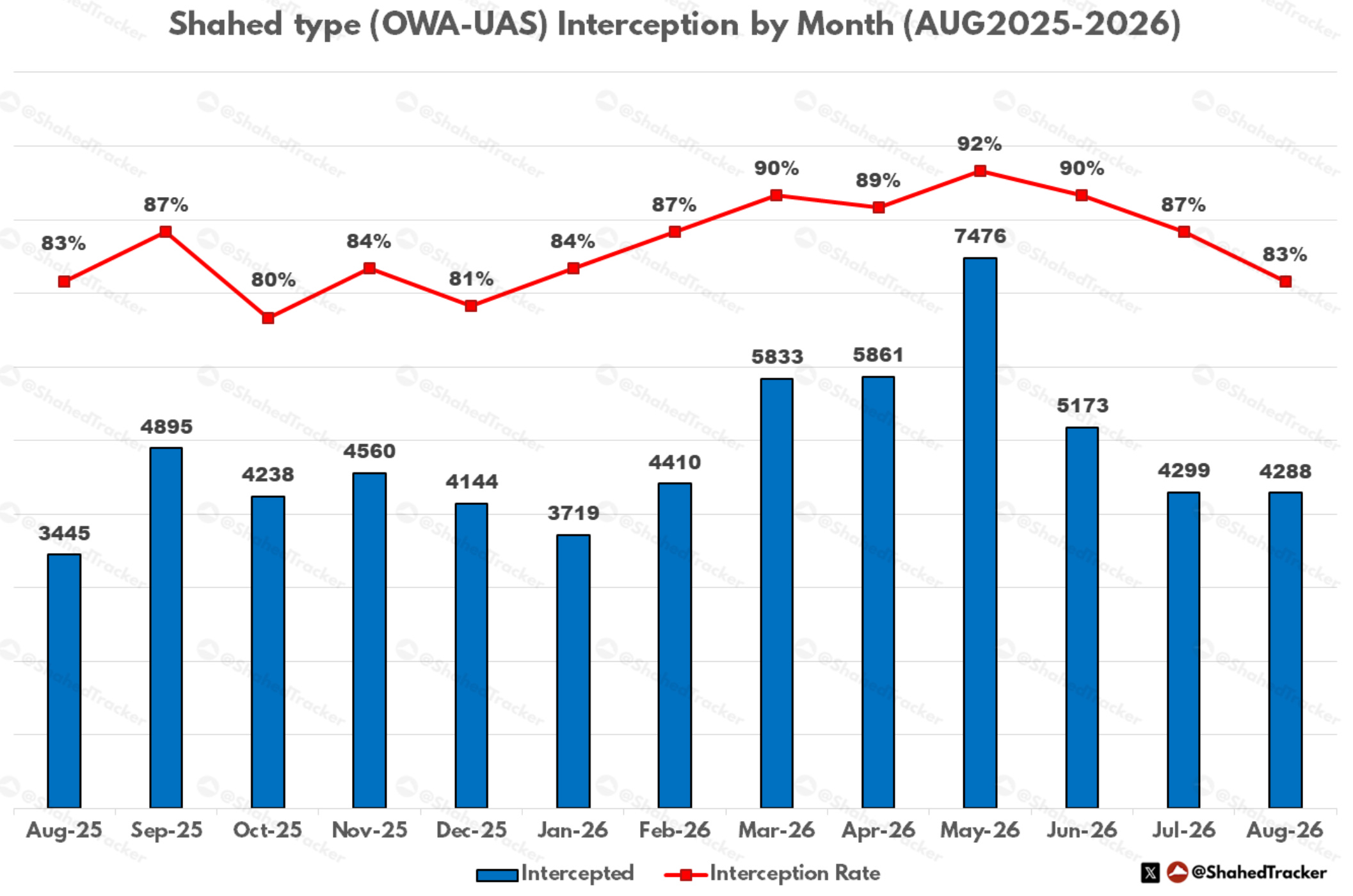
The Geran-3, based on a Chinese Telefly turbojet, and the newer Geran-4 and Geran-5, one of which has abandoned the delta-wing airframe entirely for something closer to a small cruise missile, now fly at speeds up to 600 kilometres an hour. This has proved to be beyond what Ukraine’s mobile fire groups and older interceptor drones were designed to intercept. The decrease in interception rates since May this year, from 92% to 83%, is indicative of this challenge.
On 15 September, President Zelenskyy confirmed that a newly trialled Ukrainian interceptor had successfully hit one of the jet-powered variants, while acknowledging the system still needs refinement. In the past 24 hours, the Ukrainian president reported a second successful interception.
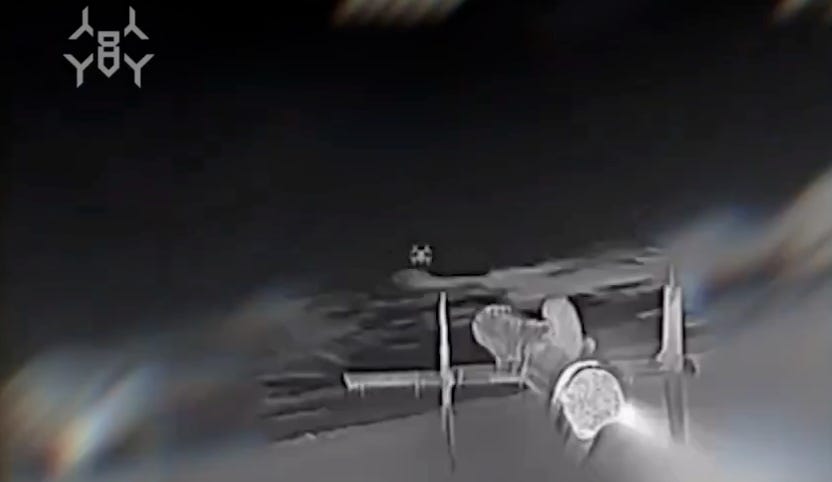
The logic behind Russia’s shift is straightforward. Mixing fast jet-powered drones with slower propeller variants in the same waves of drones forces Ukrainian air defence crews to prioritise under pressure. Every air raid now arrives faster and with less warning than those before it.

Russia’s Civilian Passenger Train Strike Campaign. It has been obvious since the beginning of this war that Russia has no interest in differentiating between military and civilian targets. Nor has it demonstrated the slightest interest in adherence to the laws of war regarding proportionality or discrimination or adherence to the Geneva Conventions.
Yet another case study in Russia’s approach to civilians has emerged over the past few weeks as Russia increases its targeting of civilian trains. This is hardly a new approach, but Putin and his military forces have stepped up their strikes in recent weeks. On 13 September a Russian drone struck the locomotive of a Kyiv-Warsaw passenger train near the Yahodyn crossing on the Polish border, narrowly missing a diplomatic train that had carried European security advisers and former UK prime minister Boris Johnson through the same station shortly before, and a separate train carrying former CIA director David Petraeus. Railway staff who had been warned in advance evacuated the crew and there were no casualties, but the near miss on a train carrying senior Western officials was a message from Putin – don’t visit Ukraine.
The pattern continued as the week went on. On 16 September a Kyiv to Mykolaiv passenger service was struck, and on 17 September an overnight drone attack hit infrastructure near an Odesa to Dnipro service, in both cases with passengers evacuated in advance and no casualties reported. This is part of the broader pattern, which can be seen in the graph below tracking strikes on Ukrainian railways in the past 18 months.
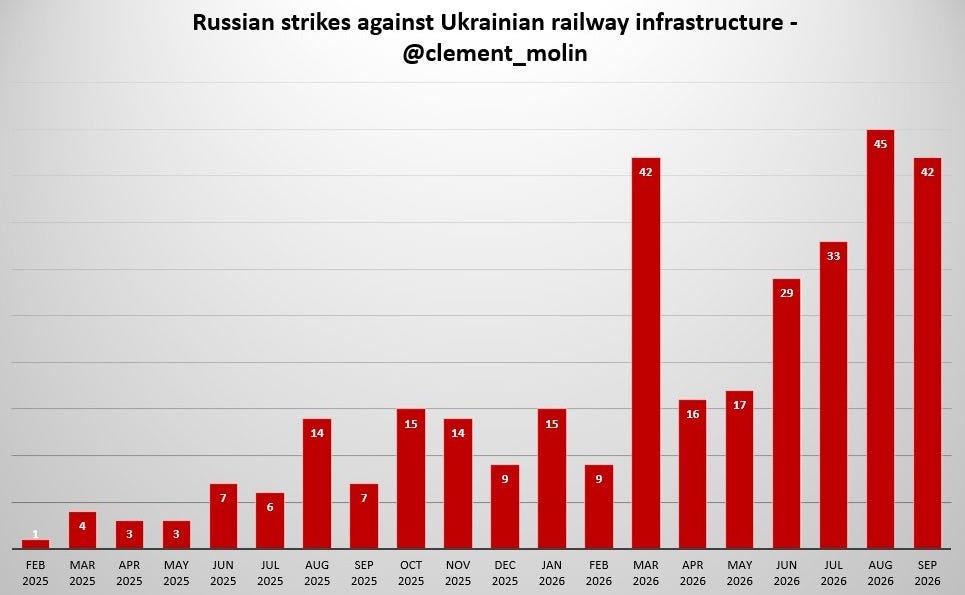
Ukraine’s railway operator has clearly built early-warning procedures robust enough to keep getting passengers off before impact, which is itself a comment on how routine this threat has become. Three attacks on passenger services were conducted in different parts of the country in five days.
This campaign is not just killing and wounding civilians. An article in Politico estimates that the Russian railway strike campaign is destroying up to 40 railway locomotives each month. The report notes that:
Moscow’s strikes have damaged or destroyed more than 500 locomotives since the full-scale invasion began in 2022; more than 60% of them have been hit in the past eight months. Ukrainian Railways is now losing 37 to 40 locomotives a month. Russia’s defence ministry has acknowledged it is striking trains, describing the attacks as part of a strategy to destroy Ukrainian logistics used to transport foreign weapons for Kyiv’s war effort.
Gunpoint Elections. Russia also went to the polls for State Duma elections over the period 18-20 September, and for the first time extended voting into the occupied Ukrainian regions of Donetsk, Luhansk, Kherson and Zaporizhzhia, where more than 3.5 million registered voters were reported. Some voters were visited in a door-to-door campaign by election officials accompanied by soldiers.
A report in Politico Europe described the election as follows:
The Kremlin’s response to the opposition suggests it is worried that people are growing tired of the war. By removing anti-war candidates from the ballot and promoting pro-war voices, Moscow seeks to overstate public support for the invasion of Ukraine, says Ivan Preobrazhensky, a Russian political scientist based in Prague. “By electing them, people are effectively endorsing the policies of the ruling party and the government,” he told POLITICO, even though voters have no real alternative.
Time Magazine notes that:
The outcome of the vote has been all but guaranteed since before the first ballots were cast. The elections, the first parliamentary vote the country has held since its invasion of Ukraine in 2022, are widely expected to result in the Kremlin-aligned United Russia party maintaining its overwhelming dominance in the Duma…This is a way for him [Putin] to theoretically show that the Russian population is united behind his war and wants to continue fighting, and that Russia has had this referendum and will continue to push harder.
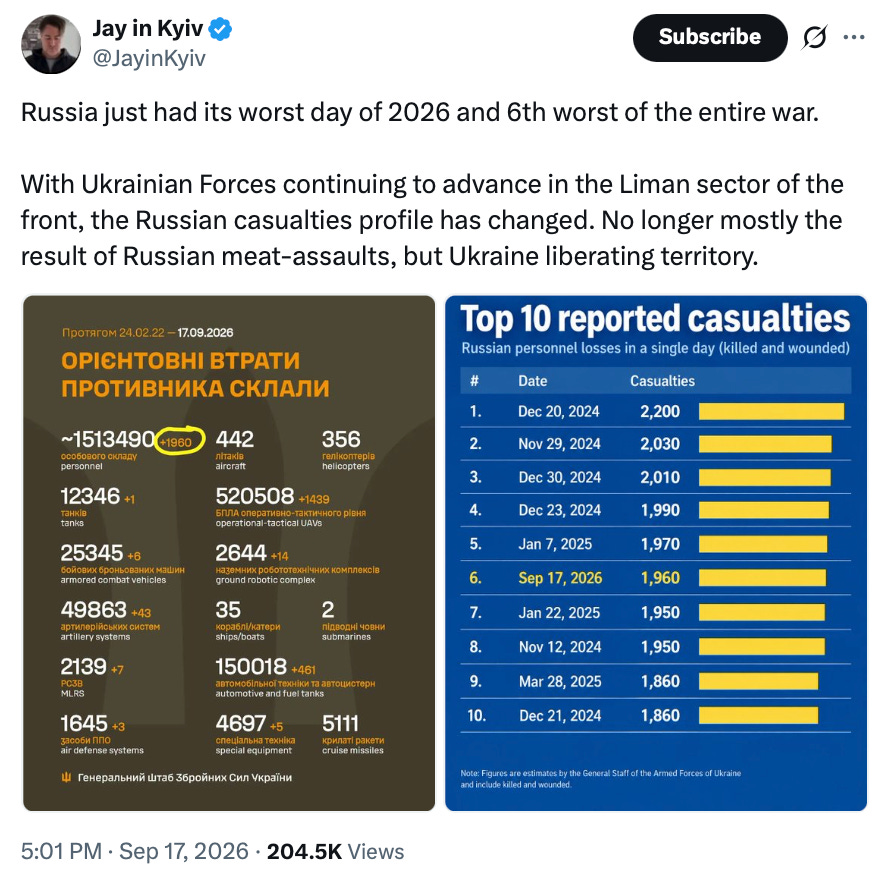
Against that backdrop, ISW’s assessment for 18 September noted the Kremlin was still publicly denying any plan for a fresh mobilisation even as Russia’s casualty rate suggests some form of involuntary reserve call-up is difficult to avoid. Indeed, this week saw a couple of days with some of the highest daily casualty rates of the war.
Ukraine Assessment. Ukraine this week demonstrated its capacity for seizing the initiative, in the form of a counteroffensive it concealed for four months, and its vulnerability to a Russian terror bombing campaign that has expanded its scope to new targets. Congress’s sanctions bill is a welcome sign yet that the US is willing to keep raising the cost of Russian intransigence. However, the waiver clauses in the bill (section 115) bear close scrutiny, because Trump has the latitude to simply not exercise the sanctions proposed in the bill.
Russia, meanwhile, used its sham elections to signal that continuity, not compromise, remains the Putin plan. He extended a rigged vote into occupied Ukrainian territory at gunpoint while treating diplomatic gestures with disdain.
**********
It’s time to explore this week’s recommended readings.
This week’s recommendations include an informative article about the risks of AI from a former Anthropic researcher, and an interesting article on a new Chinese mothership for large submarine drones. There are also articles on cognitive warfare and its impact on NATO strategic communications, an exploration of potentially new Pentagon doctrine on the use of nuclear weapons, and on the US military preparing for military operations around the moon.
As always, if you only have the time available to read one of my recommendations, the first is my pick of the week.
1. AI Risks Increasing

One of the big stories in tech news in the past week was the revelations by a former researcher at Anthropic about the risks posed by leading edge AI models. As this article notes, “Jacob Coxon, an AI researcher who also worked at OpenAI on pretraining AI models, quit his job at Anthropic over concerns that AI development could lead to human extinction.” The article covers several aspects of contemporary concern about the trajectory of AI and human safety and can be read at this link
2. Big Submarine Drone Mothership
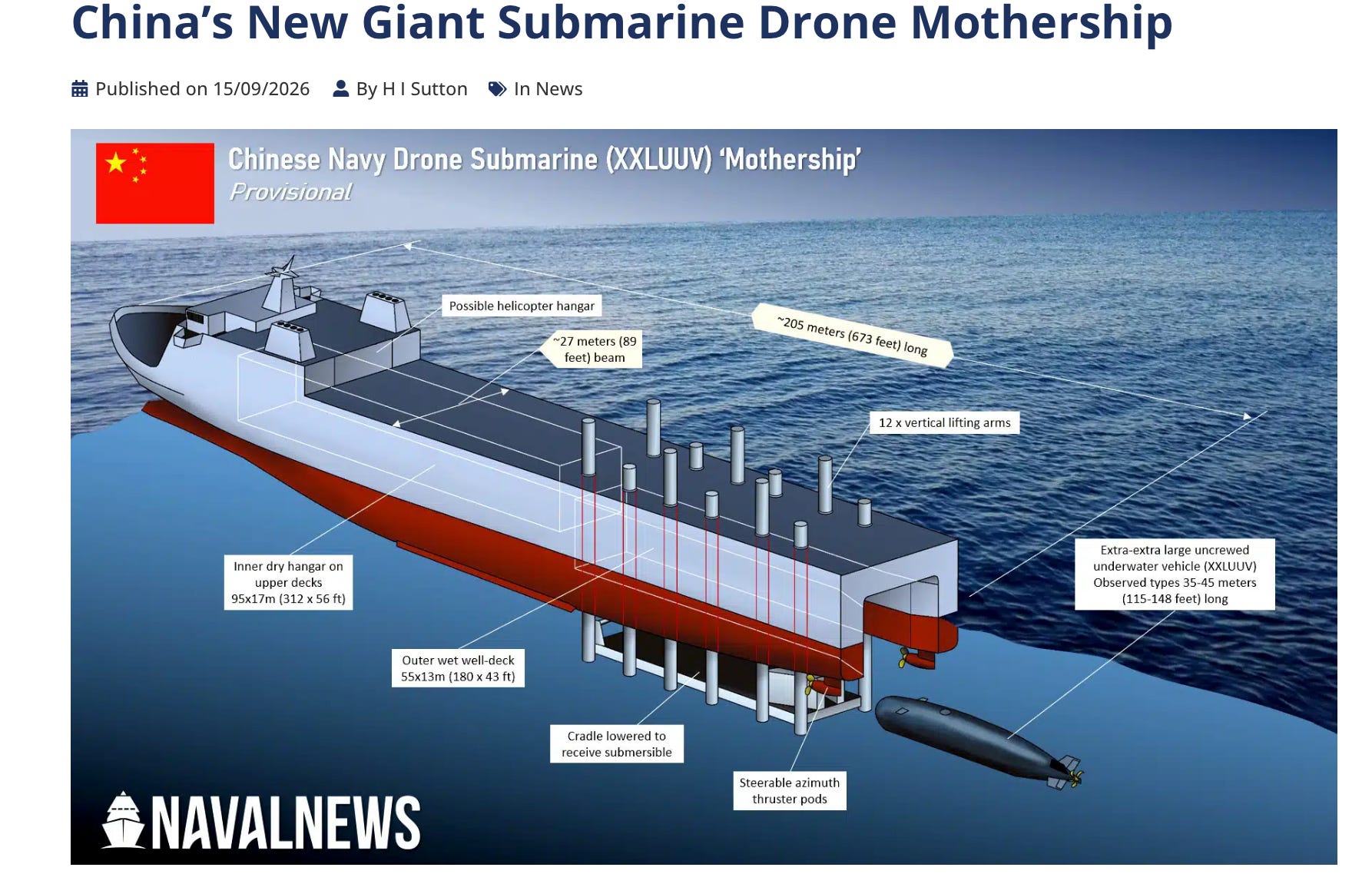
H.I. Sutton is one of my favourite analysts of naval capabilities, and this week he published a piece at Naval News about a new Chinese Navy drone submarine mothership. He notes in his article that “it seems probable that the mothership will act as a mobile submarine tender for the XXLUUV, performing maintenance and keeping them out of the water when not in use. But it can also act as a launch and recovery platform for combat missions.” His full analysis is available here.
3. Cognitive Warfare and NATO Strategic Communications

The Small Wars Journal has been publishing a series of really excellent articles that explore the concept of cognitive warfare from different perspectives. It has been a terrific debate so far, and the series is resulting in a long overdue, open exploration of the topic. In this article, the central proposition is that “cognitive warfare is not a capability but the contest itself. It reaches past information into everything that shapes how we perceive and engage with the world, impacting who we believe we are and what we stand for. The contest is continuous, an ever-present fight within our day-to-day lives.” The full piece is available at this link.
4. New Nuclear Doctrine for America

On the anniversary of 9/11, the Bulletin of the Atomic Scientists published an article that describes a secret effort by the Pentagon to review its nuclear posture. While we should not be surprised at this periodic review about the doctrine for employment of nuclear weapons (most US administrations have done this), this article proposes that the latest review may bring back battlefield nuclear weapons and the doctrine associated with their employment early in a conventional war. It is a fascinating piece, and can be read here.
5. Moon War
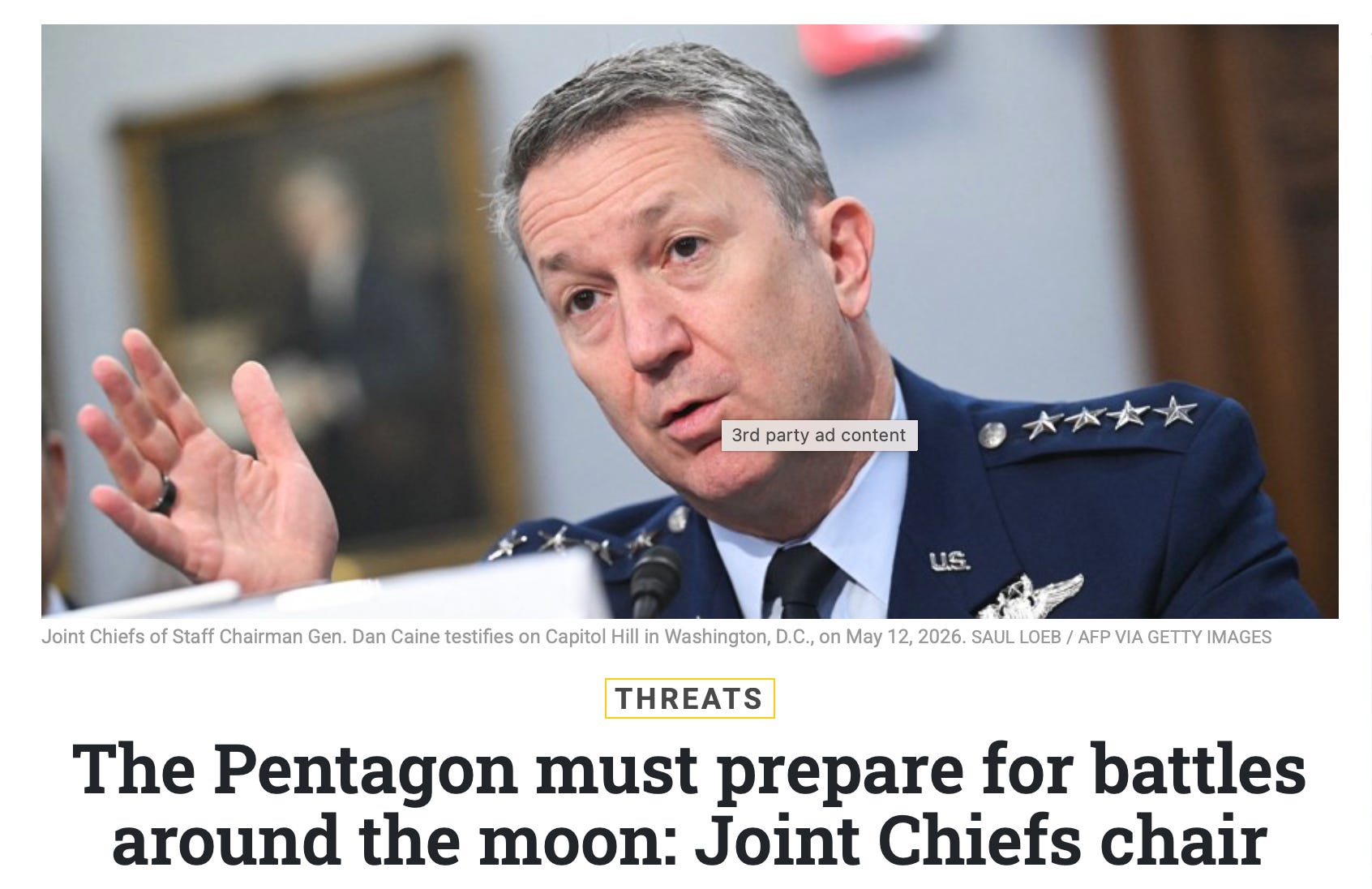
In an interesting article published during the week, Defense One covered comments made by the Chairman of US Joint Chiefs of Staff about space warfare. He described how America’s military must be prepared “to fight, endure, and win, in global contested environments, from the seabed to cislunar space.” It got a lot of attention, but his comments make a lot of sense. China has invested in cis-lunar space operations because it is a massive expanse of space where it is difficult to track objects, and therefore a region of space from which it might generate surprise against American space craft orbiting around the earth. Spoiler alert: my forthcoming book, Pacific Storm, covers this issue in detail. Anyway, you can read the article from Defense One at this link.
I sure hope Operation Vivaldi lives up to its promise of 3 more seasons! If they're half as successful as the first one they'll be well watching.