
Are You Ready? Zelenskyy's Message at Munich. The Big Five, 15 February edition
My regular update on war and great power competition. This week, Munich and diplomacy, StarLink and the Ukraine ground war, an assessment of 2026, and my Big Five recommended reads.

Are you ready – not only for the challenges that Russian aggression brings, the challenges of modern war – but also for the constant effort to convince the world, to fight for support, to defend your country’s interests every single day, as Ukraine must do? President Zelenskyy, Munich Speech, 2026.
Another week in the Ukraine war has passed, and as we approach four years since the start of the full-scale Russian invasion in 2022, the patterns of conflict on the ground, in the air and in the info-sphere remains drearily familiar. Russian forces continue their methodical, but very costly advances on the ground in eastern Ukraine despite the shutdown of Starlink this week.
At the same time Russia continues to attack Ukraine’s critical infrastructure through its long-range aerial bombardment campaign. Meanwhile, in Munich, discussion about the war and diplomatic efforts move forward at a glacial pace.
In the Pacific, a stunning electoral victory by the incumbent Japanese prime minister resets the politics of the region and demonstrates to China that democracies in the western Pacific are not meekly rolling over to some form of future Chinese hegemony.
Welcome to this week’s Big Five.
Ukraine
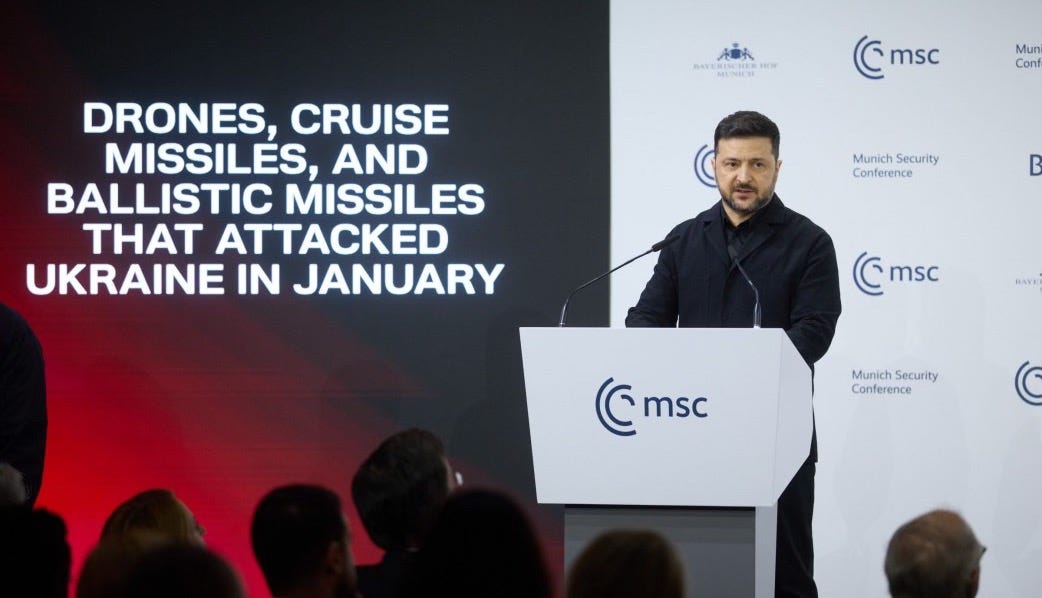
Munich and Diplomacy. The week saw limited developments in the diplomatic realm. Despite the Ukrainian cooperation with American negotiators, and their indicated willingness to negotiate a war termination agreement, talks have been less about genuine progress toward peace and more about political theatre (especially from Russia).
In the past week, many media outlets reported that President Zelenskyy might announce plans for presidential elections and a referendum on a peace deal on 24 February—the fourth anniversary of Russia’s full-scale invasion. The Financial Times reported that both votes could be held by 15 May, with Ukraine potentially risking loss of proposed US security guarantees if it failed to meet this deadline.
However, Zelenskyy denied these reports, stating he heard about the plan “for the first time” from the Financial Times. He reiterated that elections would occur when there are “all relevant security guarantees” and emphasized that voting requires a ceasefire. Zelenskyy was quoted by the BBC stating that:
Elections could be held in the next 60 to 90 days if security for the vote was guaranteed with the help of the US and other allies
The Trump administration is demanding that both the election and referendum be completed by mid-May, threatening withdrawal of security guarantees otherwise. Yet holding elections under martial law and amid active combat operations presents enormous logistical and security challenges. Ukrainian civil society organisations have noted that Ukraine’s current law prohibits referendums during martial law. As I noted in my previous update on this topic, it would be impossible to ensure the participation in elections of the millions of Ukrainians displaced overseas, and military personnel serving on the frontline.
At the 2026 Munich Security Conference, Zelenskyy reiterated Ukraine’s position. Acknowledging “a little bit” of pressure after Trump called for accelerating peace talks on Friday, he also called for a recognition of the core issue with peace talks and the war itself: Putin is not interested in peace. As Zelenskyy noted:
Putin is no longer interested in anything else. Putin does not live like ordinary people. He does not walk the streets…He cannot imagine life without power or after power. Normal things do not interest him. Putin “consults” more with Tsar Peter and Empress Catherine about territorial gains than with any living person about real life. Can you imagine Putin without war? Be honest. Right now, his focus is on Ukraine. And no one in Ukraine believes he will ever let our people go. But he will not let other European nations go either – because he cannot let go of the very idea of war.
Zelenskyy at Munich also described one of Ukraine key strategic goals for the war in 2026. Reiterating recent comments by his Defence Minister, Zelenskyy described how:
Every month, Russia mobilizes about 40,000 people. A little bit more – 42-43 sometimes. Not all of them reach the front line. So overall, the size of the Russian contingent in Ukraine is not growing this year. For our army, the mission is clear – to destroy more Russian occupiers, because they are occupiers. The goal is specific: at least 50,000 per month. Even for Russia, that would be serious. I’m sure. And it would affect Putin’s decisions.
In this recent post, I described why killing more Russians is an important part of Ukraine’s strategic approach to the war. It is not a strategy in itself, but an important ‘way’ to achieve its desired strategic ‘ends’. Demonstrating strength and the ability to cause suffering to Russia is crucial to Ukraine’s war effort. It is what will hopefully, eventually bring Putin to the negotiating table for serious negotiations. As Zelenskyy described it:
Please remember the moment when Russia began to take diplomacy most seriously in these 4 years. It was when our deep strikes against Russian oil refineries began to work – and when everyone started talking about Tomahawks. That shows exactly how to deal with Russia – and what Russia actually hears. It hears strength. The stronger we are, the more realistic peace becomes.
The substantive negotiating positions of Ukraine and Russia remain far apart. As talks get underway in Geneva again in the coming week, it is difficult to see any form of resolution on the horizon.
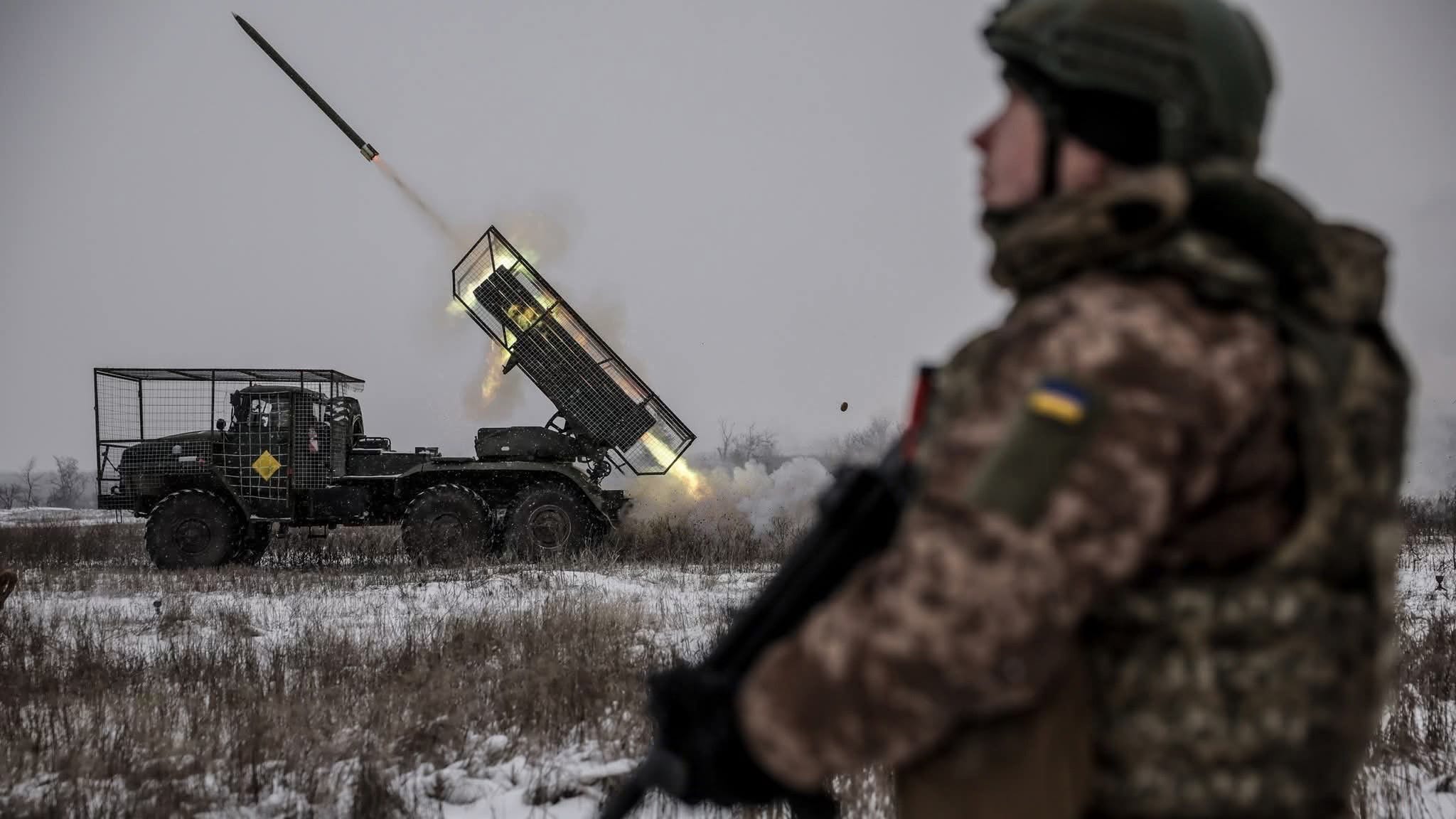
StarkLink Disconnects for Russia. One of the things that has transformed Ukraine’s ability to defend itself over the past four years has been the proliferation of StarLink terminals down to the lowest levels of command. It has enabled what I have described as the extreme democratisation of command and control in the Ukrainian Armed Forces.
Unfortunately, the Russians watch the Ukrainians closely, and when they see the Ukrainians succeed at something, become ‘fast followers’. This has been the case for some time in Ukraine, with Russians accessing the satellite network with ‘grey’ or black market StarLink terminals. This has allowed the Russians to use StarLink to control drones and undertake deeper strikes along the front line.
In the past week, StarLink connections for the Russians were severed and it has had an impact on the frontline.
A Ukrainian brigade spokesperson operating in the Pokrovsk direction reported that the number of Russian drone strikes against the Ukrainian rear, including with Starlink-enabled fixed-wing drones, has decreased since SpaceX shut down Russian access to Starlink in Ukraine. This frontline disruption has had measurable battlefield effects, particularly impacting Russian battlefield air interdiction efforts.
Russian drone forces have recently been focussing on deep strike operations, aiming to interdict Ukrainian logistics, artillery and headquarters well behind the frontline. This StarLink shutdown will hinder these efforts, although it is unlikely to shut them down totally.
Stefan Korshak has written in his latest (and always excellent) update on the war:
The biggest tactical effect of the shut-down for the Russians appears to be with UGVs (ground robots) because those things use Starlink almost without exception and now the Russian ones have stopped. Since the primary use of UGVs by both sides is carrying supply forward and wounded rearward in drone-dense sectors, it is safe to assume that things got worse for Russian infantry stuck out in some accumulation position or a Russian infantryman wounded and needing evacuation.
While the cutoff of StarLink for Russian forces in Ukraine is currently to our advantage, there is a useful lesson here. What is to stop private companies withholding essential services – communications, OSINT, logistics, etc – from friendly military forces in future conflicts? StarLink was turned off for Ukraine during an attack on Crimea early in the war. There is no reason why it cannot happen again.
One of the biggest impacts of the StarLink shutoff has been observed in ground operations in Zaporizhzhia.
The Ground War. While the Russian main effort on the ground remains focused on offensive operations in the Pokrovsk region, and the capture of the entire Donbas, significant developments emerged in Zaporizhzhia in the past week. Ukrainian forces launched multiple tactical counter attacks to take advantage of the degradation in Russian tactical communications as a result of the StarLink blackout.
Ukrainian ground forces were able to liberate territory near Hulyaipole, as well as the village of Ternuvate and near Borova. These are useful gains, but in the context of the southern Russian campaign, are unlikely to spoil expected Russian attacks here in the Spring. Nor are these Ukrainian gains going to change the overall trajectory of the ground war.


The battle for Pokrovsk continues to be Russia’s main effort in the east. According to reports from the Institute for the Study of War (ISW) and the Center for Defence Strategies this week, Russian forces are intensifying offensive operations to seize the town and collapse the Ukrainian pocket, though their advance has slowed considerably from the breakneck pace of late 2025.
President Zelenskyy revealed at the Munich Security Conference that Russian forces are losing an average of 156 soldiers for every square kilometre of Ukrainian territory they capture. The regular update by the British intelligence community was released this week. It shows that Russian casualties in December 2025 were 35,000 and in January were 31,000.
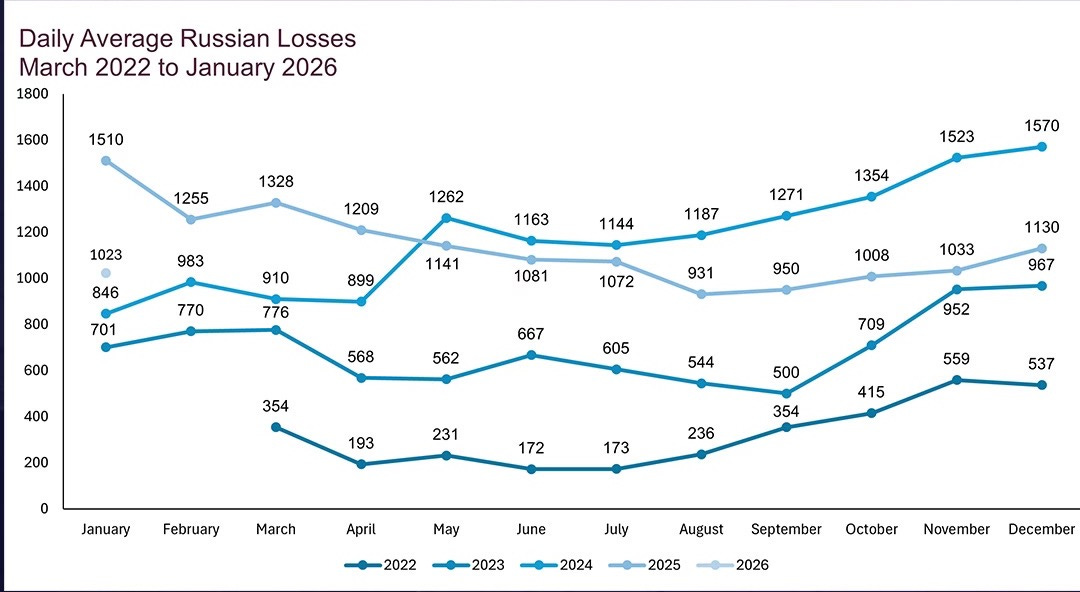
Despite these catastrophic losses, Russian forces continue to advance, albeit at rates that would have been considered glacially slow in any previous conflict. The recent report released by the Center for Strategic and International Studies assessed that Russia’s advance in Pokrovsk has been slower than the Allied forces during the Battle of the Somme. While these are different eras, the Russian pace of advance is only sustainable if it wears down Ukrainian and European resolve at the same time it wears down the size of the Russian military. That no longer appears to be the case.
The picture on the ground is indicative of Ukrainian resilience and vulnerabilities. On 8 February, Ukrainian forces successfully repelled a large-scale Russian breakthrough attempt by mobile assault groups near Pokrovsk, destroying an entire assault company. This demonstrated the continuing effectiveness of Ukraine’s sensor-to-shooter networks when conditions permit.
But the broader strategic reality remains challenging. In northern sectors, Russian ground forces sustain pressure in Kharkiv and Sumy oblasts, with the Russian Ministry of Defense claiming liberation of Chuhunovka in Kharkiv region and Sidorovka in Sumy region during the week.
Russian forces continued to press on the northern and southern wings of their double envelopment of the fortress belt cities in the east. They also made small progress within Pokrovsk city itself. In the past month, Russian forces gained 182 square miles. This was more than double the 79 square miles gained in the previous four-week period.
Four Years Since the Full-Scale Invasion: An Assessment
Three strategic realities, which I think have been in evidence for some time, were reinforced by the events of the past week. They are worth pondering as we approach the four year mark of Russia’s full-scale invasion.
First, Russia has abandoned any pretense of military efficiency in favour of pure attrition. It is betting that have a superior mobilization capacity relative to Ukraine’s will eventually exhaust Ukrainian resistance. Given the challenges of mobilising manpower in Ukraine, and the lack of conscription for 18-25 year olds, this is a reasonable wager by the Russians. This has been a key driver of Ukraine’s decision to significantly increase their monthly kill targets for Russians in 2026.
Second, the systematic targeting of Ukraine’s energy infrastructure, particularly substations supporting nuclear facilities, represents the continuation of a strategy (first initiated at the end of 2022) to make Ukrainian territory ungovernable while maintaining plausible deniability about direct nuclear targeting. But thus far, this multi-winter campaign executed by the Russians has failed to break Ukraine’s will. Nor has it forced any political or military accommodations from the Ukrainians. At some point in 2026, Putin will have to reckon with the failure of his strategic bombing campaign against Ukraine’s cities to shift Ukraine’s political posture, and the slow-rolling military failure that is Russia’s extraordinarily bloody ground campaign.
Third, the diplomatic theatre increasingly resembles a choreographed performance designed to satisfy domestic political requirements in Washington DC rather than any genuine pathway to a sustainable or just peace. Further, it is being used by Putin to continue dragging out the war until he can achieve something - anything – that he might be able to present to Russians as a ‘victory’. As I wrote recently, Putin is nowhere close to that being the case, he cannot afford the war to end yet. He will use negotiations and cognitive warfare against Americans and Europeans to corrode support for Ukraine and increase pressure on Zelenskyy’s administration to accept a deal that gives away territory in exchange for no security guarantees.
For Ukraine’s international supporters, the key question remains whether they can sustain assistance at levels required to offset Russia’s willingness to accept catastrophic losses at least until 2030. The Ramstein meeting held this week included important contributions from multiple nations. In total, 38 billion dollars in military commitments were made. This included:
UK — £500 million for air defence, £150 million to buying US equipment for Ukraine immediately (PURL). Total for Britain this year: £3 billion.
Germany — €1 billion for the purchase of drones for Ukraine, financing to integrated air defense over Ukrainian cities, financing to drone assault units. Total for Germany this year: €11.5 billion.
Norway — $7 billion promised in 2026, of which $1.4 billion for drones, $700 million for air defense, $200 million for artillery, $125 million for PURL.
Netherlands — Pledged 0.25% of GDP, about €2.95 billion. Short term €90 million to PURL.
Belgium — €1 billion promised for 2026, no short-term figure
Sweden — €1.2 billion in aid, €100 million to PURL. Commitment for 2026 — €3.7 billion.
Denmark — Commitment to $2 billion in total in 2026.
Spain — Commitment to $1.2 billion in 2026.
Canada — $50 million to Ukraine production of arms, $45 million for medical support.
As this demonstrates, Russia’s efforts over the past four years to degrade European support for Ukraine has failed. The Europeans have not only reinvigorated their alliance but their defence industry and are pushing back against Russian aggression in Ukraine, the Baltic and elsewhere. The step up in European support for Ukraine has ensured that, as the Kiel Institute notes:
The total volume of aid allocated to Ukraine remained relatively stable in 2025… European military aid rose by 67 percent above the 2022–2024 average, while non-military aid increased by 59 percent.
This step up in support also provides the foundations for a significant military deterrent against Russian aggression elsewhere in Europe. Unlike in 2022, Europe is now awake to Russia’s aspirations and has the capacity to push back. Whether it will continue building the political will and consensus to do so remains to be seen.
Europe must also continue to work on the relationship with the United States of America. Regardless of the careless statements about Europe that emerge from Washington DC at times, this is a relationship that is crucial to both sides. And it is a relationship crucial to the trajectory of the war in Ukraine. As Marco Rubio noted in his speech at Munich:
President Trump demands seriousness and reciprocity from our friends here in Europe. The reason why, my friends, is because we care deeply. We care deeply about your future and ours. And if at times we disagree, our disagreements come from our profound sense of concern about a Europe with which we are connected – not just economically, not just militarily. We are connected spiritually and we are connected culturally. We want Europe to be strong. We believe that Europe must survive, because the two great wars of the last century serve for us as history’s constant reminder that ultimately, our destiny is and will always be intertwined with yours.
The brutal calculus of the past four-years will continue into 2026 unless there is a significant breakthrough in technology, tactics or strategy that changes the deep, close and rear aspects of the overall battlefield dynamic. The only other thing that might significantly change the trajectory of the war is if there is a significant shift in political will in Kyiv or Moscow.
Russia can sustain offensive operations for years if it maintains its current mobilisation and prevents Ukraine from increasing monthly casualty rates. Ukrainian tactical excellence can impose high costs on Russia but cannot fully offset the asymmetry in personnel and industrial capacity.
The coming weeks will see continued Russian pressure in the Pokrovsk area and preparations for the spring offensive operations designed to capture the remainder of the Donbas by Russian forces. Supporting Russian efforts, to draw off Ukrainian strategic reserves, maintain the fiction of Russia’s inevitable victory and seize small parcels of terrain, will continue in southern and northeastern Ukraine. What seems certain to me is that short of some fundamental shift in the military balance or a significant expansion in Western military and economic support, the war between Ukraine and Russia will continue despite the artificial diplomatic deadlines that periodically emerge from Washington DC.
The preference by the Trump administration for Ukraine to make territorial concessions is unlikely to be guarantor of a long-term, stable war termination agreement. As Zelenskyy noted in his speech in Munich this week, “it would be an illusion to believe that this war can now be reliably ended by dividing Ukraine — just as it was an illusion to believe that sacrificing Czechoslovakia would save Europe from a greater war.”
A different solution is required if there is to be a durable and just solution to this war. But at this time, it is hard to image what that solution might be.
The Pacific

Japan’s Returned PM. Sanae Takaichi's landslide electoral victory in the past week represents a transformative moment for Japanese domestic politics. It also has implication for the western Pacific security architecture. Takaichi’s LDP secured 316 seats, achieving a two-thirds supermajority. This was the party's largest victory in its seventy-one-year history.
The election outcome heralds what might be Japan's most dramatic strategic pivot since the Cold War. Takaichi has recently abandoned Tokyo's ambiguity on Taiwanese security, stating that a Chinese attack on the island could trigger a military response from Japan. This provoked Chinese retaliation through canceled flights and military patrols. But it does align Japan more closely with America’s Indo-Pacific strategy.
Takaichi has pledged to revise Japan's National Defense Strategy and hinted at reworking policies on nuclear weapons. She has suggested that potential constitutional amendments that could transform Japan from a pacifist nation into a conventional military power. Her supermajority provides the parliamentary authority to override opposition vetoes and potentially initiate constitutional referendums.
Takaichi's relationship with President Trump provides significant diplomatic leverage. The U.S. president celebrated her victory, and the Japanese PM will be hoping to establish a personal rapport reminiscent of the Trump-Abe relationship. As an assessment from The Brookings Institution describes it:
The American president broke protocol in endorsing Takaichi on the eve of the election. Yet this provides no guarantee that Trump will have Takaichi’s back when he meets with Xi, especially given Trump’s penchant for subordinating allied interests to his great powers’ dealings.
Another assessment, this one from Chatham House, notes that:
Many Asian governments will welcome Takaichi’s victory – if she can use her unprecedented parliamentary majority to strengthen Japan’s economy, security and global role. Asia’s leaders do not want to see their region dominated by Beijing or at the mercy of Washington’s will. They see a resurgent Japan as a key partner to bring balance to the world’s most consequential continent.
Takaichi now has a mandate to bring forth lasting change in both domestic and international policy in Japan. She has promised to cut taxes, increase defence spending (she has already delivered on this but other increases might be coming) and revise Japan’s pacifist, post-Second World War constitution, which constrains the military.
An economically and militarily strong Japan can play an important role in pushing back against Chinese coercion and aggression in the region. It has strong ties with nations such as The Philippines, Australia, Taiwan, and of course America. We should expect Takaichi to further develop these relationships.
Xi hates a strong Japan, almost as much as he hates democratic nations forming alliances and strategic partnerships to push back against China’s hegemonic objectives. In the wake of Takaichi’s re-election, the Chinese foreign ministry spokesman had the following to say:
The lessons of history are still fresh in memory and should not be left behind. We urge those running the Japanese government to take seriously rather than brush aside the concerns of the international community, follow the path of peaceful development rather than return to militarism, and abide by the four political documents between China and Japan rather than go back on commitments made. If Japan’s far-right forces miscalculate and act recklessly, they will be met by resistance from the Japanese people and serious backlash from the international community.
It will be an interesting 2026 in North Asia.
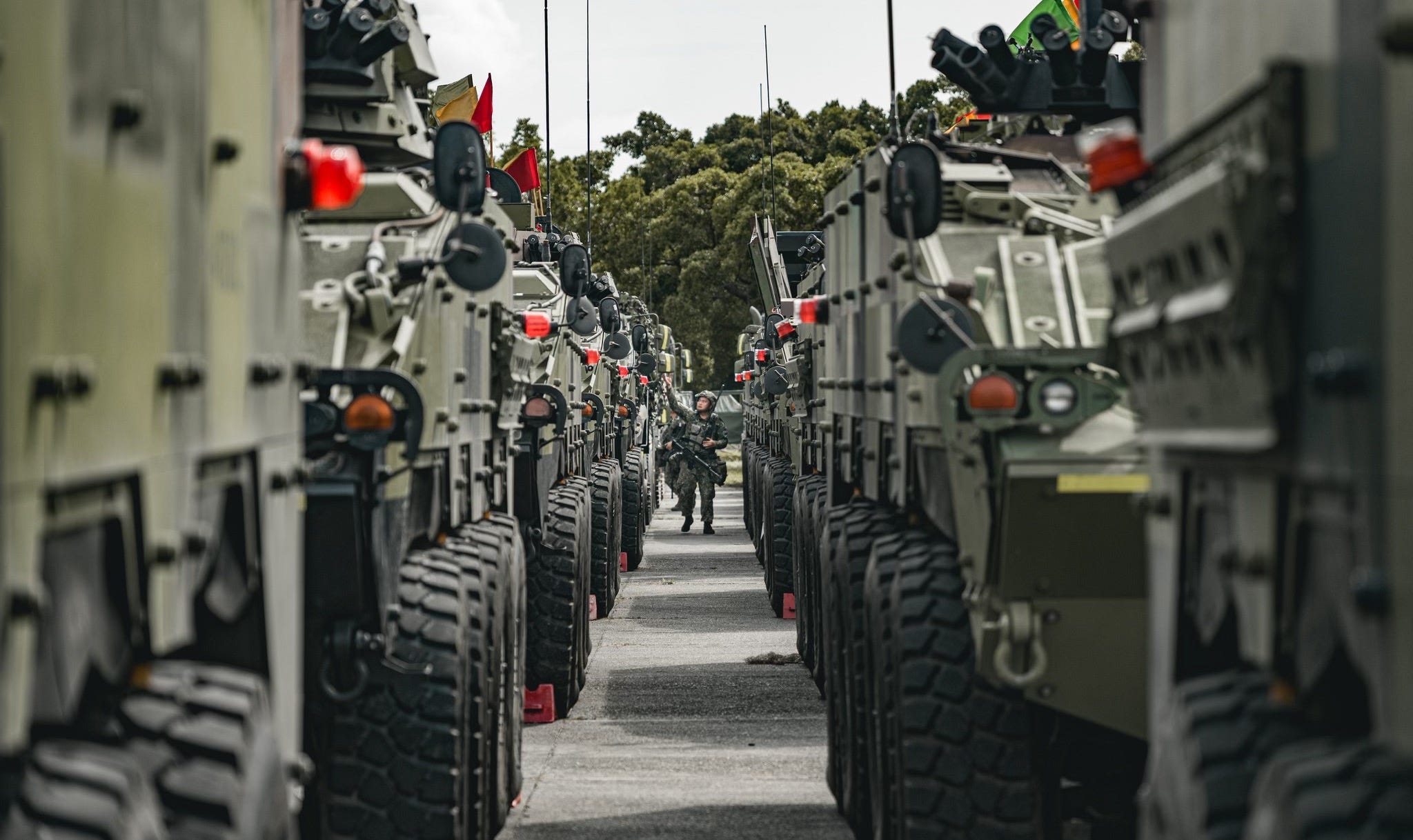
Taiwan Defence Budget Blues. In Taipei, domestic politics threaten to undermine deterrence against Chinese aggression at the worst possible moment. The opposition-controlled legislature is advancing a counterproposal that would slash President Lai Ching-te’s eight-year, $40 billion special defense budget by nearly 70%. The cuts would eliminate procurement of 200,000 drones, the T-Dome multilayered air defence system designed to counter Chinese missile threats, tactical mission network software, AH-1W helicopter parts, Harpoon missile support, and funding for local defence-industrial partnerships—precisely the asymmetric capabilities Taiwan needs most.
In Washington DC, U.S. Senator Roger Wicker, chairman of the Senate Armed Services Committee, publicly expressed disappointment with the dramatic budget reduction, while Senators Jim Risch and Jeanne Shaheen urged Taiwan’s party leaders to “expeditiously approve vital investments.” The timing is particularly inopportune. Despite President Trump signing $1.4 billion in Taiwan defence funding as part of the 2026 Consolidated Appropriations Act, America also expects clear funding commitments from Taipei for its defence.
*******
This week, a couple of articles were published at Futura Doctrina.
First, I published an important article written by Dr Frank Hoffman. An esteemed military intellectual who has written on hybrid war, adaptation and the impact of technology on concepts and human systems, Frank has produced a superb examination of AI and its impact on critical thinking in military institutions. You can read the article at this link.
Next, I published a piece at the Lowy Interpreter that examines the forthcoming Australian National Defence Strategy, and why building the peacetime foundations for wartime adaptation must be an important component for the new strategy. You can read that article here.
Finally, while not exactly in the ‘published’ category, this week I submitted the manuscript for my sequel to my first novel, White Sun War. Set two years after the events of the first book, the new story explores a larger war in the Pacific which again features America, China and their respective allies. It covers a range of contemporary military and national security issues, including strategic reconstitution and mobilisation, integration of technology and human military personnel, cognitive warfare, balancing crewed and uncrewed systems, AI in war, as well as crucial topics such as dealing with surprise and uncertainty, and the centrality of good leadership. I expect to have more to say on this in the coming months.
*******
It’s time to explore this week’s recommended readings.
In this week’s Big Five, I have included an excellent new report from Katryna Bondar on how AI is driving change in Russian military command and control systems. There is also a report on Chinese military purges, an exploration of the costs of a war over Taiwan, a public intelligence report from Estonian intelligence on the war in Ukraine and eastern European security, as well as a good report in The Atlantic which features a long interview with Ukrainian President Zelenskyy.
As always, if you only have the time available to read one of my recommendations, the first is my pick of the week.
Happy reading!
1. AI and Russia’s Evolving Command and Control
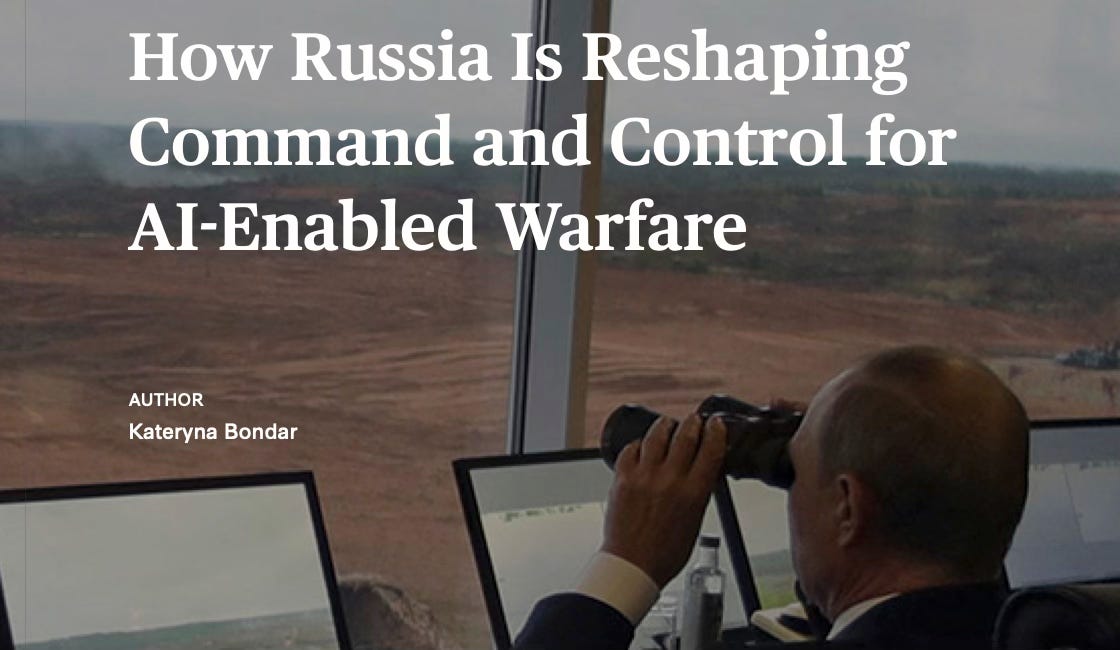
Kateryna Bondar, from CSIS, has produced a series of excellent reports related to the war in Ukraine. These reports have examined the applications of AI, new generations of autonomous systems, command and control as well as defence industrial challenges. In her latest report, she explores how Russia is transforming how it executes military C2 to take account of the opportunities provided by AI. You can read the full article here.
2. The 10 Trillion Dollar War
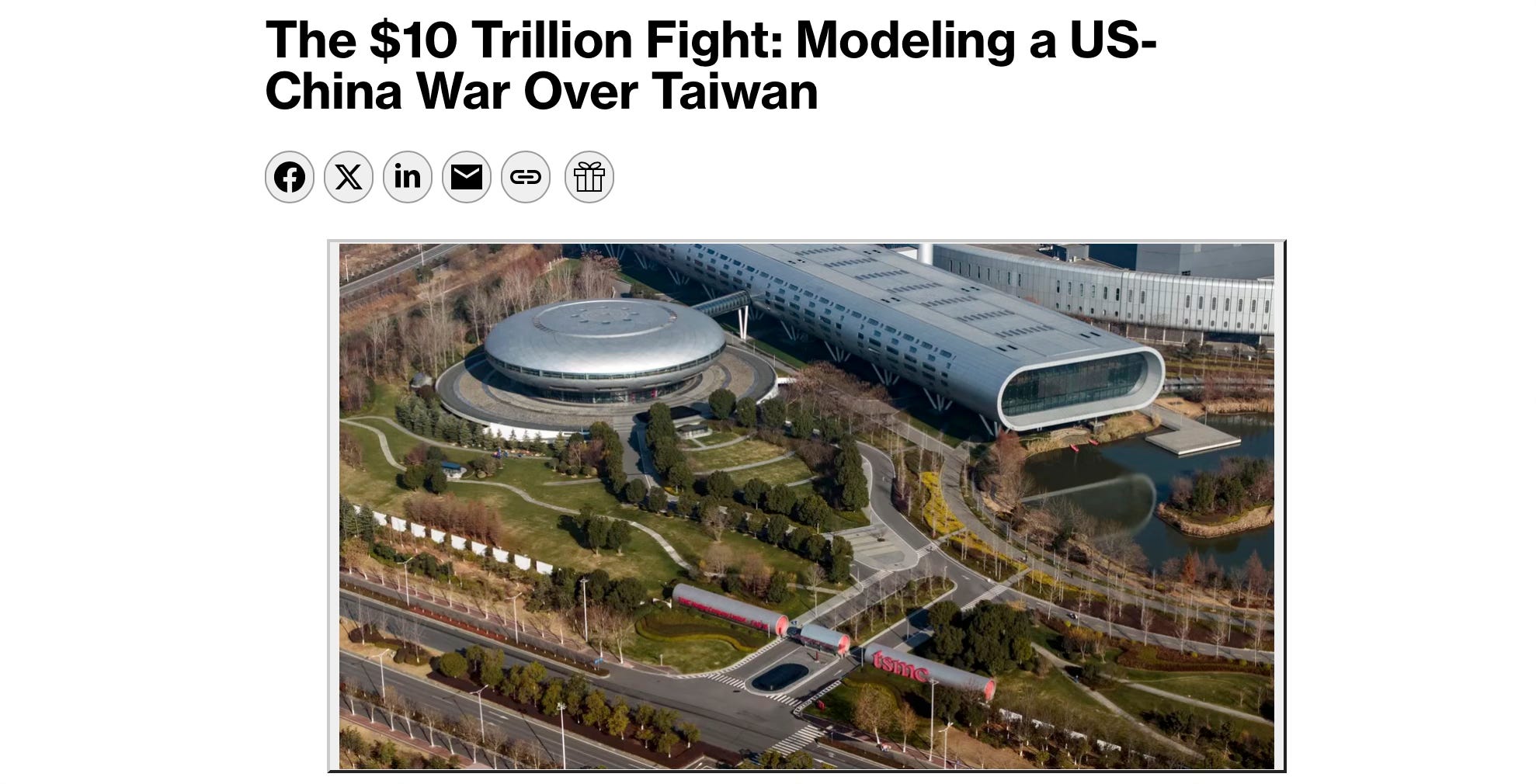
This week, Bloomberg published modelling that examined various scenarios related to conflict between China and America in the Pacific. Cross-strait invasions, blockades as well as other less violent options were explored in the five scenarios featured in the article. As the article finds, “in the most extreme case, a US-China conflict over Taiwan would cost the global economy about $10.6 trillion… damage would be global. Taiwan’s economy would be decimated. We estimate China’s GDP would fall by 11% and the US’s by 6.6% in the first year.” You can read the full report at this link.
3. An Interview with Zelenskyy
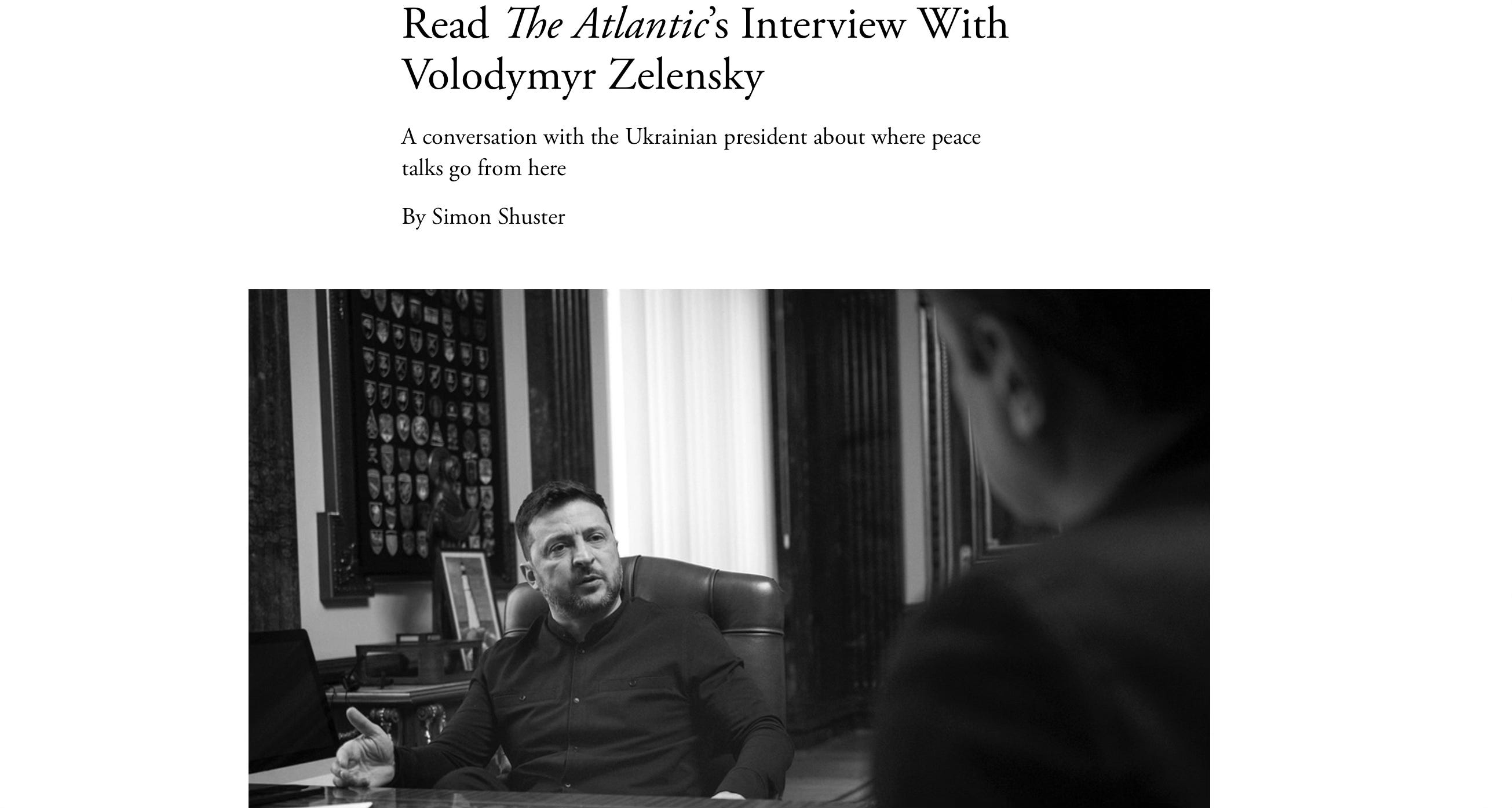
In this piece, published by The Atlantic, Ukrainian president Zelenskyy provides an in-depth interview which focuses primarily on peace talks. It also covers topics such as America’s interests in the war, Russian casualties, elections in Ukraine and Ukraine-America relations. You can read the interview at this link.
4. China’s Military: Flourishing Despite Purges
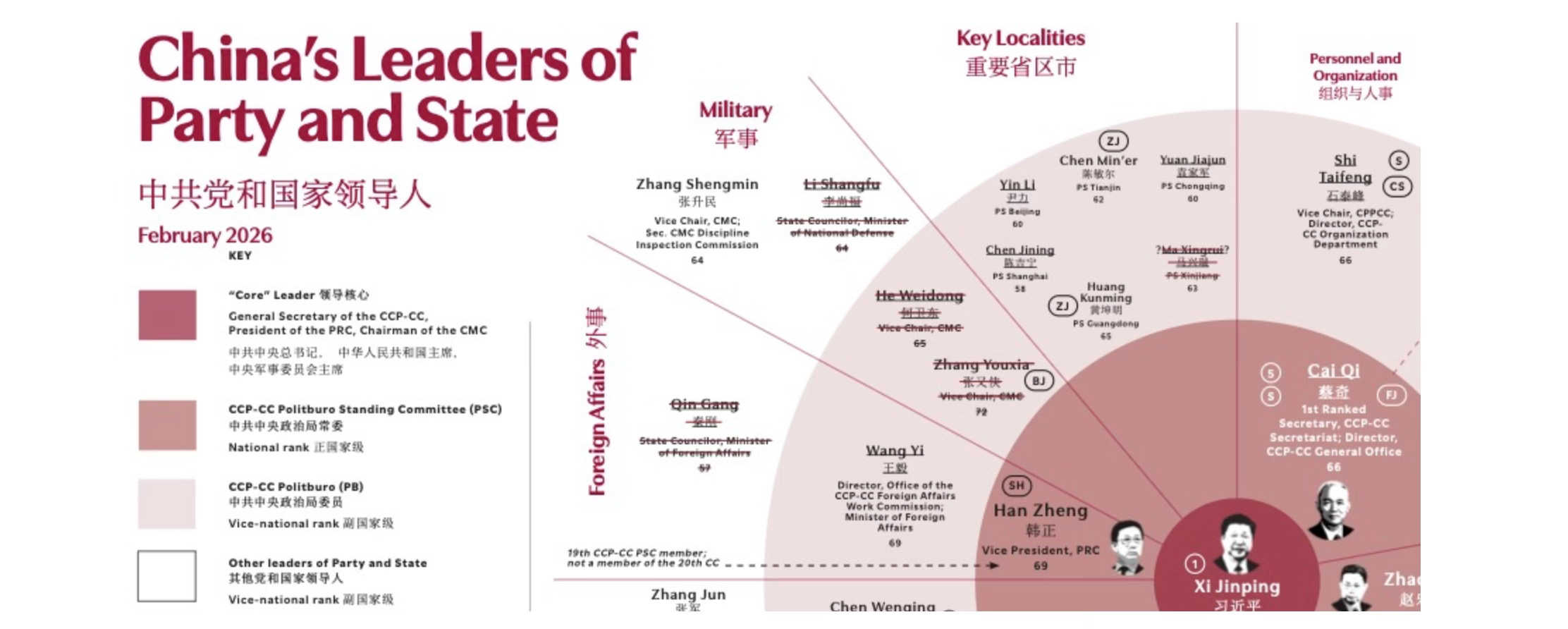
In this new report, published by the Fairbank Center for Chinese Studies at Harvard, scholar Andrew Erickson examines the impact of the ongoing purges at the top of the People’s Liberation Army in China. As Erickson notes, “personnel purges coexist with, and may even facilitate, accelerating PLA capability development. In today’s China, multiple things are true at once. Fixating on “tree” removal risks missing flourishing “forest” growth.” You can read the full report here.
5. Estonian Foreign Intelligence Service report 2026
In this latest public report from the Estonian Foreign Intelligence Service, assessments are made about Russian aggression towards Estonia as well as its short and medium term objectives in Ukraine. As the report notes, “we see that Russia is setting long-term operational objectives in its war against Ukraine. This confirms that the recent uptick in peace-talk rhetoric is merely a tactic to buy time. Moscow has no intention of ending the war in Ukraine until its objectives are achieved or the conditions are favourable for doing so.” You can read the full article here.