
Crimea's Switch Off, Ankara’s Outcomes, Russia’s Black Sea Shipping Apocalypse and Beijing's Pacific Signal. The Big Five, 12 July

Trump: "Would you go to Moscow (to meet Putin)?"
Zelenskyy: "It's difficult. There are a lot of Ukrainian drones there. It's dangerous."
From Trump-Zelenskyy meeting this week.
As I write this, the fragile memorandum of understanding between Washington and Tehran has collapsed and the US is undertaking another round of strikes against Iranian targets. Iran has said it is closing the Strait of Hormuz.
President Trump declared on 10 July that the ceasefire negotiated after the 17 June memorandum of understanding was “over“, following Iranian strikes on commercial shipping in the Strait of Hormuz and retaliatory American strikes on Iranian targets. He then unleashed a torrent of threats in a new social media post: “1000 Missiles are Locked and Loaded and aimed at the Islamic Republic of Iran, with thousands of more to immediately follow, should the Iranian Government act on its threat…to assassinate, or attempt to assassinate, the sitting President of the United States of America.”
Talks continue in a much diminished form, but the sixty-day technical process envisaged in June has effectively broken down over the same issues that stalled it from the outset: the fate of Iran’s highly enriched uranium stockpile, passage through the Strait of Hormuz, and the timeline for sanctions relief. The renewed Iran crisis matters well beyond the Gulf. It is already straining the American air defence munitions and production capacity that Ukraine needs for its own air defence. It has also potentially handed China fresh leverage as a potential guarantor of discounted transit for its shipping through the Strait of Hormuz.
Iran, Ukraine and the Pacific are one continuous test of whether Washington can sustain credible deterrence commitments in three theatres at once.
Welcome to this week’s edition of The Big Five.

Ukraine
The Ankara summit. On 7 and 8 July, NATO leaders gathered in Ankara for the Alliance’s 2026 summit, producing the Ankara Summit Declaration that pledged €70 billion in military equipment, assistance and training for Ukraine in 2026, with a commitment to sustain “at least equivalent levels” in 2027. The entire sum is now financed by European Allies and Canada, with no direct American contribution, confirming the shift underway since Washington began describing its own role in Europe as an enabler rather than a guarantor.
The declaration avoided any explicit membership pathway for Ukraine, repeating the pattern set at The Hague in 2025. It did, however, describe Ukraine as “contributing to transatlantic security”, the formulation Article 10 uses for prospective members. Kyiv can read this as an indirect acknowledgement of its eventual qualification even as the practical pathway remains absent.
As Nadiia Koval wrote for the Kyiv Independent, the summit “held the facade of transatlantic unity” while leaving the central question, the trajectory of American disengagement from European security, unresolved. The Pentagon’s six-month posture review, ordered in June, is still pending, and the previously announced drawdown of some 5,000 troops from Germany and the cancellation of a rotational brigade to Romania remain unchanged.
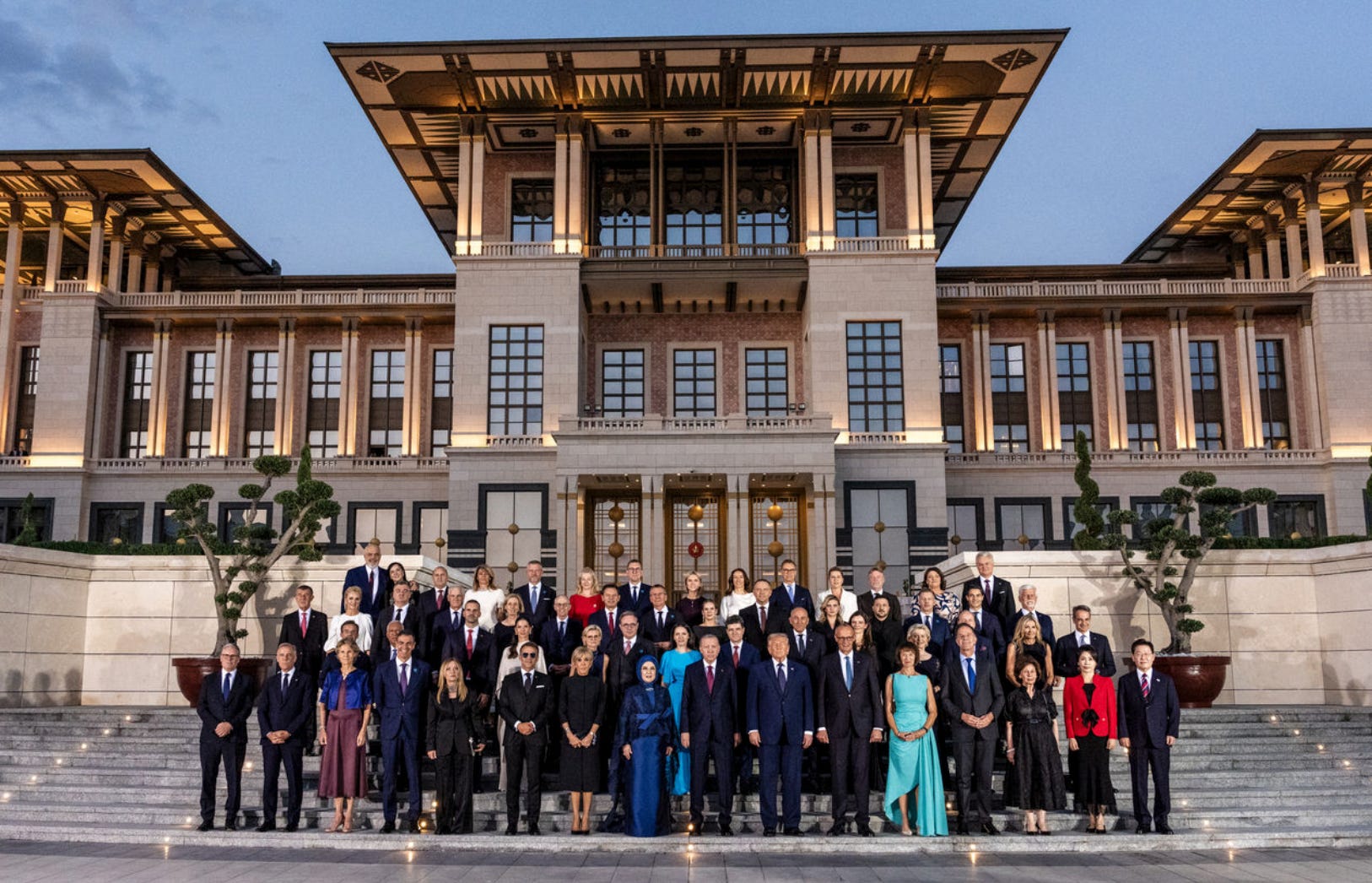
President Trump used the summit to renew his call for control of Greenland, criticised Spain’s defence spending and voiced disappointment in France, evidence that higher European spending has not eased Washington’s political friction with its allies. The Greenland issue in particular will remain an open and unresolved wound and a threat to the NATO unity written about in the Ankara Summit Declaration.
For Ukraine, the summit’s most important outcomes were industrial. Three “Drone Deal” framework agreements, with Estonia, the Netherlands and Denmark, will expand joint production and structured exports, and Ukraine became a founding member of the new Defence, Security and Resilience Bank. On air defence, outcomes were mixed. Germany, Denmark, Norway and Canada placed a joint order for PAC-3 interceptors, and the NATO Support and Procurement Agency announced a purchase of 700 PAC-2 and 200 PAC-3 missiles, but the binding constraint remains American production capacity, which the renewed Iran crisis will now further strain.
The most significant moment of the summit was the bilateral meeting between President Trump and President Zelensky. In this meeting, Trump endorsed Ukraine’s deep strikes on Russian territory as legitimate pressure that could hasten a settlement, and announced that Washington would grant Ukraine a licence to manufacture Patriot interceptors domestically. It was the most visible alignment between Kyiv, Washington and the European allies in two years, and the most positive comments about Ukraine by the American President for some time.
But the Patriot missile licence was a political commitment from Trump, not an established production line. Industry sources cited by Reuters and reported by the Kyiv Post suggest that any new manufacturing capacity will need to be established first in Germany or another secure European state, given the impracticality of building high technology assembly lines inside an active war zone, with meaningful output unlikely before 2027. Zelensky has separately floated cooperation with Japan’s Mitsubishi Heavy Industries, the only non-US licensed producer of the PAC-3, though Japan’s own rules on transfers to states in active conflict will complicate this.
The brutal arithmetic of Ukraine’s air defence outlines the scale of the challenge. Russia is estimated to manufacture 700 to 800 ballistic missiles a year. Given that standard doctrine requires 2-3 interceptors to guarantee destruction of a single incoming ballistic missile, allied production would need to reach around 2,400 interceptors annually simply to keep pace. This is a target one missile analyst described as very difficult, if not impossible, even with a licensed Ukrainian production line. For an excellent resource on missile matters, see Fabian Hoffman’s excellent substack.
The 40-day campaign and Ukraine’s deep strikes. In late June, President Zelensky approved a forty day operation run by Ukraine’s Security Service, combining long and medium range strikes against Russian oil refineries, military facilities and cities in a deliberate campaign of strategic coercion by attrition of the Russian war economy. As of early July, Ukraine’s General Staff was claiming to have disabled some 42.7 percent of Russia’s oil refining capacity, with eight refineries hit in a month, more than sixty storage tanks destroyed or damaged, and cumulative industry losses of thirteen and a half billion dollars since August 2025.
The reach of the campaign has been extraordinary, given Ukraine did not have a strategic strike capability four and a half years ago. On 6 July, Ukrainian drones struck the Gazprom Neft refinery at Omsk in western Siberia, roughly 2,500 kilometres from the Ukrainian border and, according to Ukrainian officials, the last of Russia’s eleven largest fuel producers to be struck. Ukraine has now hit Russian refineries at least 194 times in the first half of 2026 alone, eleven times the rate of the same period last year. The fuel shortages triggered by the campaign have forced Moscow to extend petrol export bans and impose sale restrictions across more than forty regions and occupied Crimea.
Mid-range strikes and the Crimean Switch Off. Running alongside the deep strike effort is what Ukraine’s Unmanned Systems Forces have themselves labelled the Crimean Switch Off, a mid-range interdiction campaign against the energy, fuel and transport links that sustain the occupation of the peninsula. Commander Robert “Madyar” Brovdi’s forces have systematically targeted the substations and cross-strait power infrastructure that supply Crimea from Russia, hitting the Kuban-Crimea power bridge facility, five electricity substations, air defence radars and a training ground on the night of 7 to 8 July alone. Between 1 and 8 July, the Unmanned Systems Forces reported striking fifty separate energy load centres across Crimea and the occupied south.
As reported by several Ukrainian sources, in recent days, 60 power nodes (51 in Crimea) have been attacked, including the following in Crimea:
110 kV Berehove electrical substation, Molochne.
110 kV Mainaky electrical substation, Yevpatoriia.
110 kV Novoozerna electrical substation, Medvedeva.
110 kV Saky electrical substation.
36 kV Medvedeve electrical substation.
Saky TPP, Saky.


The bridges connecting Crimea to the Russian mainland have also been targeted. Ukraine destroyed the rail bridge over the North Crimean Canal in June, and the Chonhar Bridge was struck twice, first on 7 June and again two days later, with the second attack crippling the crossing and halting Russian military traffic across it. Logistics along these routes has become sufficiently dangerous that Ukrainian officials report a de facto ban on Russian traffic for safety reasons, given Kyiv’s fire control over the corridor.
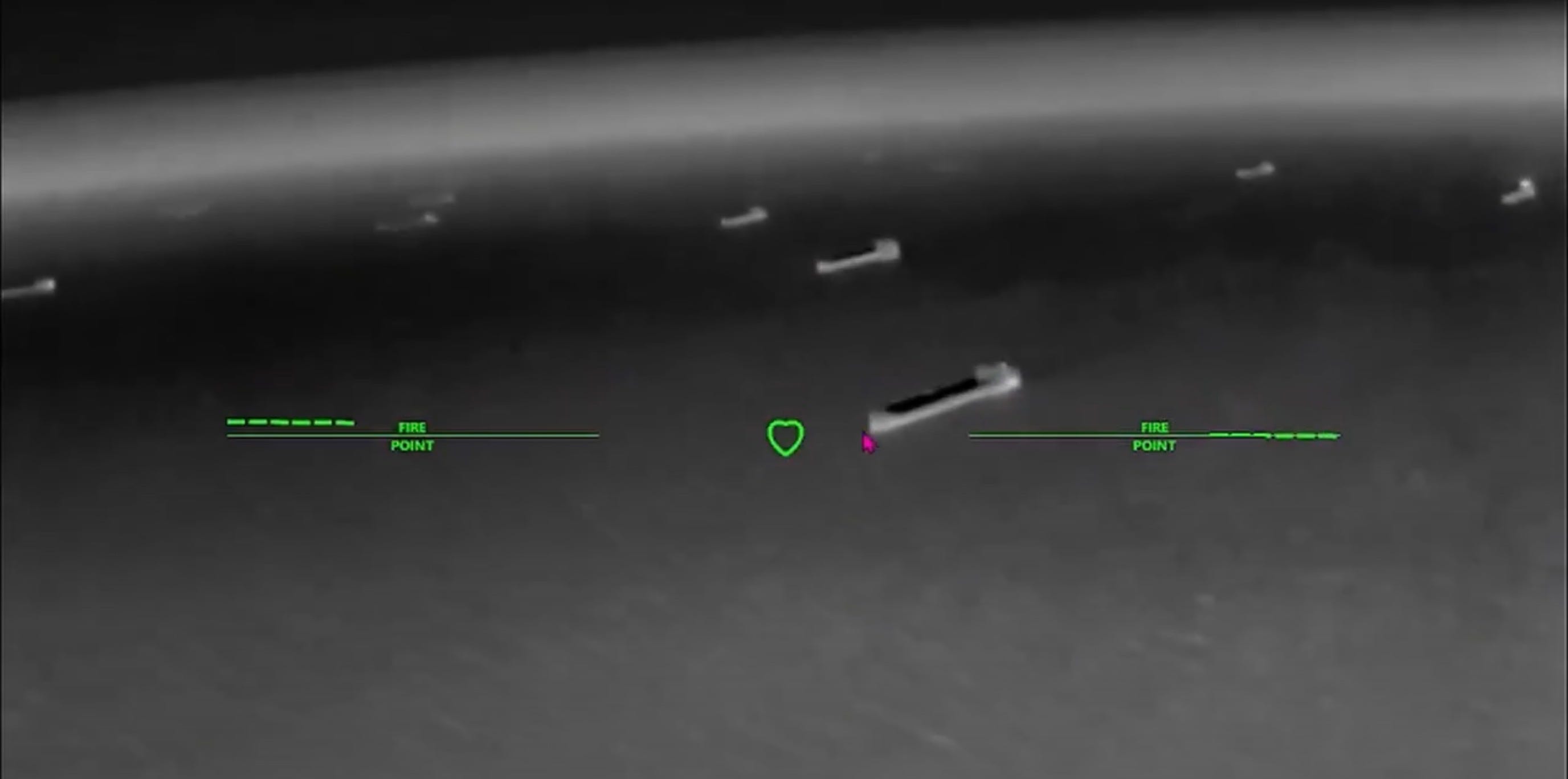
The Anti-ship Campaign in the Sea of Azov. The most dramatic development of the past week has been the emergence of a large-scale anti-ship campaign waged by Ukraine’s Unmanned Systems Forces against Russia’s shadow tanker fleet in the Sea of Azov and around the Kerch Strait.
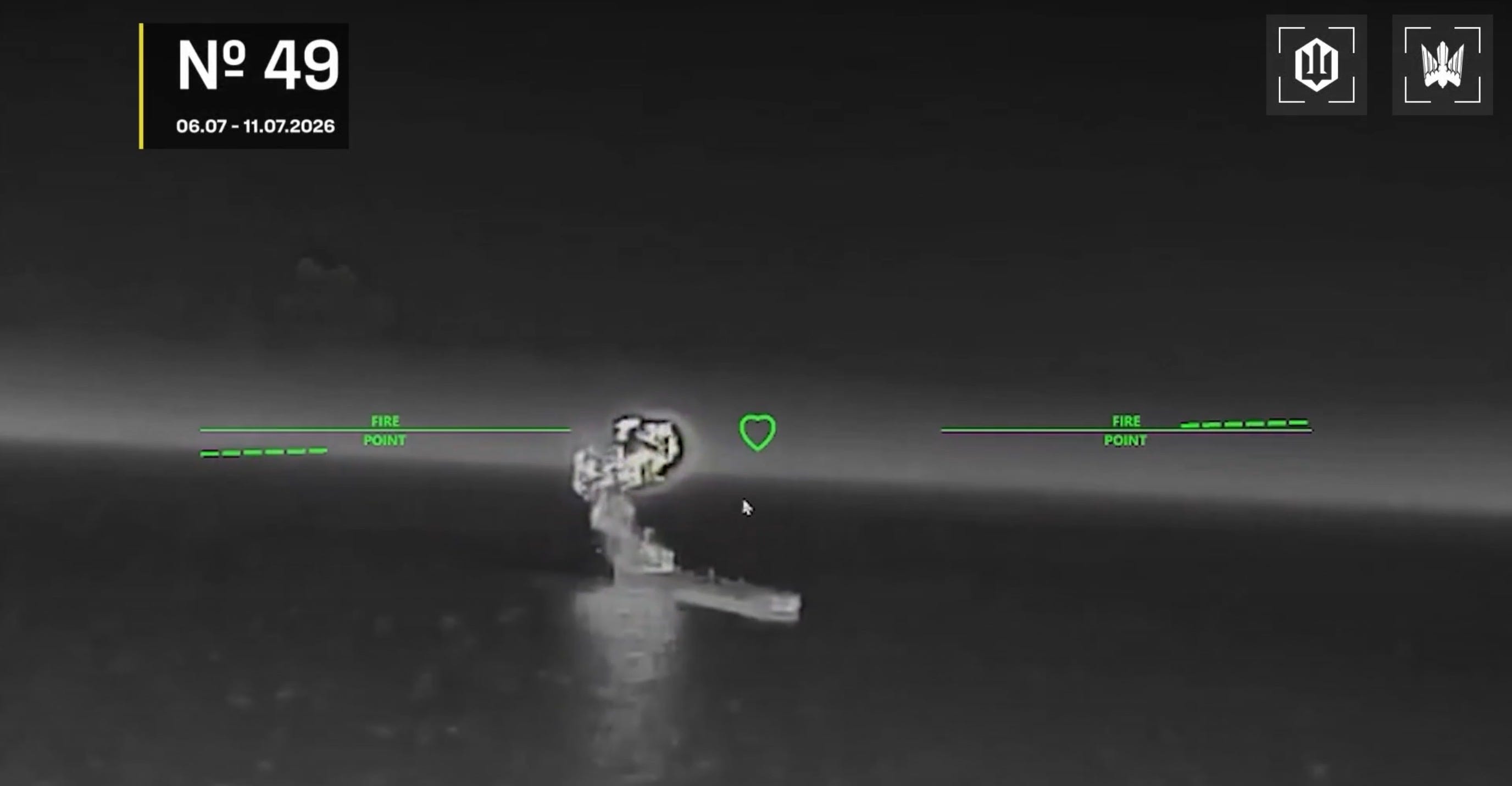
Veteran Kyiv Post correspondent Stefan Korshak has likened it to Operation Paukenschlag, the German U-boat offensive against unescorted American shipping in early 1942, and by several metrics the comparison undersells the scale of what is occurring. Confirmed by drone video, satellite imagery and neutral shipping in the area: two tankers hit on 6 July; ten tankers, a cargo ship and a ferry on 7 July; nine tankers on 8 July; and fourteen tankers on 9 July, with sea drones joining the attack for the first time and sailing directly into Russia’s Taganrog Bay. Around 80 percent of vessels struck have caught fire, and Ukrainian officials claim roughly half were left inoperable and a quarter burned out entirely.
What makes the campaign remarkable is that it is occurring in some of the most heavily defended airspace in the Russian-controlled Black Sea littoral. For nearly every ship struck, a Russian air defence system in Crimea or south-west Russia has also been hit, an indication of a coordinated air and sea operation months in the planning and now being executed with evident confidence.
Operators from the 1st Center, the 20th K-2 Brigade, the 412th Nemesis Brigade and the 413th Raid Regiment have carried out the strikes, coordinated through the Deep Strike Centre operating since December 2025. Ukraine’s stated intent is to starve occupied Crimea of fuel and demonstrate that Russia cannot protect the sea lanes on which the peninsula depends. Vladimir Putin’s own public call for emergency fuel subsidies for Crimea is as clear an acknowledgement as any that the campaign is working.
It also places Putin in a strategic dilemma: defend both Russia and Crimea concurrently, or focus on Russia only. Yes, I know Putin sees Crimea as part of Russia (it is not), but if he has to prioritise in the coming months, this will be an interesting issue to watch.
The underlying technology for these long and mid-range strike campaigns is also maturing quickly. Fire Point, the Ukrainian manufacturer of the FP-2 strike drone used in many of these attacks, has increased its warhead to 200 kilograms while extending range to some 370 kilometres through a redesigned wing. Ukraine is reportedly working with British support to field longer range, ocean-capable naval drones that would extend the campaign well beyond the confines of the Black Sea and Sea of Azov.
Ukraine has no standing conventional navy fleet in the Black Sea and has instead built, from nothing, a form of sea denial and sea control through unmanned systems alone, a genuinely novel approach to naval warfare that other maritime services are now studying closely.
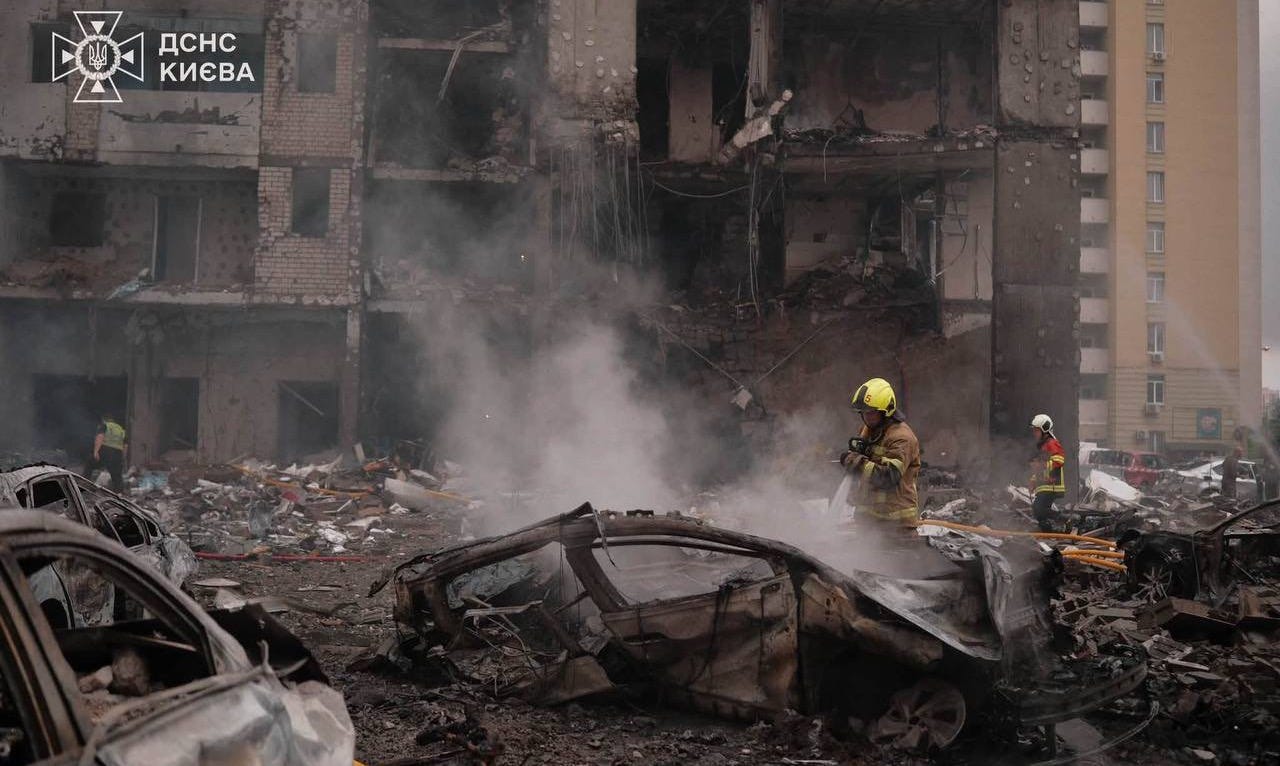
Russian Retaliation and the Ballistic Missile Terror Campaign. Russia’s answer to Ukraine’s long and mid-range strikes, has been aimed at Ukrainian civilians rather than Ukrainian forces. Kyiv suffered mass missile and drone attacks on 2, 6, 8 and 11 July, the 6 July strike alone killing at least nineteen people in the city and eight more in the surrounding region. None of the ballistic missiles fired at Kyiv on 6 July were intercepted, a stark illustration of the interceptor shortage that now defines Ukraine’s air defence problem. As President Zelensky has observed, ballistic missiles are now Putin’s only remaining edge in a war he is otherwise losing on most other measures.
The Ground War. The ground war remains dynamic although terrain gains in the past week have been limited. The balance continues to slowly tilt in Ukraine’s favour. Commander-in-Chief Oleksandr Syrskyi reported on 10 July that Russian territorial advances had slowed by more than half during the first six months of 2026. Kremlin claims to have captured Kostiantynivka remain contested and, per Ukraine’s General Staff, false; defensive operations continue within the town and along its approaches.
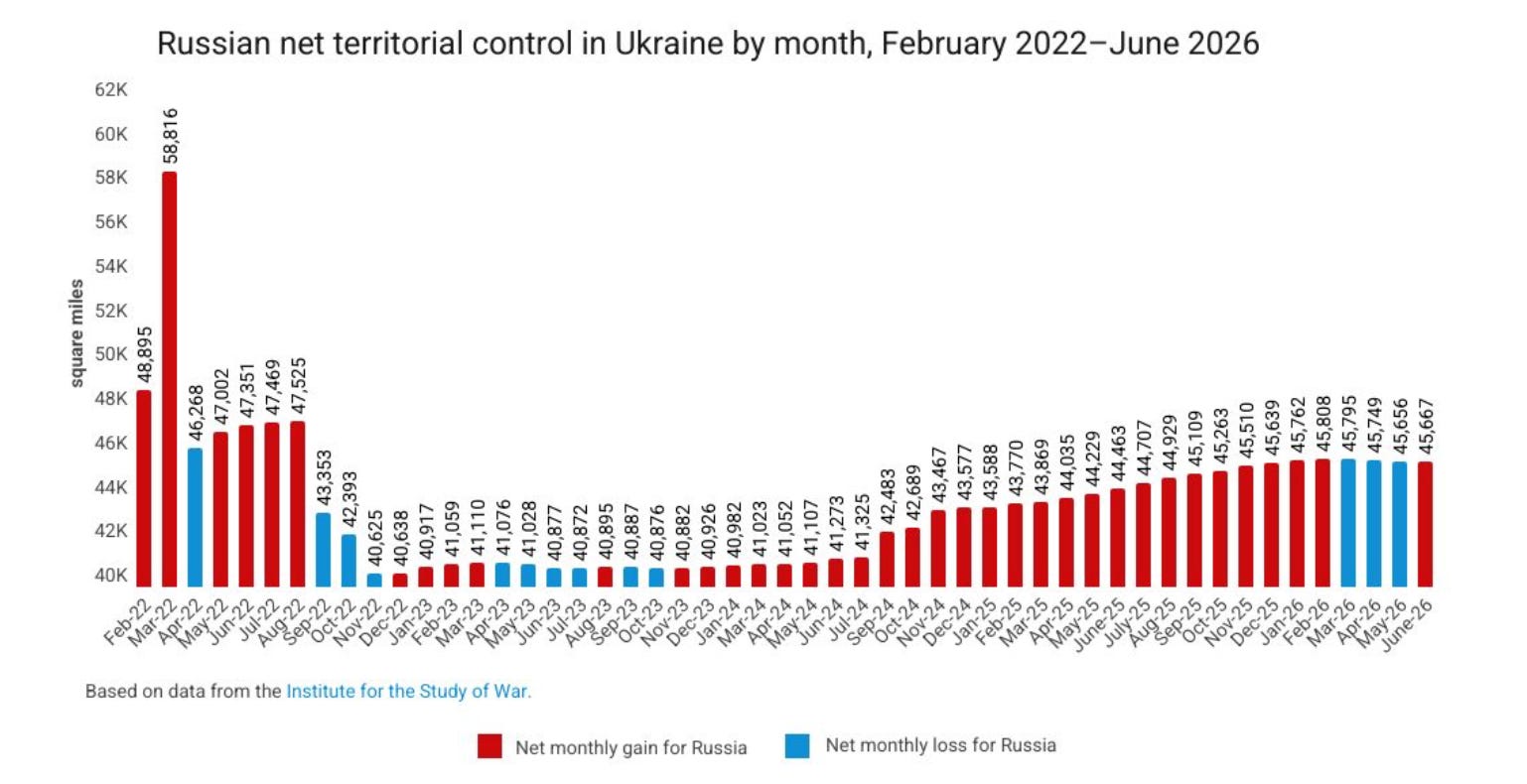
Analysts and the research group Tochnyi report a concentration of some of Ukraine’s most capable regular units, including the 79th, 80th, and 95th Air Assault Brigades and the 92nd Mechanised Brigade, in the Zaporizhzhia sector. Stefan Korshak’s reporting for the Kyiv Post suggests this concentration, alongside the commentary of 1st Assault Regiment commander Dmytro Perun describing Zaporizhzhia and Crimea as the “most promising” areas for future Ukrainian offensive operations. This is feeding speculation that Kyiv may be preparing a move toward the Perekop land bridge, the same axis discussed as a Ukrainian objective as far back as 2023. The terrain favours Ukraine’s technical edge: open steppe, reliable weather, and small, well-trained infantry formations operating behind masses of tactical drones.
That said, all this could also be part of another deception campaign, similar to that undertaken in the lead up to the 2024 Kursk operation, to distract attention from Ukrainian offensive preparations elsewhere. Time will tell, but we should always be looking past the obvious conclusions to ascertain the true intentions of senior commanders.
Korshak has written recently about a shift in Ukrainian infantry tactics. Russian and Ukrainian sources increasingly describe Ukrainian assaults built around light infantry carrying only ammunition and medical kits, with heavier weapons, ammunition resupply and even fire support delivered by drone rather than carried on foot, a pattern that has quietly displaced the combined arms model built around armour and mechanised infantry that both sides expected to dominate this war. According to the Ukrainian president, roughly 90% of Russian casualties are now attributed to drones, and Russian advances around Kostiantynivka, Pokrovsk and Sloviansk are being measured in tens of metres a day, among the slowest rates of any major offensive in the drone era.
Ukraine Assessment
Ukraine now holds the initiative across every layer of its strike architecture: deep strikes disabling nearly half of Russia’s refining capacity, mid-range interdiction switching off Crimea’s energy and transport links, and an anti-ship campaign that has turned the Sea of Azov into what Stefan Korshak rightly calls a maritime holocaust for Russia’s shadow fleet. A key concern, however, remains Russian strike operations with precision glide bombs. But despite Ukraine’s new advantages, none of this has moved Putin from his maximalist objectives. The ground war and its supporting mid-range strike campaign, while tilting toward Ukraine, has not produced a breakthrough.
Putin has a much deeper problem than his inability to achieve decisive outcomes on the battlefield. Russia must now defend two things simultaneously that were, until recently, treated as largely separate: first, the physical security of Crimea, whose fuel, power and transport links depend on a handful of vulnerable crossings and sea lanes now under sustained Ukrainian fire; and second, the economic and industrial base of Russia itself, whose refineries and defence production plants are often situated hundreds if not thousands of kilometres from the front and were assumed safe until Omsk was struck this week.
Russia’s air defence system, already stretched, must choose between protecting the peninsula and protecting the homeland. Ukraine’s expanding target set, which now extends from the Kerch Strait to western Siberia, ensures that every reinforcement in one region creates a weakness in another.
But Ukraine faces its own air defence dilemma. The Ukrainians have solutions for the massed Russian drone strikes and cruise missiles but not ballistic missiles. Only the most sophisticated interceptors such as the Patriot can bring these down. It is these missiles, in high demand in the Middle East and running short in Ukraine and the inventories of its European supporters, that are most desperately needed. Ankara delivered money and industrial cooperation but no interceptors fast enough to close that gap. Until Ukraine’s allies solve the production mathematics of missile defence, Ukraine will not be able to translate its momentum in strike operations into decisive leverage over Moscow.
The Pacific
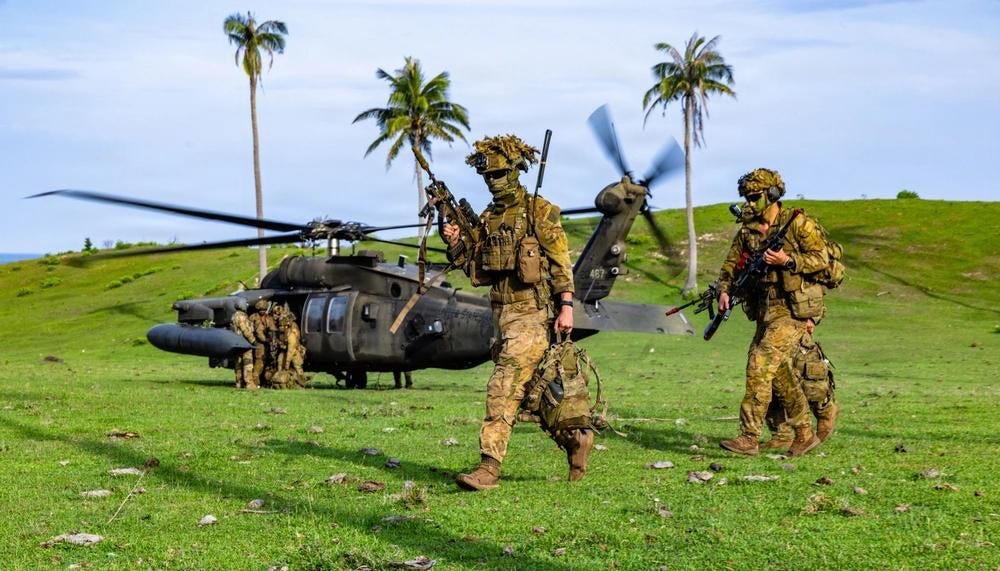
China’s submarine-launched ballistic missile test. On 6 July, a People’s Liberation Army Navy submarine, almost certainly a Type 09IV boomer, fired a submarine launched ballistic missile carrying a dummy warhead roughly 7,300 kilometres into the Pacific, landing between Tuvalu and Kiribati’s Gilbert Islands. The Chinese also deployed four tracking vessels into the Pacific region to support the tests.
This was China’s first publicly acknowledged SLBM test since 1982 and the first ever conducted into international waters rather than a closed impact zone. Beijing notified Japan, Australia and New Zealand in advance, but not the United States. Taiwanese officials assessed the missile as a JL-2, though Chinese state media speculated it may have been the longer ranged JL-3, first displayed at a September 2025 parade with a stated range of 10,000 kilometres.
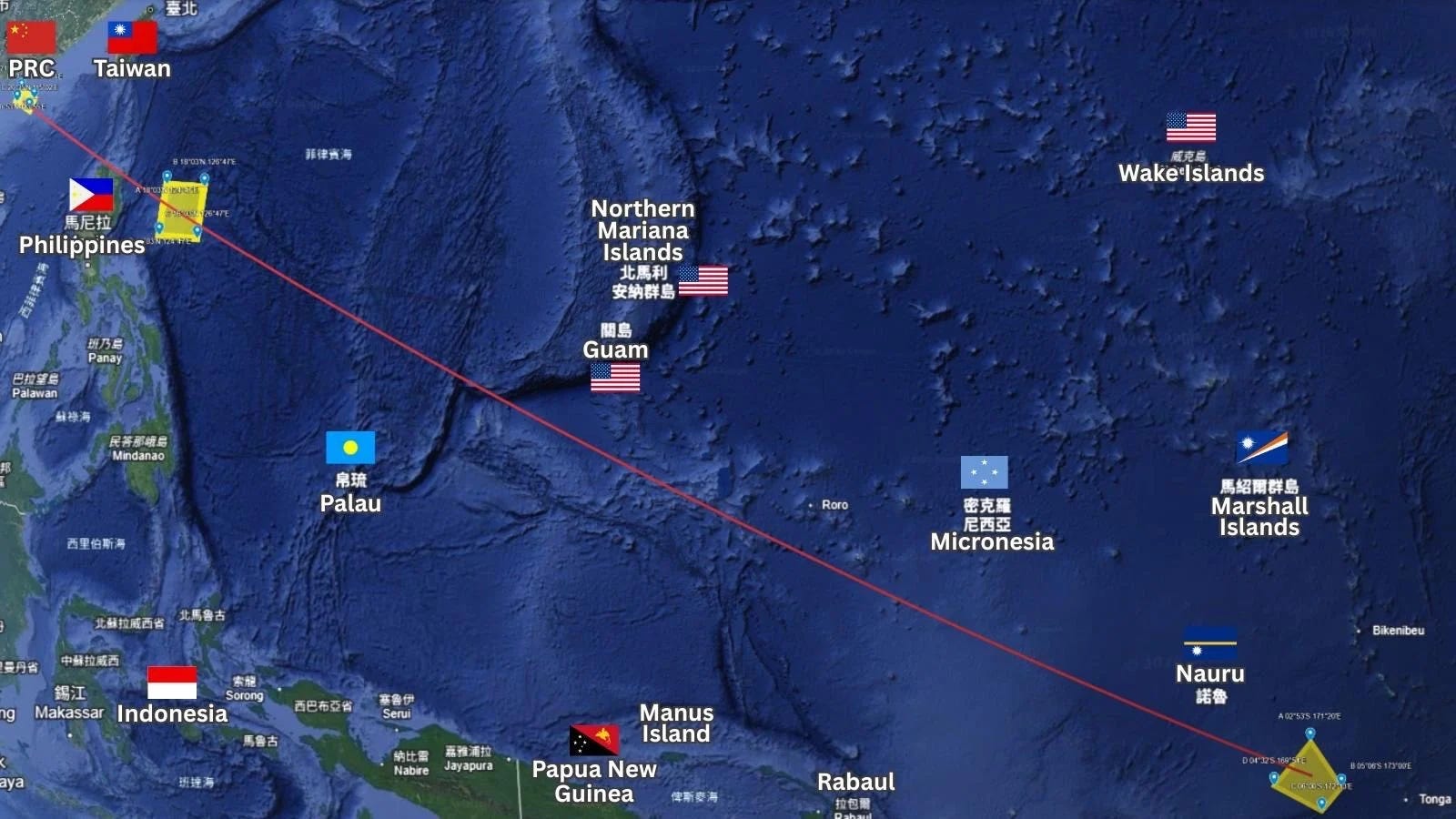
The test is best read as what analyst K. Tristan Tang calls a “systemic move”, and a demonstration of China’s improving second-strike capability rather than as a signal aimed narrowly at any single state. The joint ISW-AEI assessment concluded Beijing is seeking to show it can threaten the American mainland from an SSBN operating inside its own protected waters, reducing the risk of detection that comes with a far-seas deployment. China is building toward a larger fleet of intercontinental ballistic missile-armed submarines by 2040.
The regional reaction was predictable. The missile landed within the South Pacific Nuclear Free Zone established by the 1986 Treaty of Rarotonga, to which China is a party. Australia called the test destabilising. New Zealand said it breached the treaty’s intent even if not its strict text, since the warhead itself was not nuclear. The Solomon Islands Prime Minister Matthew Wale, in his capacity as chair of the Pacific Islands Forum, lodged a formal protest, arguing the test contradicted the Forum’s own Ocean of Peace Declaration.
The Marshall Islands asked China directly to explain its intentions. For a set of small Pacific states that have spent the past two years being courted by both Washington and Beijing, the test was an unwelcome reminder of what great power competition can look like when it occurs in their waters rather than around them.
More Chinese First Strike Missiles. This week, the China Aerospace Studies Institute (CASI), and naval analyst Tom Shugart, reported on the PLA Rocket Force appearing to be testing a land-based fixed multiple-missile launch system, for up to MRBM-sized missiles. While the CASI report examined whether this was designed for ballistic missile defence, or for offensive missiles, it settled on the following assessment:
These launch systems more likely support conventional missiles launched via a vertical launch system or by erecting horizontal missile canisters housed within the launch system.
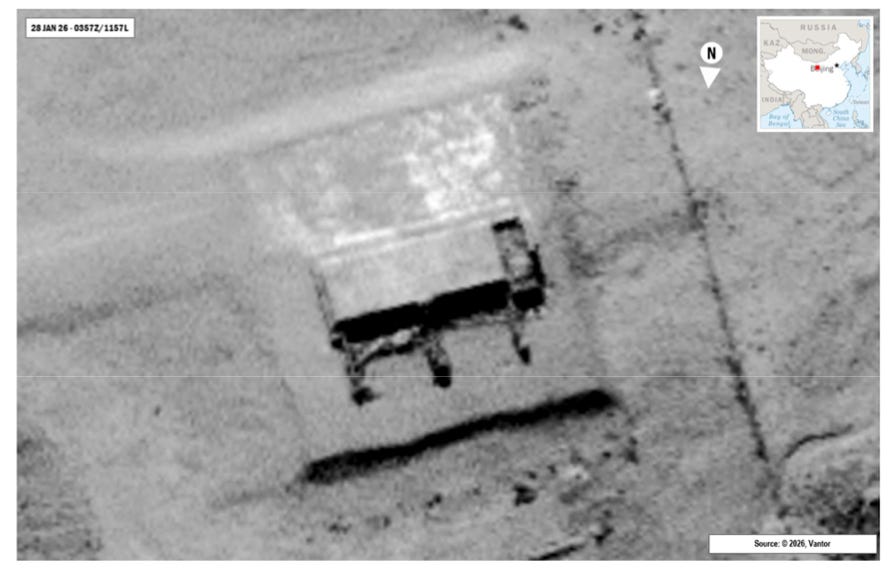
As the CASI report notes in its conclusion:
A conventional quick strike capability, like that provided by a vertical launch system, could make PLA leadership more confident in their ability to compel Taiwan and U.S. behaviours during a crisis by threatening or conducting rapid preparatory strikes or counter intervention fires in the early stages of a conflict. Building out these launch systems in sufficient quantities could allow the PLA to rapidly escalate from a quarantine or blockade of Taiwan to conducting elements of a massive preparatory fires campaign against targets on Taiwan, U.S. bases in the first island chain, or U.S. Navy task groups if positioned along the coast.
As Shugart notes:
a system like this makes sense for massed missile launches: it's much cheaper to field a large number of missiles this way than on individual TELs or in individual silos. It could also enable rapid fire with very little warning—no TELs to deploy.And because it's a fixed facility, with a concentrated number of expensive missiles vulnerable to counter-attack, there is a strong use-it-or-lose-it incentive. In other words, this is a system built for a first strike.
It will be interesting to monitor when these installations starting popping up in other locations within range of Taiwan.
Taiwan: Normalised Coercion from China. China’s approach to Taiwan continues to shift toward a persistent, layered presence. China Coast Guard vessels have now maintained a near continuous patrol in the eastern portion of Taiwan’s claimed exclusive economic zone since 1 June, rotating crews on 4 July while switching off tracking transponders to complicate monitoring. The patrol was launched under cover of an unrelated dispute, boundary talks between Japan and the Philippines over their overlapping economic zones, but its practical effect is to normalise a Chinese law-enforcement presence on the side of Taiwan furthest from the mainland, exactly the kind of persistent posture from which a future quarantine or blockade could be launched at short notice.
Alongside the coast guard presence, Taiwanese and Singaporean authorities have pursued a string of prosecutions over the smuggling of advanced Nvidia AI chips into China, including a raid on the Taiwanese offices of Super Micro’s local distributor that uncovered fifty sets of servers containing restricted GB300 chips.
China’s coercion of Taiwan’s international space has also intensified well beyond the Strait. As Nathan Attrill documents for ASPI’s The Strategist, Beijing spent the first half of 2026 obstructing Taiwanese participation in a widening range of low politics venues: a WTO ministerial in Cameroon, overflight permissions for President Lai Ching-te’s travel, the RightsCon technology conference in Zambia, the World Health Assembly, and, in June, the detention of Taiwanese scholars attending the Our Ocean Conference in Kenya.
China also imposed year long entry bans on four New Zealand parliamentarians who visited Taiwan. Together these Chinese actions constitute a campaign designed to make routine engagement with Taipei costly, testing whether the island’s partners will absorb that cost or quietly avoid the friction.
China and Russia: Deepening Military Cooperation. Beijing and Moscow began their annual Joint Sea-2026 naval exercise off Qingdao on 6 July, running through 13 July, alongside a joint maritime patrol in the Pacific. The exercises followed a joint strategic bomber patrol that briefly entered South Korea’s air defence identification zone, and add to a body of reporting, now including new detail on chemical, biological and radiological warfare training conducted for Russian officers in Beijing in late 2025, that points to a steadily deepening military relationship between the two countries. This has direct relevance to the war in Ukraine given that some of the Russian personnel trained in China were later deployed to Crimea and Zaporizhzhia.
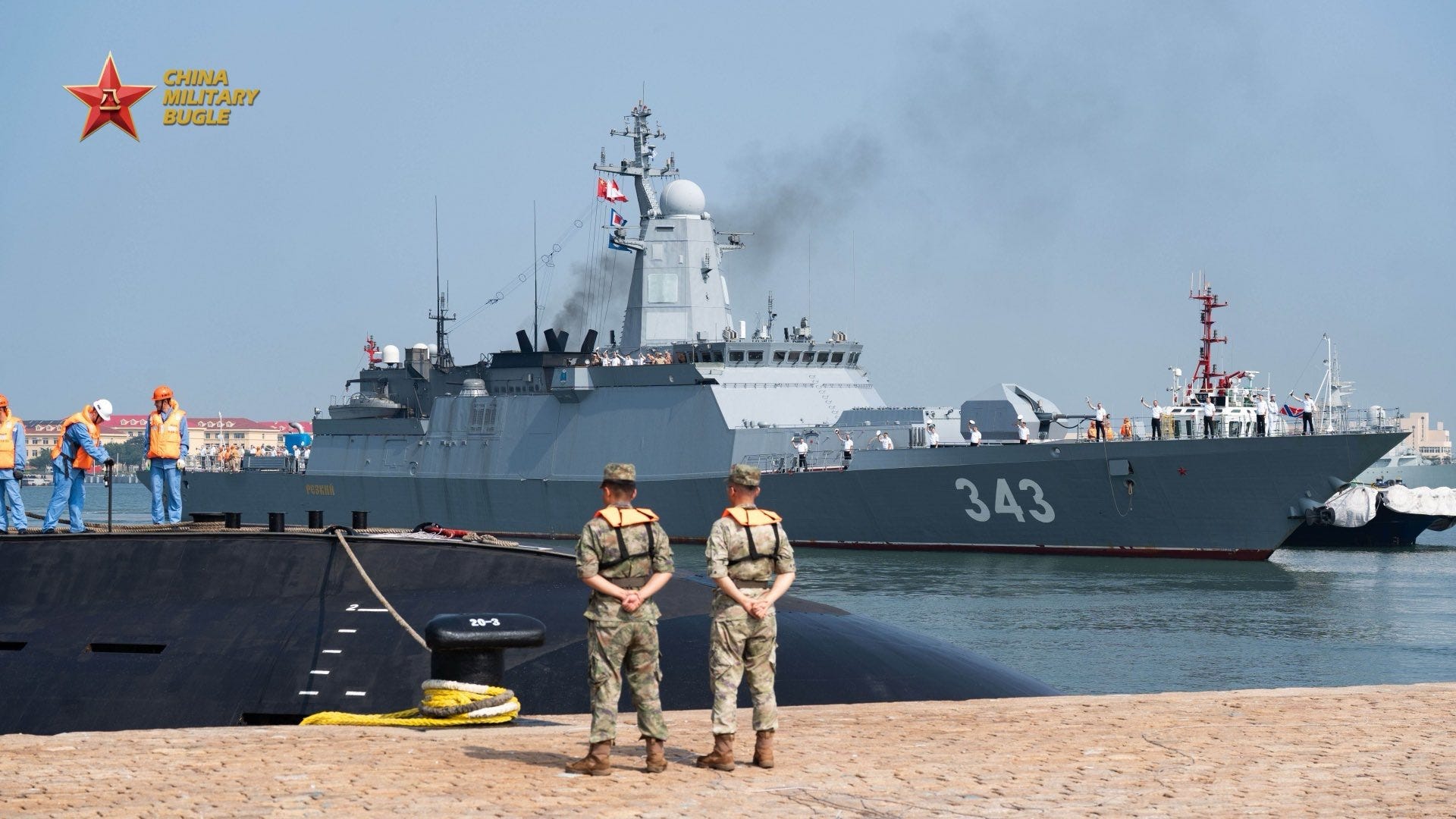
Beyond exercises, it has been reported that Western officials have obtained evidence of secret arms supplies from China to Russia, which could be an escalation of Beijing’s involvement in the war in Ukraine. As the report in The Times describes:
A new report obtained by allies points to a Chinese company sending a range of purpose-built military drones to Russia for testing, with the ultimate destination being Ukraine, The Times understands. The deal occurred last year, according to a western official, who was unable to disclose the name of the company. However, they said there was “clear evidence now that Chinese companies are supplying Russia with deadly weapons for use in Ukraine”.
Russia is also now producing a long-range attack drone which has Chinese engines and other components. Called the Garpiya-A1, production has been underway for some time by a subsidiary of Russia’s state-owned Almaz-Antey arms manufacturer, Izhevsk Electromechanical Plant Kupol.
Oceania and the Contest for Influence and Access. Australia continued its run of Pacific security agreements, signing the Ocean of Peace Alliance with Fiji on 6 July, its fourth formal alliance after the United States, Papua New Guinea and New Zealand, alongside the broader Vuvale Union covering economic and policing cooperation. New Zealand’s Prime Minister Christopher Luxon said on 9 July that Wellington would consider joining the Ocean of Peace Alliance.
The agreements follow the Pukpuk mutual defence pact with Papua New Guinea, which entered into force on 8 July, and build on the Nakamal Agreement with Vanuatu concluded in June, under which Vanuatu undertakes not to host any foreign military base. Beijing’s standard response, urging Pacific agreements not to target third party interests, did little to disguise its evident concern at losing further ground in a region.
Pacific Assessment
The past week illustrated the well-established strategic pattern in the Pacific: military signalling and grey zone coercion from China and democratic nation coalition-building advancing simultaneously. China’s submarine launched ballistic missile test was less a message to any single capital than a demonstration, aimed chiefly at Washington, that Beijing’s second-strike capability from its own waters is maturing.
The bigger story, however, is the normalisation of persistent presence and everyday coercion around Taiwan. This includes Chinese coast guard patrols that no longer end, entry bans and visa friction aimed at parliamentarians and scholars, and a deepening China-Russia military relationship which extends well beyond the Pacific into the war in Ukraine. It also includes the adding of hardened, ground launchers for PLA Rocket Force Medium Range Ballistic Missiles which provides a first strike capability.
Washington’s allies are responding, but slowly and unevenly. Australia’s expanding web of Pacific pacts and Japan’s widening defence partnerships with India and the Philippines show some momentum. Yet Japan’s own legal caution on lethal exports to Ukraine, even as it pursues deeper security ties elsewhere, is a reminder that solidarity and practical capability do not always move at the same speed, a gap Beijing will exploit. At the same time, states like Australia, while big on media releases from the government, have constrained defence spending to levels more appropriate to the great peace of the 1990s than today’s era of aggressive strategic competition.
**********
This week I published two articles at Futura Doctrina. The first was an examination of my recent Lowy Institute report on the systemic learning disorder afflicting contemporary Western military institutions. You can read the article at this link.
My second piece this week was analysis of the concept of strategic depth. In the article, I question whether it remains a meaningful concept in an era of AI, OSINT imaging, advanced sensors and long-range drones. I then explore how nations might think about strategic depth beyond its traditional association with geography and time. You can read that article here.
This week, I spoke with media organisations about Ukraine and other elements of modern war. I had a long conversation with Nataly Lutsenko on the War and Politics 24 platform, which you can watch below.
I also appeared on CNN again. This time, I discussed the Ankara NATO summit, its key outcomes and the implications for the war in Ukraine. You can watch that interview below.
**********
It’s time to explore this week’s recommended readings.
This week’s recommendations include two different articles on contemporary developments in drone warfare and whether this represents revolutionary or evolutionary change. These is a good piece on nuclear deterrence, as well as articles on Chinese strategic coercion and a re-examination of decision-making about offensive and defensive operations.
As always, if you only have the time available to read one of my recommendations, the first is my pick of the week.
Happy reading!
1. On Defense and Offense: Revisiting Clausewitz, Mao Zedong and Thucydides
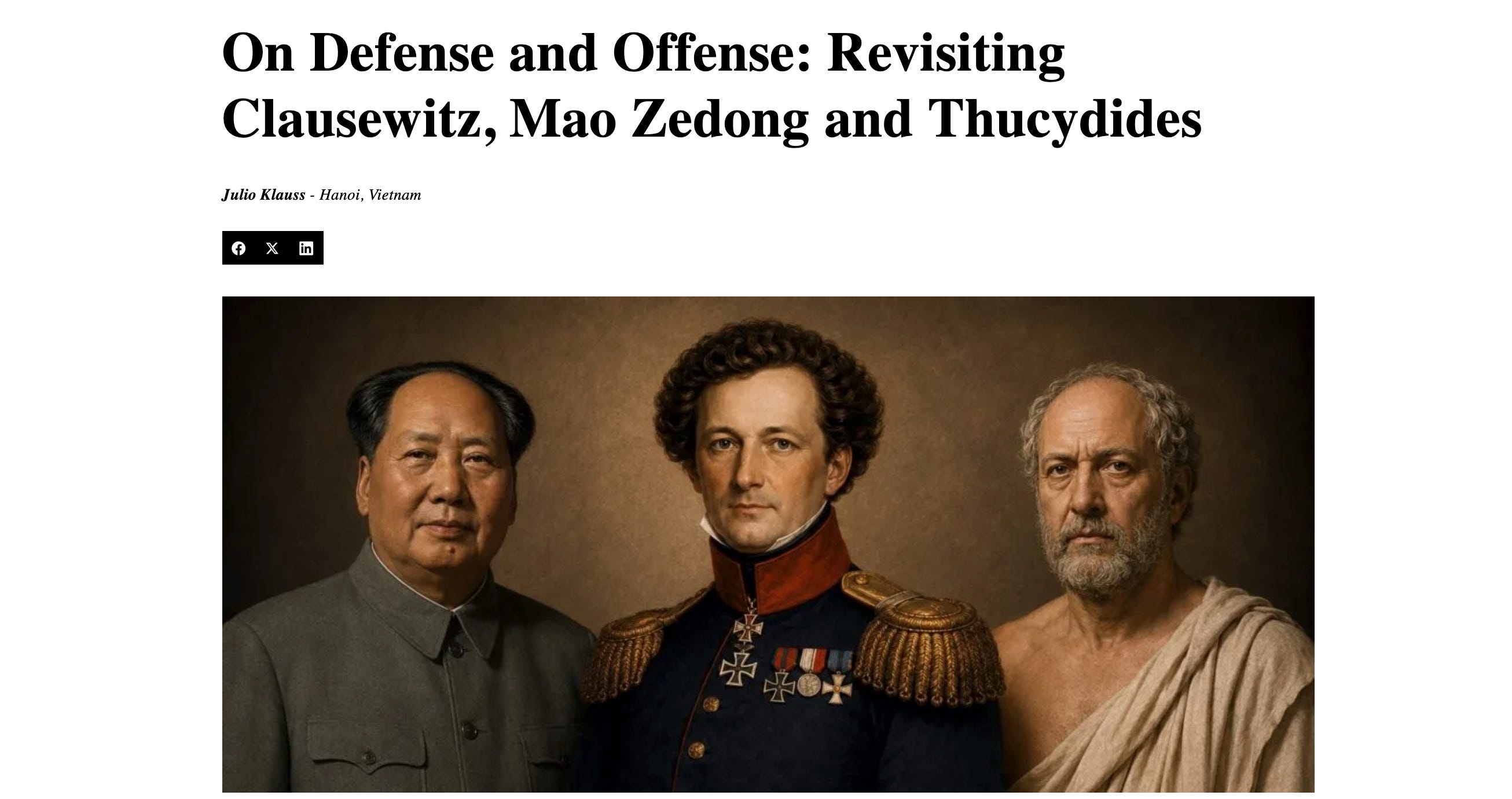
Julio Klauss, writing in Military Strategy Magazine, returns to first principles on one of strategy’s oldest questions: what actually drives a commander’s choice between attack and defence. Working through Clausewitz, Mao and Thucydides’ account of the Peloponnesian War, Klauss argues that the balance of power and the psychology of command remain the two factors that matter most. You can read it here.
2. The Drone Revolution That Isn’t
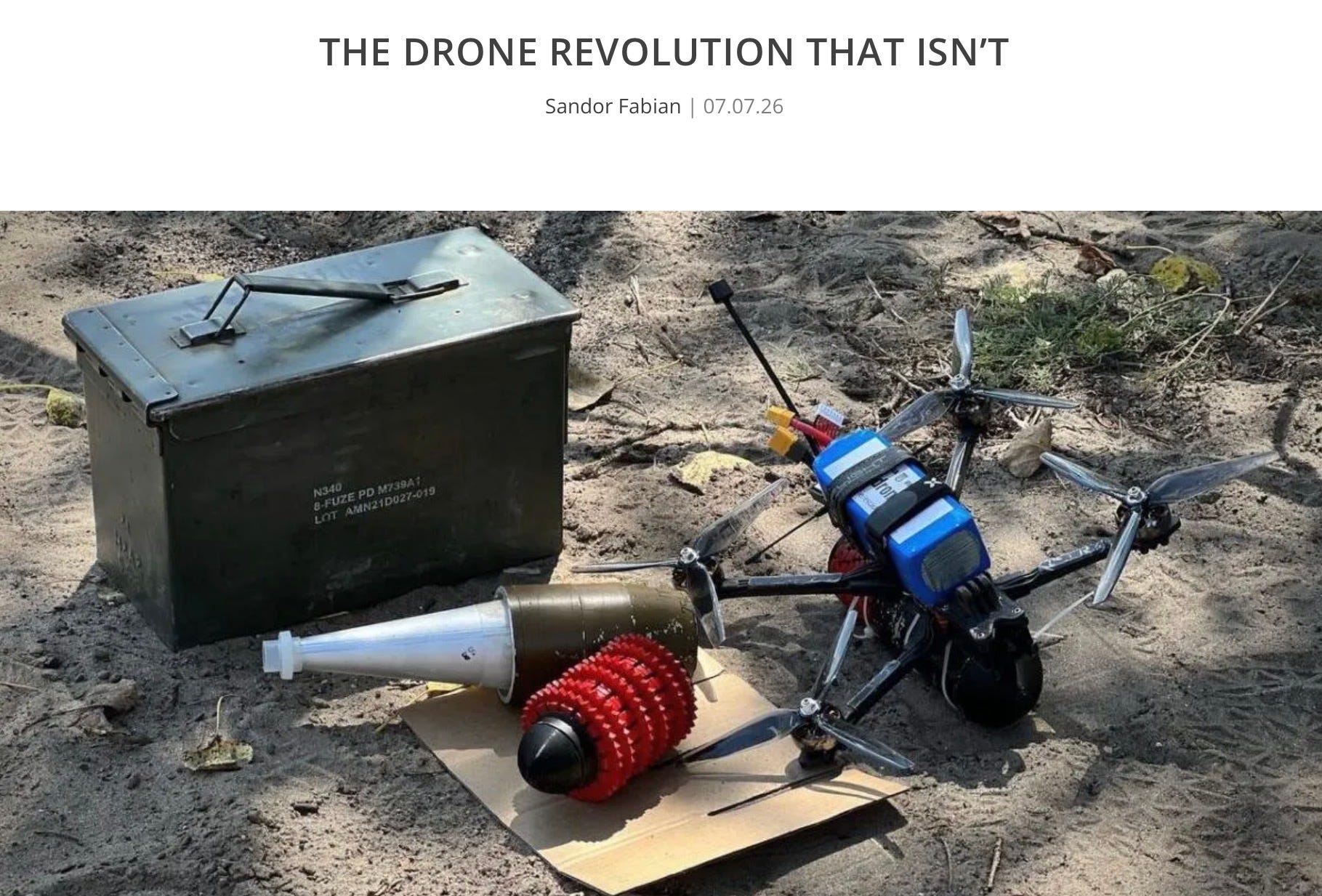
In this piece for the Modern War Institute, Sandor Fabian, argues against the idea that drones represent a genuine revolution in warfare. He makes the case that every tactical breakthrough in this war sits atop an unglamorous ecosystem of logistics, training, spectrum control and industrial production that rarely makes it into a viral clip. His conclusion, that drones are transformative at the tactical level but evolutionary rather than revolutionary at the strategic one, corrects some of the breathless commentary Ukraine has attracted. You can read it here.
3. The Strange Defeat of Nuclear Deterrence
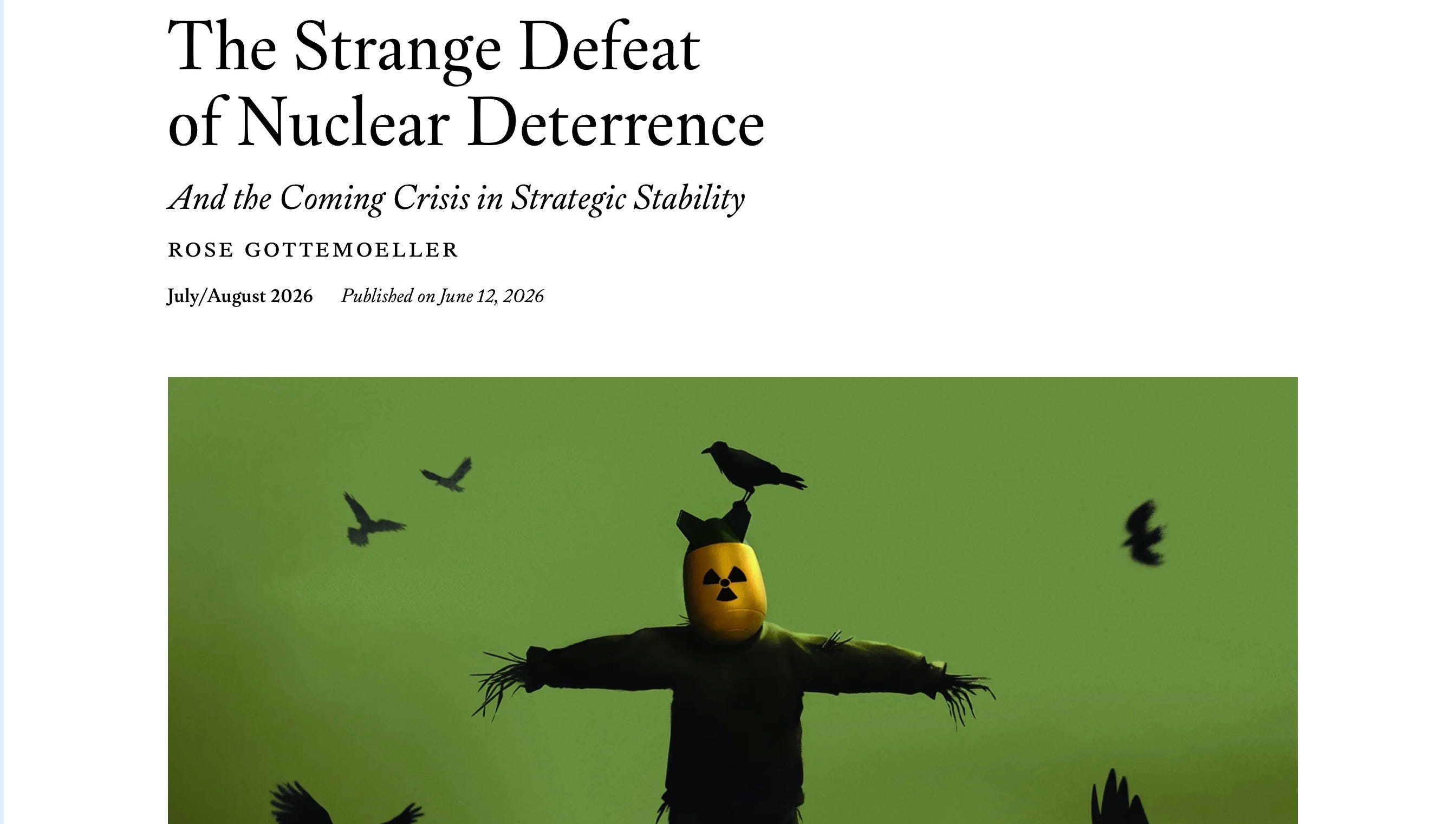
Rose Gottemoeller, a former NATO deputy secretary general and experienced arms control negotiator, argues in this Foreign Affairs piece that nuclear deterrence has quietly failed to do the one thing it promised, which is to keep major powers safe from serious attack. Her central case study is Ukraine’s June 2025 strike on Russian strategic bomber bases deep inside Russian territory, an operation that damaged the delivery platforms for Moscow’s nuclear arsenal using nothing more than smuggled commercial drones. You can read the article at this link.
4. Drone Warfare With a Moral Code
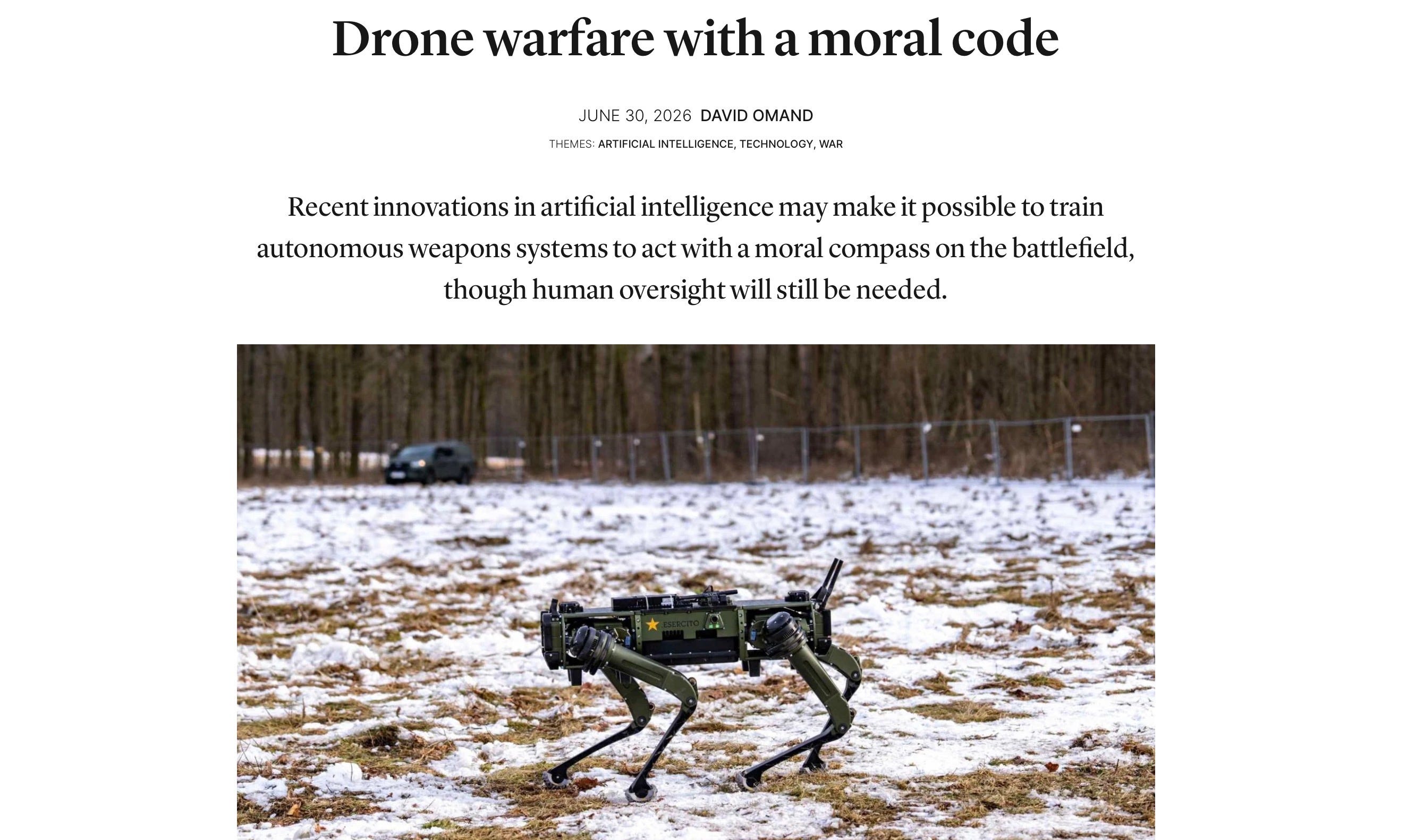
Sir David Omand, the former director of GCHQ, writes in Engelsberg Ideas about whether AI can be trusted to make the ethical judgements for lethal autonomous systems. His argument, that a human commander can remain meaningfully “on the loop” rather than “in the loop” without abandoning moral accountability, has application in current and future conflicts. It is a thoughtful, first principles treatment of an important modern problem for many militaries. You can read it here.
5. Beijing Is Testing Who Will Stand By Taiwan

This article published in The Strategist examines the widening pattern of Chinese coercion against Taiwan’s everyday international engagement, from a cancelled human rights conference in Zambia to entry bans on New Zealand parliamentarians. The argument put forward, that Beijing is testing whether Taiwan’s partners will absorb the cost of routine engagement or quietly avoid the friction, is a useful complement to my Pacific section above. The article is available at this link.
Your point about the Ukranians holding the initiative across multiple domains and posing Russia the strategic dilemma of defending Russia or defending Crimea is fascinating.
So, as far as I can tell, a Russian Army that's losing capacity by losing more troops than it is recruiting, is being compelled to keep advancing by a political imperative to show they are gaining territory, but has been de-mechanised and de-fuelled and has strained logistics from Ukranian drone strikes, yet is being aided in adapting by China and Iran.
Seems like a race - can the Russian Army adapt faster than the Ukranian can convert their initiative into territorial gains.
The 2023 Ukrainian counteroffensive using NATO mechanised kit was in part stopped by layered Russian defensive lines - I wonder how effective those defensive lines will be against Ukrainian offensive tactics you've described above - light infantry on foot moving under a drone shield?
An excellent post, as always. Regarding "But the Patriot missile licence was a political commitment from Trump..." - in my head, the words Trump and commitment don't go together 😅. He only sticks with anything as long as it benefits him, or until he forgets 😅. He shouldn't treat his words as "commitments" as we do with normal people.