
The Big Five - 01 June edition
A weekly guide to new readings on modern war and adapting to win


This week, I had the opportunity to spend some time in the field with another of the Australian Army’s combat brigades. The 3rd Brigade, based in Townsville, Australia, is one of the three combat brigades of the 1st (Australian) Division.
Over the past couple of weeks, the 3rd Brigade has been conducting a multinational exercise which has included soldiers from Japan and the United States of America in the north Queensland region. While I will write a separate piece about the activity, and how the Australian Army is applying lessons from Ukraine, needless to say it was a terrific opportunity get out among soldiers again.
It was, as always, also another fascinating week in international security affairs!
First, we saw the continuation of Israel’s operations in Gaza and the failure of the US constructed floating jetty designed to bring aid supplies ashore into Gaza.
Second, we saw the conclusion of the PLA Exercise Joint Swords 2024A that was conducted at sea and in the skies around Taiwan. While this activity was not as large as the one that followed the 2022 Nacy Pelosi visit, it was yet another opportunity for the PLA Eastern Theatre Command to rehearse joint planning and operations. Called ‘destabilizing’ by Taipei, the exercise was also another chance for China to normalise large-scale activity around Taiwan so it could be used as a deception plan in any future real-time military action against Taiwan.
Third, there were some big announcements on military aid to Ukraine. The most significant was the assistance package announced by Sweden, which included surveillance aircraft, hundreds of armoured personnel carriers, and munitions. Ukraine also signed security agreements with Norway, Belgium and Iceland. Australia provided $31 million for the Ukraine Energy Support Fund.
Finally, we saw a change in the US policy for the use of its weapons by Ukraine. The ‘no use on Russian soil’ policy has been slightly relaxed to allow for attacks on Russian ground forces in the Kharkiv - but not with ATACMS. The change in policy also include the ability to attack Russian bombers launching cruise missiles against Ukraine, and tactical aviation launching long-range glide bombs. You can read my full assessment of the implications of the evolution of US policy on the use of American weapons here.
In this week’s reading recommendations, I have included articles that cover strategic assumptions about the trajectory of the war in Ukraine, the future of the main battle tank, an examination of Soviet military theory and its application in Ukraine, Chinese strategy for its presence in Antarctica and building a more competitive strategy for confronting authoritarian regimes.
As always, if you have time to read only one article, the first one below is my recommendation (hat tip to Frank Hoffman for recommending it).
Happy reading!
1. Testing Assumptions about the War in Ukraine
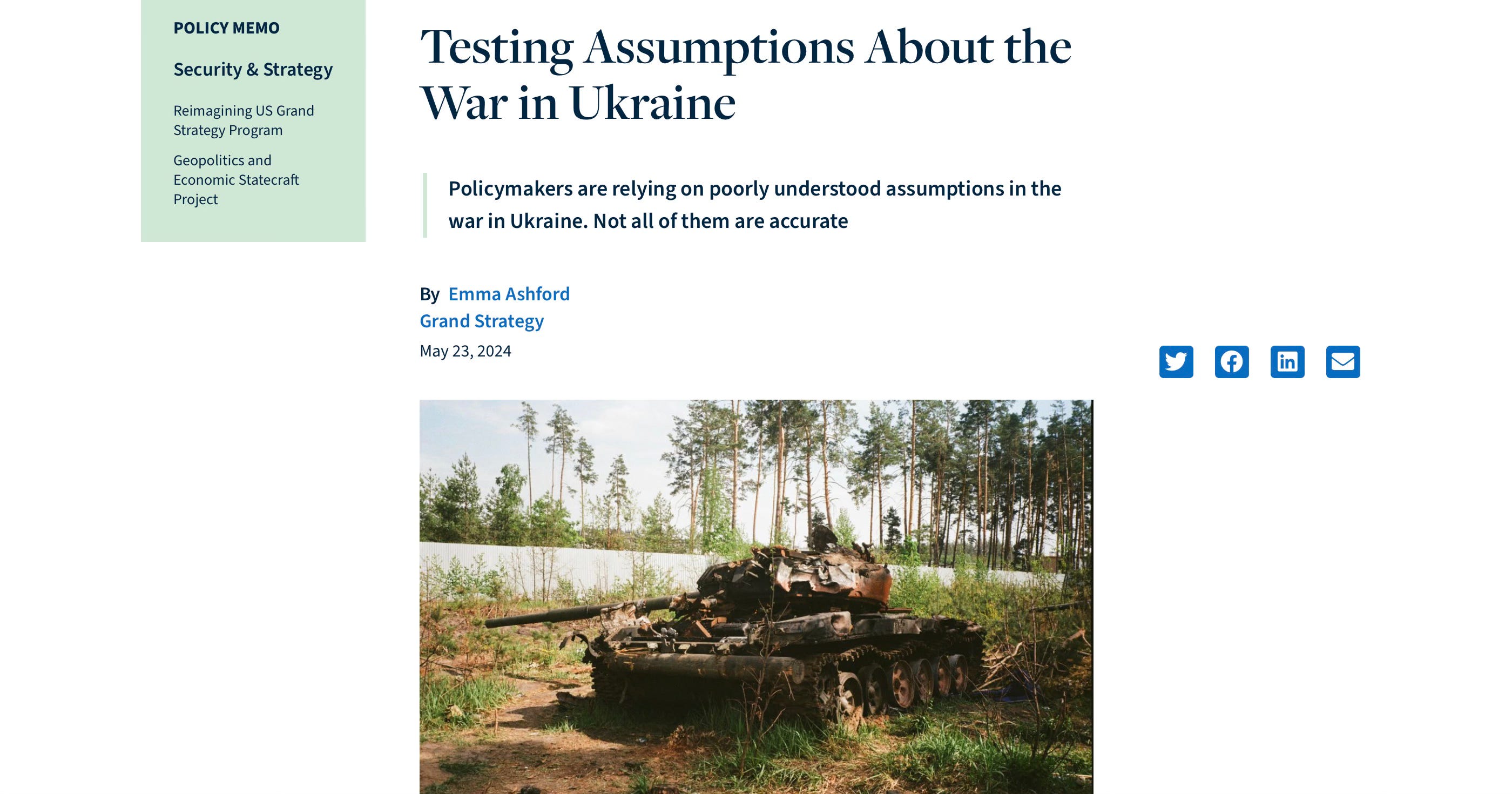
In developing, executing and adapting strategy, the assumptions which are employed are critical. In many circumstances, assumptions can lack in evidence or be entirely untested. Indeed, the importance of assumptions in strategy making is so important that it recieves significant coverage in my forthcoming book on strategy and adaptation during the war in Ukraine. In this piece, Emma Ashford undertakes a detailed exploration of some of the assumptions currently informing strategic thinking and analysis about the war in Ukraine. You can read the article here.
2. Soviet Military Theory and Ukraine
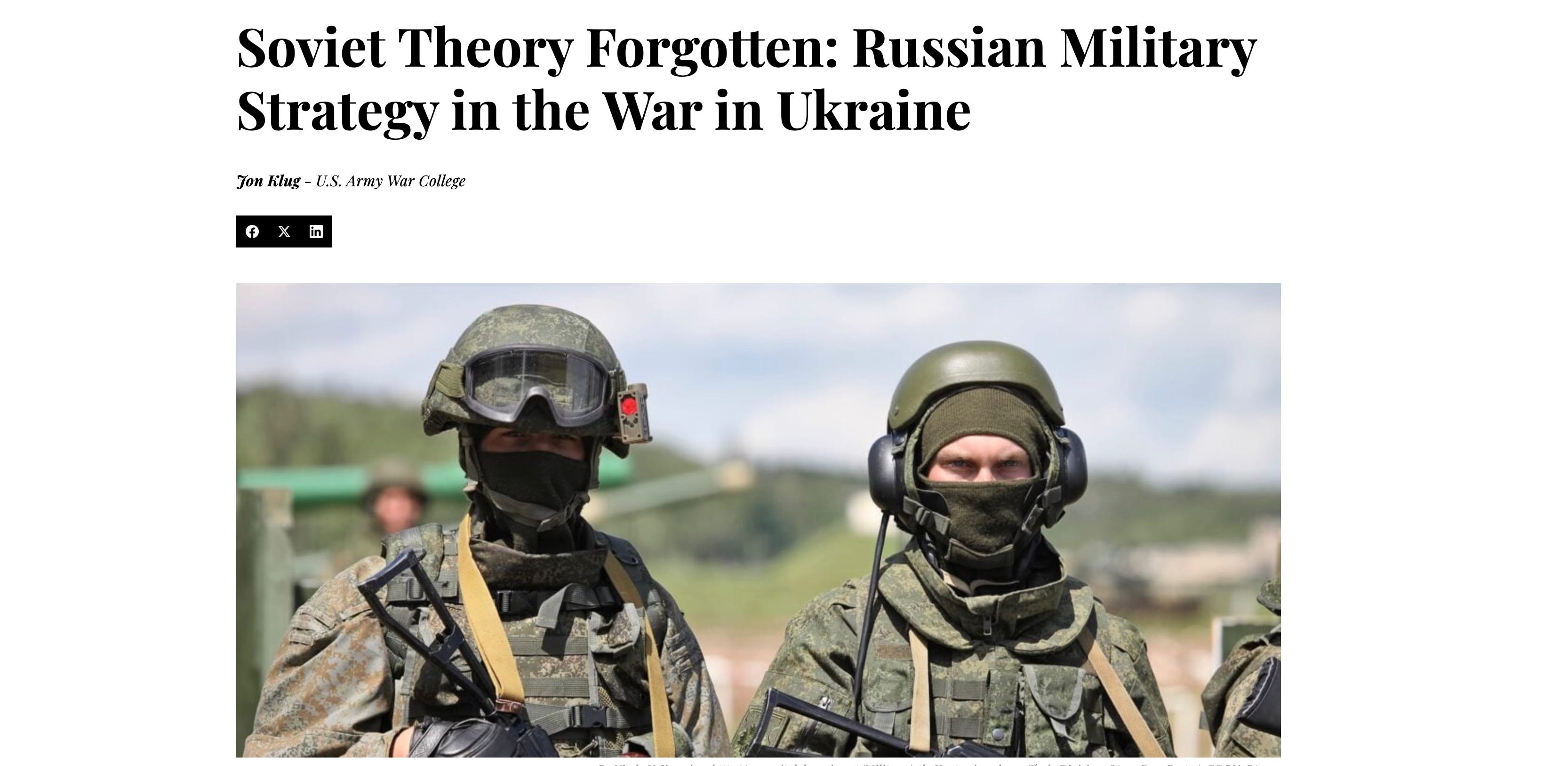
There was a time when studying Soviet military theory was mandatory in the development of young military officers. For those engaged in strategic and operational planning, it still is because of some of the foundational theories that emerged before WW2 and how they informed development of military theory during the Cold War. In this article, Jon Klug examines different aspects of Soviet military theory and which elements have been most influential during their ongoing invasion of Ukraine. You can read the full piece, published by Military Strategy Magazine, here.
3. China and Antarctica
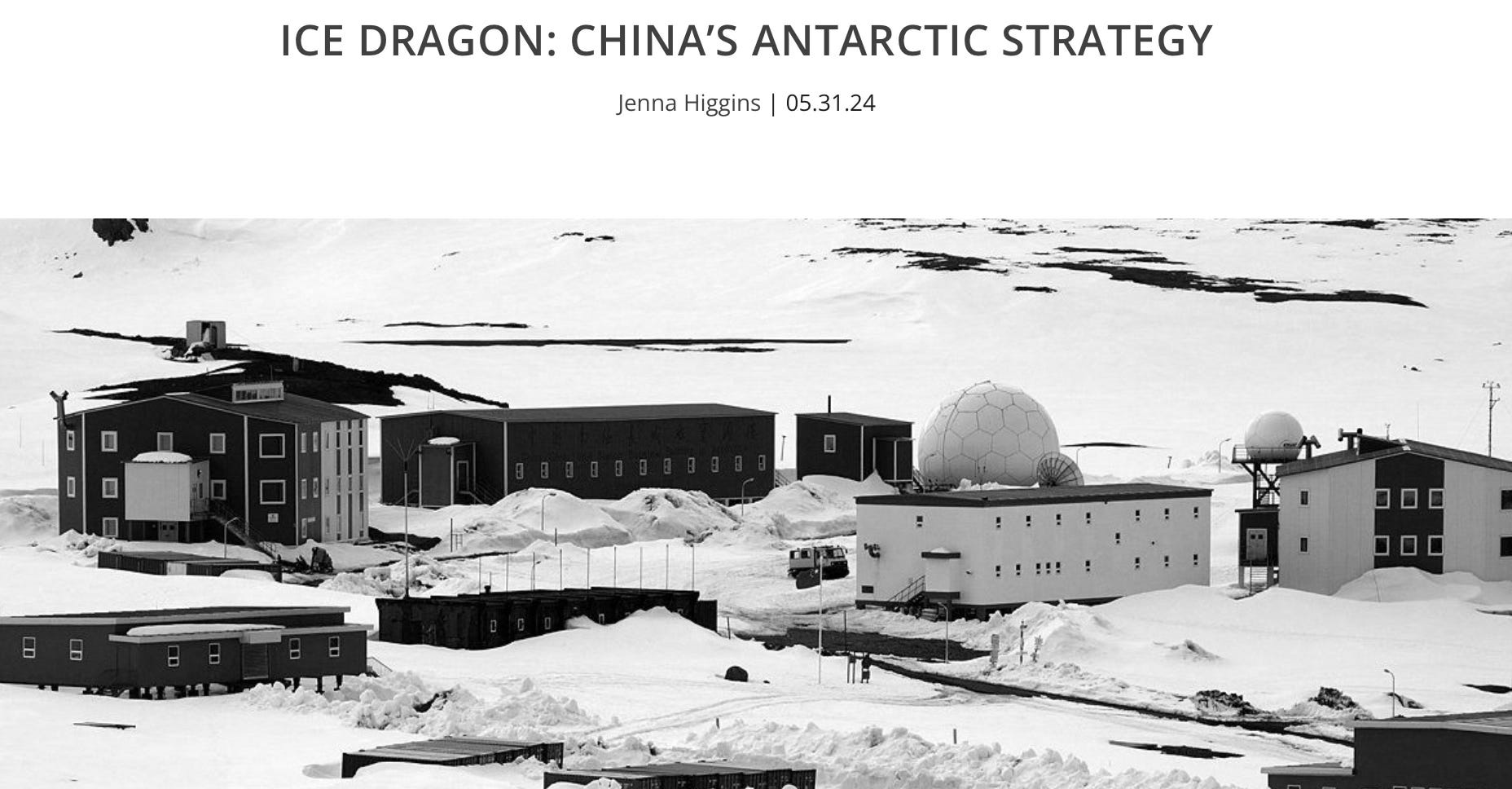
China has made no secret in recent years about its strategic interest in Antarctica. In this article, Jenna Higgins explores Chinese aspirations for Antarctica and how countries like Australia and the US might be able to respond. As she notes in the article, “China’s strategy for Antarctica incorporates strategic patience, technological innovation, international influence, and access to South Pacific territories.” You can read the full article, published by Modern War Institute, here.
4. A Vision for Competitiveness

This week, the Special Competitive Studies Project, based in Washington DC released its new strategy. Designed to provide insights and recommendations to improve US competitiveness against authoritarian regimes, the report notes that “managing crises is no longer sufficient, and the constant red-teaming of risks of escalation is counterproductive. To face the present challenge head-on, we must renew our strategic confidence and competence.” You can read the full report here.
5. The Future of the Main Battle Tank
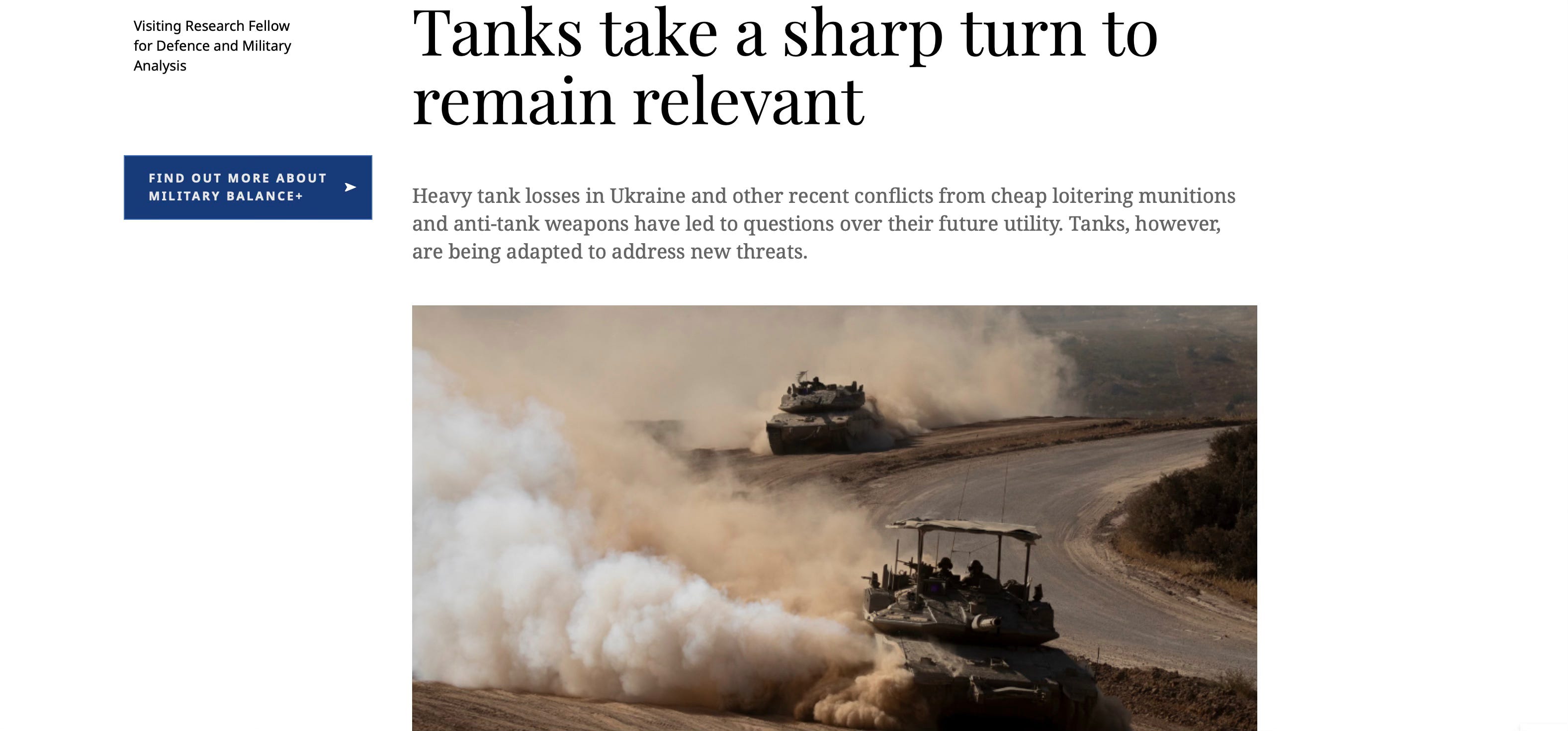
It is fair to say that the reputation of the main battle tank, and its role in battle, has come under some scrutiny in the past couple of years. Much of the speculation has however been uninformed and offered by ‘instant experts’ who have watched a few videos on social media of abandoned armoured vehicles having grenades dropped in open hatches by drones. However, there is a case for reviewing the role, technology and protection systems of tanks - and many other military systems - given developments in drones and EW in the past two years. To that end, this article from IISS adds an informed voice to that debate. You can read this short piece here.
The analyzis by Emma Ashford lacks a couple of important aspects. In comparing the size and strength she forgets the human psyche: Russia has a much bigger pool of potential soldiers, but the motivation for fighting is undoubtly immensely greater among the Ukrainians than for the average Russian. So a cool calculus about resources and economy will always lack this aspect - just watch the Vietnam and Afghan wars.
Then the rhetoric of Putin signals an extreme level of hatred against the West and particularly the US. The fanatical level of revenge and imperial visions does not signal any will to stop attacking the free, democratic world. For him the fight is personal, and the obviously narcissistic vantage point will never let him give up - he must be physically defeated. On the battlefield. Any other outcome will result in endless war and enormous costs. This is what the 'rational' analyzis of Emma Ashford doesn't incorporate.