
Confronting Complacency
Confrontation with authoritarians is not new for democracies. But how do we shake our societies out of strategic lethargy and complacency about the nature and scale of the threat?

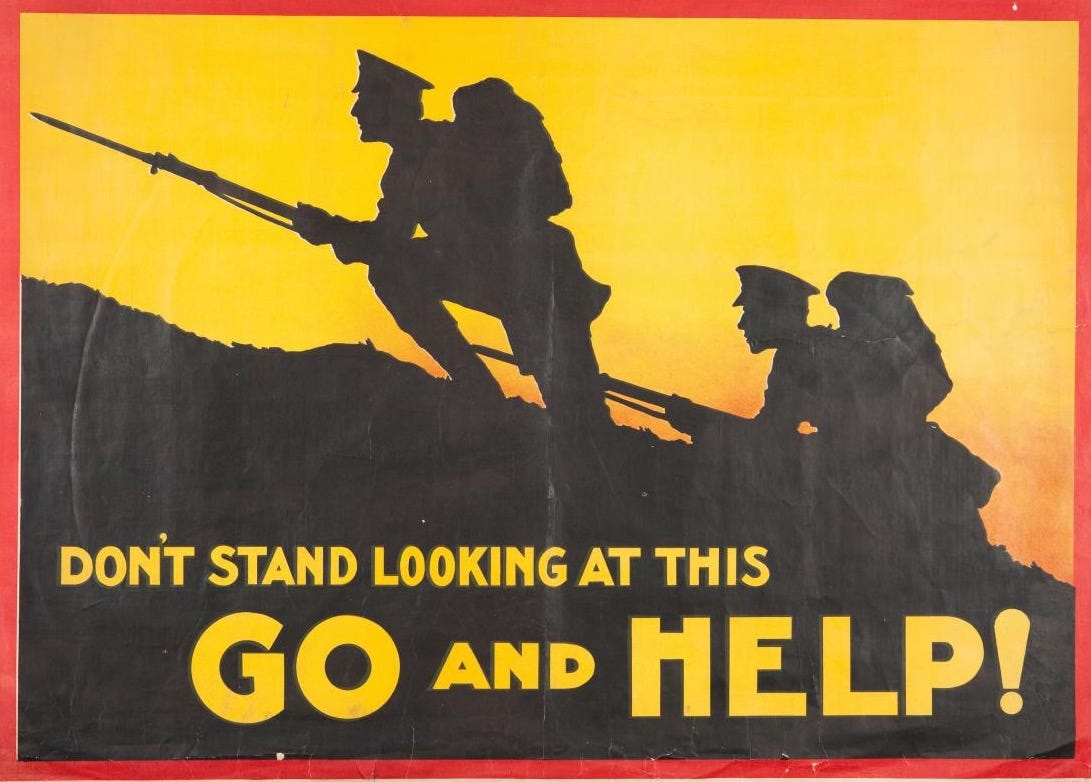
If it ain’t broke, don’t fix it” is the slogan of the complacent, the arrogant or the scared. It’s an excuse for inaction, a call to non-arms. It’s a mind-set that assumes (or hopes) that today’s realities will continue tomorrow in a tidy, linear and predictable fashion. Pure fantasy. Colin Powell, “Lessons for Living, and Success in Business or War”
It has been a few days since I posted here.
Sorry!
I have just returned from a 22 day overseas trip which saw me visit Ukraine, Poland, Germany and Canada. Frankly, the jet lag on return home to Australia has been a little more than I expected. For a couple of days, this has interfered with my writing in general, and my posts here.
Now my brain seems to have returned to normal operations, I wanted to post a couple things about my just-completed visit. I know that many of you have read my Ukraine Dispatches.
My first dispatch, which covered Ukrainian military training as well as a certain incident with a snake, is available to read at this link. My second one is available here. My third dispatch, an interview with Nataliie Lutsenko, is available at this link. The fourth dispatch is here. My fifth dispatch, about Ukraine’s assault forces, can be read at this link. The sixth dispatch, on air defence, is available here.
Thank you for reading these articles. I hope they provided some insights about the war in Ukraine that were useful. I will be posting another piece shortly that wraps up the Ukraine visit from the strategic issues through to battlefield insights.
Ukraine was just the start of my around-the-world research trip. During a short trip to Germany, I was able to visit the Security Assistance Group-Ukraine (SAG-U) as well as the organisation called NATO Security Assistance and Training for Ukraine (NSATU).
The SAG-U is a U.S. initiative that has handled the coordination of security assistance to Ukraine. Its role has been transitioning to NATO’s NSATU (see below) but it still is responsible for many operational aspects of the combined efforts to support Ukraine.
A NATO-led NSATU has assumed many training and force development responsibilities from SAG-U. Its mission is to coordinate the provision, transfer, and repair of military equipment, and to lead training efforts for Ukrainian forces in allied countries. NSATU works to align support to Ukraine efforts within NATO and to assist Ukraine in building its future military force.
I had the opportunity to speak with key leaders at both of these organisations, and to visit the small team of Australian soldiers embedded within them.
The final part of my trip was a few days in Canada where I gave speeches in Montreal and Calgary. It was the first time that I had visited either city, although it was my sixth or seventh trip to Canada overall. During these visits, I was able to meet with local folks and to visit the Canadian 2nd and 3rd Divisions. These were very interesting visits to the Canadian Army because they are in the process of a large-scale reorganisation. I deeply appreciate the hospitality I was shown during these visits.
The speech I gave in Canada focused on how western societies might overcome a profound complacency about national security that appears to afflict some democratic nations. In nations such as Australia, Canada and in other places where the threat from aggressive authoritarian regimes is not immediate or proximate, many citizens do not believe that there are compelling reasons for increased spending on defence and national security to deter authoritarian aggression.
The aim of my speech was to explain the threats to democratic nations, and democracy more broadly, and propose a course of action for nations such as Canada, Australia and others to address these threats. I have posted the entire speech, called Confronting Complacency, in the section below.
*******
I would like to lay out some of the perils that democracies are currently facing, the implications of these perils for international competition and war, and what we as advanced democratic societies might do to respond.
I will state up front. The current international picture is not a pretty one, although I suspect everyone here appreciates this.
The environment
There are a multitude of factors driving change in the security environment, but two stand out. These are:
1. Authoritarians seeking to change the global system through violence if necessary, and
2. The development of advanced technologies made widely available.
The first trend is Authoritarians seeking to change the global system. In the past several years, there has been a tendency to group Russia, China, Iran, and North Korea into a single axis of authoritarian powers because they each share an interest in challenging the global order established after the Second World War.
Russia has both the capability and will to challenge global norms and initiate conflict. Russia possesses significant military, space, and cyber capabilities (including large stockpiles of nuclear weapons) that can be used for coercion. Under President Putin’s leadership, Russia aspires to the global role it enjoyed during the Cold War. In frequent speeches, Putin has referenced a favourable interpretation of Russian history to describe his vision for what he believes is Russia’s rightful pre-eminence in the global order.
Since his speech to the Russian people on the eve of launching the large-scale invasion into Ukraine in February 2022, to recent comments where he has mused about the recreation of the Russian empire, Putin has foreshadowed a willingness to use aggression, subversion, and violence to achieve this goal. In the past few years, this willingness has manifested in the continuing occupation of nearly 20% of Ukraine. Despite the mass casualties and economic pain, Russia has demonstrated both the will and capacity to continue the conflict. This is unlikely to change, particularly given the behaviour to Trump.
Russia is also expanding its presence beyond Europe. It has increased its defense and diplomatic ties with nations in Africa, Latin America, and South Asia since the beginning of the war in Ukraine. Importantly, Russia retains a significant presence in the Pacific theatre with its Pacific Naval Fleet. This presence is magnified through the growing interaction with Chinese military forces.
In 2024 and 2025, China and Russia conducted joint naval exercises in the Pacific, and they also executed multiple joint bomber patrols. These joint exercises are set against the background of an evolving strategic relationship, which was in 2022 declared as a “No Limits Friendship.” At a meeting in May 2024, the Russian and Chinese leaders signed a joint statement proclaiming a “new era” of opposition to the United States on a range of security issues. They doubled down on their collaboration at their May summit in Moscow this year.
But as significant as the threat posed by Russia may be, the threat posed by China is much more challenging over the long term.
It presents a more dangerous threat than Russia in terms of scale, technological sophistication, the level of resourcing available, and pace of development. Moreover, the speed with which it has developed and deployed new technologies and capabilities is unprecedented in the past 80 years.
The Chinese defense budget, while impossible to assess with total accuracy, is massive. This allows for China’s continued investments in ships, aircraft, ground equipment, missiles, space capability, cyber capabilities, and personnel. In size, the PLA has become at least the equivalent of the United States’ military in many areas. For example, the Chinese Navy now has the largest fleet of surface warships in the world, and the Chinese are also rapidly expanding their stockpile of deployed nuclear warheads.
And at a time when American leadership, something we all took for granted for many decades as an enduring common good, is in decline and perhaps something we will need to be prepared to do without, Xi, Putin and others believe now is there time to assert the benefits of their alternative political systems.
The other strategic trend impacting on security affairs is technological change. Technological change has continued to impact society and national security over the past three years. Many of the technologies that have emerged as highly influential in the wars in Ukraine, Gaza and Iran have been commercial technologies that have been adapted and militarized for battlefield operations as well as strategic support functions such as planning, strategic influence, and logistics. Two elements stand out: the meshing of technology across civil-military divides, and the pace of technological change.
Meshing of Technology Across Civil-Military Divides. The past four years have seen a deeper integration of traditionally distinct civil and military capabilities. For example, drones available in commercial markets have been adapted and modified for military use, often with outsized effects. First-person view (FPV) drones have been widely used in Ukraine, and their presence imposes costs on opposing militaries, especially when trying to move on the battlefield. Another example is the Ghost Shark, a large autonomous underwater vehicle developed by Anduril for the Australian Department of Defence. This design was primarily based on a vehicle developed for civil applications and adapted for military use.
This civil-to-military trend is most apparent in the areas of sensing and distributed command and control. Consumers have demanded inexpensive and capable sensors such as cameras and microphones, plus the memory needed to record their outputs. The markets have responded, and now cheap, capable sensors are ubiquitous. This is especially true on the modern battlefield, where these sensors make it difficult to remain undetected. In addition, advanced communications technology is widely available, as is access to communications networks. In Ukraine, all sides have used commercial networks for military communications.
These networks carry and fuse sensor data used by analysts and commanders, and the result is improved situational awareness through applications such as Kropyva and Delta. Until recently, the Russians also secretly used Ukraine’s national telecommunications network to guide the drones used in its nightly, large-scale drone raids on Ukrainian cities.
The vast array of sensor data carried over commercial networks has provided a capable and readily available alternative to closed military-only intelligence systems. In the last three years, intelligence analysis based on open-source data has grown in capability with impressive results. Today, commercial intelligence agencies operate in parallel—and sometimes in partnership—with military and other government intelligence agencies.
The pace of technological change is also a daunting challenge. In Ukraine, the pace of development in autonomous systems has accelerated beyond all expectations. Indeed, the pace of change is well beyond the comprehension of western miltiary procurement bureaucracies, which is a major problem for us.
The use drone was limited to small quantities and ad hoc concepts of employment in the early days after the Russian invasion. Today, both Ukraine and Russia deploy hundreds of different types of drones in the air, on land, and in the maritime environment. Both sides put tremendous effort into disrupting the adversary’s systems and hardening their systems. The resulting competition has become a daily battle for advantage, driving a dizzying pace of change, with the latest developments including drone on drone combat, and the 1000km long drone wall in eastern Ukraine.
But it needs to be said that Ukraine is not a Drone War – it is a war where drones have gained prominence. The evidence shows, in Ukraine and elsewhere, that drones don’t replace human capacity - they extend it. And they have not replaced artillery or tanks or infantry or engineers or logisticians in Ukraine - they have complemented them. The Ukrainians talk about this issue frequently. They view drone operations as complementing existing conventional systems, changing how they are used, and covering gaps in conventional capacity, but not replacing them. And, as the Ukrainians have discovered on the frontline, drones cannot replace a soldier holding ground.
Additionally, counter-drone technologies are improving rapidly. We might ponder whether drones and counter-drone systems will achieve parity in many circumstances in future conflicts. As such, we may not see again the dominance achieved by drones in this war, particularly in the period 2022-2023.
Another area of accelerated change is evidenced in both analytical and generative AI. While generative AI has dominated recent headlines, analytical AI is also improving rapidly. Analytical AI can be used to support data management and analysis and, more recently, has been used to improve operations through real-time optimization, compress kill chains and improve hasty and deliberate planning activities. There is much more to come in this area of AI application for civilian organizations and militaries alike.
These trends in technology have multiple implications for military institutions. Proliferation means that a wider variety of technologies will be available to both friendly organizations and potential adversaries. The cost of entry to some advanced military capabilities will be radically lowered and that more non-state actors will use them. Civil-military meshing means that commercial technologies will be adapted for military operations in the coming years, and in turn, military operations will be influenced by what is commercially available. This meshing will also increase the lethality and persistence of potential state and non-state adversaries.
But perhaps the most daunting challenge, which features the combination of authoritarian relationships and new technologies, is what I have described in recent publications as an Adversary Learning and Adaptation Bloc. This sees Russia, China, North Korea and Iran interacting, learning and sharing lessons on modern war. They have constructed a new era knowledge market that shares ideas that stretch from battlefield tactics and the use of drones, through to advanced manufacturing techniques to mass produce drones and other weapons but includes strategies about misinformation, strategic coercion, sanctions avoidance, and technology sharing.
This learning and adaptation by authoritarian regimes is occurring at many different levels, in many different organisations across multiple geographic regions. It is a multi-domain learning and adaptation environment, with efforts underway in the ground, air, space, maritime, cyber and information domains.
For the first time in human history, a global adaptation war has been spawned with the potential for a real-time, global knowledge market among authoritarians and potentially – if we are clever - among allied democracies and their security partners. Unlike previous eras where learning took time to be absorbed into organisations, and even longer to share between organisations and nations, now there is the potential for all members of an adaptation community, regardless of their location, to access lessons almost as soon as one member can collect and analyse insights. This means that among our competitors, when one learns a lesson about our weaknesses or vulnerabilities, all of them can benefit from the lesson – if they can overcome the obstacles to learning I described earlier.
A State of Constant Confrontation
Countries like Canada, as well as its NATO allies and other partners such as Japan and Australia, now exist in a state of constant confrontation and competitive adaptation with authoritarian regimes. Fundamentally, this confrontation reflects a battle of ideas about political power and the question of balancing individual freedom and prosperity versus collective order and security. This confrontation will not be settled in this decade. Instead, it is likely to grow in intensity. We can expect an ongoing, sometimes violent struggle that features strategic influence operations, misinformation, subversion, coercion, sabotage, and the possibility of clashes between military forces.
Confrontation with authoritarians is not new for democracies. However, it is clear that our democratic governments are challenged by this situation and the direct threat it imposes on their legitimacy. As such, constant confrontation cannot be ignored, even if each instance of confrontation may not justify a response. At the political level, this requires leaders who can explain the threat and create consensus between governments, citizens, the military, and industry to provide the human, intellectual, technological, and financial resources necessary to resist the pressure. Perhaps most importantly, political leaders must provide a compelling strategic purpose to sustain this approach over the long term.
To some degree, Western politicians and bureaucrats have enjoyed the luxury of strategic drift since the end of the Cold War, but they can no longer afford such an approach. Authoritarian regimes are probing for military, societal, and technological weaknesses and will exploit them to undermine democratic legitimacy. Where they go unchallenged, they will view this as a tacit invitation to continue. They are likely to escalate until they experience pushback. For the West, active confrontation is necessary. Some may see confrontation as risky, but avoiding confrontation through appeasement or strategic risk aversion will likely be more expensive in the long term. Eventually, it may grow to be existential for us.
How Have Democracies Responded to Date?
Eminent American cold war strategist Thomas Schelling once wrote of the attack on pearl harbour that “surprise when it happens to a government is likely to be a complicated, diffuse, bureaucratic thing…It includes straightforward procrastination but also decisions protracted by internal disagreement. It includes, in addition, the in-ability of individual humans to rise to the occasion until they are sure it is the occasion – which is usually too late.”
This is an extraordinary finding in the wake of a historic strategic and military failure. It also perfectly captures the current situation in many western government’s approach to national security.
Years of chronic underfunding have degraded military readiness and compromised the development of the lethal, balanced military forces we will need in the 2020s and 2030s to deter war, and if that is not possible, win them.
At a time when China’s military, diplomatic and propaganda aggression continues to accelerate, is leading us all to an almost inevitable place: strategic surprise and failure. Like all surprises, this will be as Schelling writes “complicated, diffuse and bureaucratic” and tragically, “drearily familiar”.
It will also probably be the combination of five types of failure from the vast majority of governments in the democratic world.
The first is a failure to nurture innovation. Bloated defence bureaucracies, more focused on collegiality in committees than generating the creative tension that drives innovation, has seen the development of a zero-risk culture, a lack of accountability and transparency, and worst of all, out-of-balance defence forces in many countries.
The second is a failure to invest. Military force structure in many western nations is skewed by a budget flatlined by government parsimony and inflation, removing any capacity to invest in innovative solutions. An obsession with small numbers of expensive, exquisite platforms ignores the lessons of wars in Ukraine and the Middle East. The lessons from these conflicts have shown the need for mix of crewed and uncrewed systems, a mix of expensive, exquisite and cheap, massed systems, a balance of long-range strike and close combat capabilities, regular and mobilised forces.
Making things worse, the collaboration between soldiers and industry required to speed up learning and adaptation, demonstrated in Ukraine and enabled by organisations such as Brave1, is a cultural and bureaucratic no-go in many western countries.
The third likely failure is the inability and unwillingness of governments to communicate with their citizens and have tough conversations about defence and national security. The Australian government earlier this year went to great efforts to suppress the knowledge of, and debate about, the recent Chinese naval task group doing circle work around Australia. While some insisted it was China exercising freedom of navigation, anyone with the slightest insight into strategy understood exactly the deliberate display of coercive power, and of Australia’s relative weakness, that this exercise was.
The fourth failure is one of confidence. Collectively, politicians and citizens have first questioned and then become increasingly cynical about the democratic systems that our forebears fought hard to establish and protect in two world wars and in multiple other conflicts and strategic competitions. We must arrest this.
The final and ultimate failure of western governments however has been a failure to lead. Many western governments have ducked and weaved to avoid any discussion about threats to their nations. This is slowly changing in parts of Europe, but the pace of change in this regard is not matching the acceleration in threats and aggression being demonstrated by Russia and China.
Unfortunately, as the title of my speech implies, some of the political problem and lack of will in politics with regards to national security is founded on a broad, sullen complacency in the western world about defence – and the need to defend our systems of government. In short, too many believe that those who have the luxury of physical distance from the world’s biggest security threats are imbued with greater security than is the case. To get out of this situation requires better political leadership.
When it comes to defending our respective nations, we can do better. Therefore, I would like to finish with answering the following question: what does better look like?
The Way Ahead: Combating Complacency
Fortunately, democracies have a historical record for standing up, defending themselves and their allies. And, we seem to forget that collectively, the key democracies of the world form the richest and most military powerful collective that has ever existed. Combating complacency demands that we not only understand the great gifts that we possess, but that we leverage them for the enduring prosperity and security of our citizens.
Mostly, addressing the challenges with national security is not about more money or technology, although they needed. It is most crucially about will and it is about moral courage. I think there are five areas where we can make the biggest change.
First, we must accept that large-scale conventional war remains part of human existence on this planet. We must accept that war is still possible in Europe and the Pacific in the 21st century. History shows us that economic ties or integration have not prevented large wars in the past. We have become complacent about the scourge of war and the preference of some to use it to secure their strategic objectives.
Contemporary political cultures in western nations are not well informed about war and its consequences. The past thirty-four years, described by some as the long peace, has seen the Cold War generation of political leaders and staffers move on and be replaced by a new generation. This new generation, seduced by the economic growth and increased globalisation came to believe that war in Europe was not possible, and that large-scale conflict in the Pacific is not also possible, regardless of the lessons of Ukraine. Unfortunately, it is very possible.
Second, we need to address societal cohesion and resilience within our nations. The last couple of years have demonstrated that there are fissures in our society that need to be fixed. We should be in no doubt that misinformation fostered by China makes this worse, but ultimately this is a problem that only federal, state, and local governments, working with community groups, can solve. Defence without societal cohesion is almost impossible.
Third, we need to complete urgent mobilization planning. Ultimately, if we do need to mobilise – a possibility in the next decade – our people and our industry are central. I am not advocating for mobilising now, but we better have a plan to do so. And this will require the contribution of all levels of national and provincial governments, industry, academia and community groups. And we should not forget, a mobilisation plan is part of a nation’s strategic deterrence approach. If an adversary believes we can quickly expand, and hurt them more, it has an impact on their strategic calculus.
Fourth, we need to develop and deploy different forms of ‘balanced military forces’ that are fit for deterrence and war in the 21st century. It is not about sharing the spoils between Army, Navy and Air Force. It is about having a wider balance of options for government to provide our nations with a much better ability to deter war, and if necessary, respond and adapt to strategic surprise.
This demands a new 21st century ‘Balanced Force’ model involving the following:
Balance between air, maritime, land, cyber and space capabilities.
Balance between crewed and uncrewed systems.
Balance between small numbers of exquisite systems & large numbers of cheap ones.
Balance between indigenously built and imported weapons and platforms.
Balance between professional and citizen service personnel.
Fifth and finally, we deserve better, more creative and more visible leadership. We require political leaders capable of communicating with their citizenry on the tough issues. Political leaders need to be able to explain conflict to their citizens, and the strategies and resources needed to defend national sovereignty.
Defence and national security leaders need to be incentivized by government to take more risk and be more creative. We urgently need more ratcatchers, and much fewer regulators.
Governments need to have the will and the moral courage to sack non-performing senior officers. There are a few. Governments must also have the moral courage to permit National security leaders to become visible to their citizens and enabled by the politicians to have direct conversations with them.
In conclusion, our democracies face perhaps the greatest threats they have ever faced. But we have collectively faced tough national challenges before and overcome them as allies and as friends. It is not yet too late for us to work with our democratic partners to deter some of the perilous threats we face and to protect what we have together built here.
We must collectively demonstrate the will to stand up, defend our systems and defeat the gathering forces of darkness. The key lesson of the past several years is that no one will help a nation that doesn’t demonstrate the will to defend itself.
Some might think I am somewhat delusional in this post-truth era, but I retain enormous faith in the collective power and creativity of the citizens of free nations.
The creation of prosperous and robust democracies in Canada and Australia, both of which were once considered to have existed at the far ends of the earth, stands as grand examples of modern human achievement. It has taken struggle, creativity, the building of institutions and infrastructure and enormous sacrifices over centuries to achieve this. To ensure the story of both our nations, and of all democracies, continues in this century, will require similar if not even greater efforts.
We are capable of this. We just need to decide to do so.
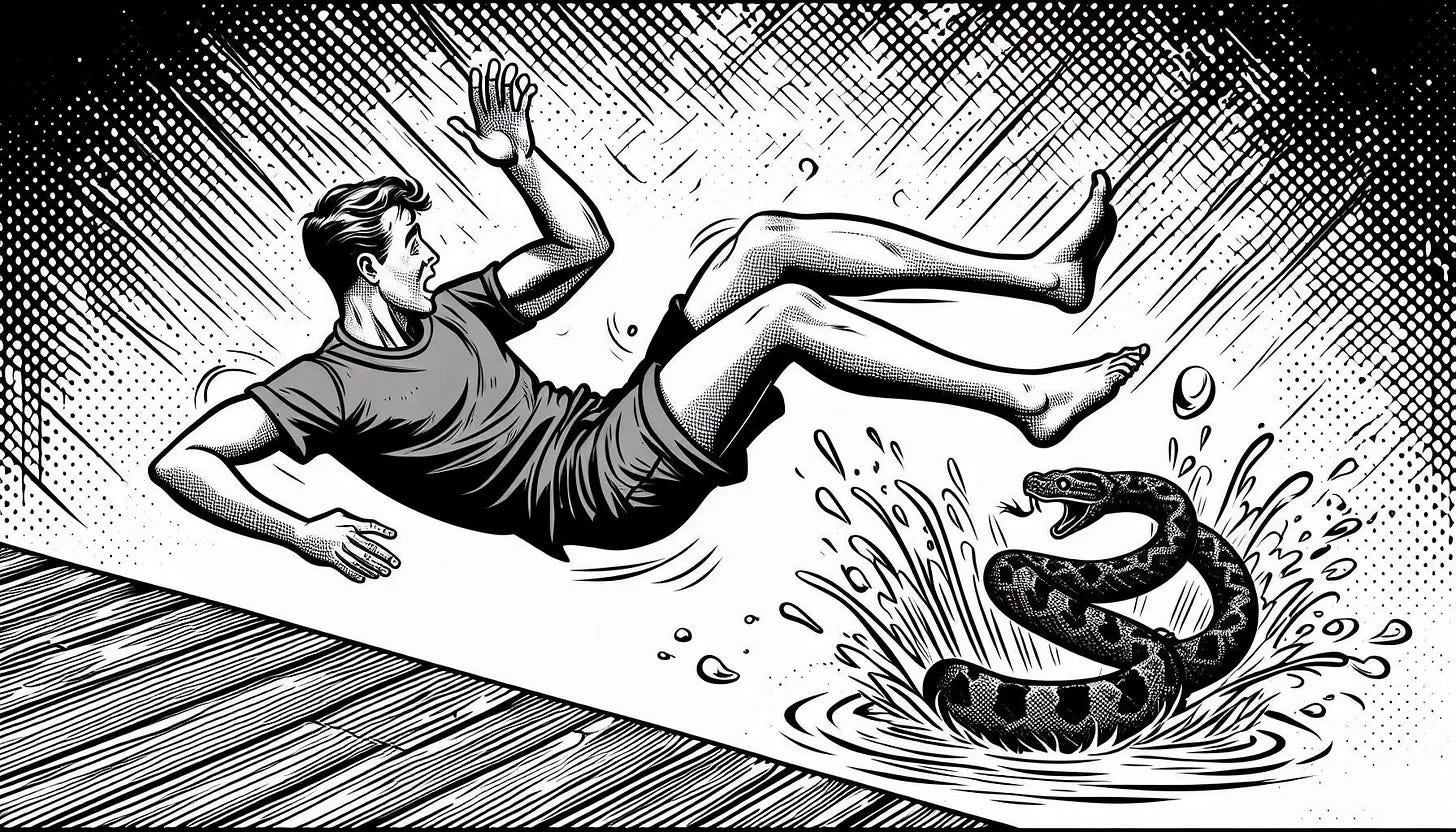
If you read my first Ukraine Dispatch, you know exactly what this image refers to!
First off don’t apologize the universe just wanted to slow down. Glad to have you and your insights back! 🚀
Hi Mick, some great insights.
I really like the format of our articles, especially the use of boldface headings as they make the articles easier to navigate and review.
Thanks
Mike L